RWA

RWA (Real World Assets) refers to the tokenization of tangible assets—such as real estate, private credit, and government bonds—on the blockchain. By bringing traditional financial instruments on-chain, RWA protocols like Ondo and Centrifuge provide DeFi users with stable, real-yield opportunities. In 2026, the RWA sector is a multi-trillion-dollar bridge between TradFi and DeFi, enabling fractional ownership and global liquidity for previously illiquid assets. Follow this tag for insights into on-chain credit markets, regulatory compliance, and asset-backed security innovations.

41944 Articles
Created: 2026/02/02 18:52
Updated: 2026/02/02 18:52
Decoding the global liquidity cycle: Where are we?

Decoding the global liquidity cycle: Where are we?

Author:hoeem Compiled by: Saoirse, Foresight News Wealth inherited from generation to generation is often born in the transition from a tightening cycle to an easing phase. Therefore, clarifying one's position

Author: PANews
Weekly Crypto Regulation Roundup: Trump Slams Musk, Tim Scott Backs Blockchain, and Broker Rule Gets Buried

Weekly Crypto Regulation Roundup: Trump Slams Musk, Tim Scott Backs Blockchain, and Broker Rule Gets Buried

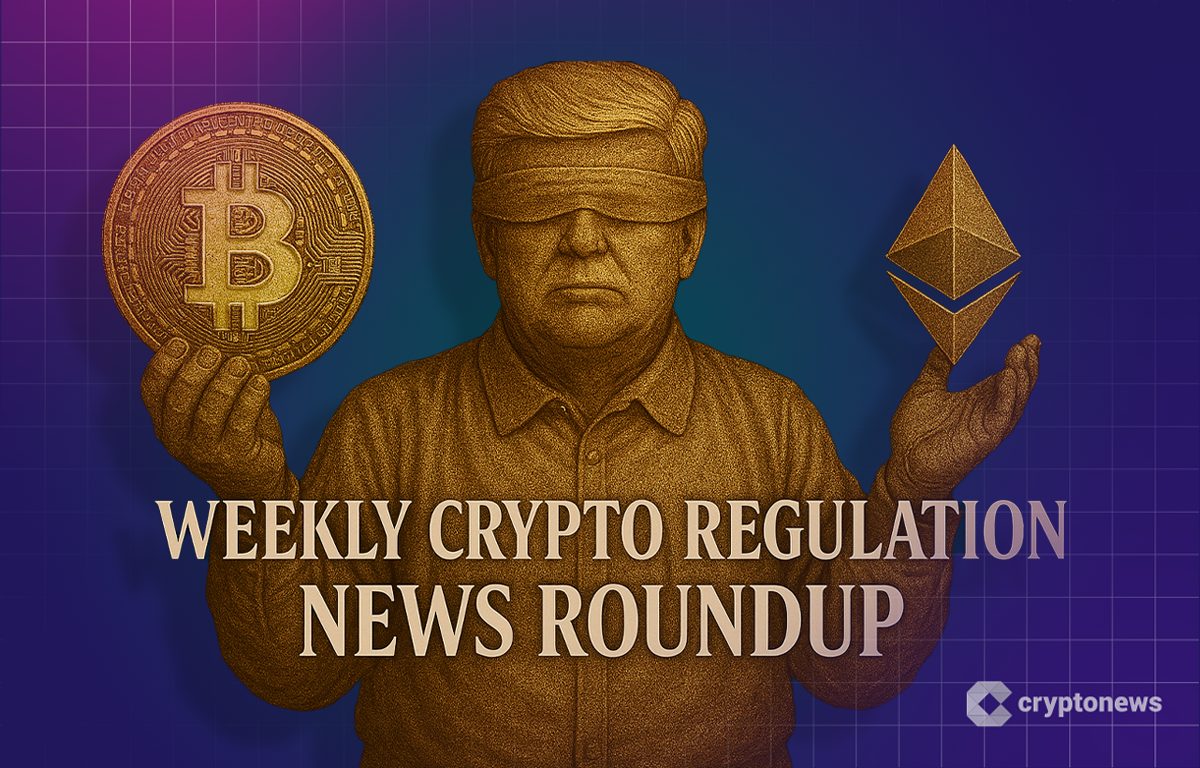
This past week has seen U.S. crypto policy thrust back into the spotlight — but not just in the legislative chambers. A political feud between two of the most influential names in tech and governance — Donald Trump and Elon Musk — spilled out onto social media, while regulatory milestones unfolded in the Senate and Treasury Department. The conflicting headlines reflect a reality that the crypto sector knows all too well: when it comes to digital asset policy in the United States, clarity remains elusive. Trump Slams Musk Amid New Political Party Formation U.S. President Donald Trump’s war of words with Elon Musk took a sharp turn this week, as the president publicly criticized Musk over the formation of a new political party. 🇺🇸 U.S. President Donald Trump called tech billionaire Elon Musk a "train wreck" in a social media post on Sunday. #DonaldTrump #ElonMusk https://t.co/aDoUhWXSVR — Cryptonews.com (@cryptonews) July 7, 2025 On July 6, Trump lashed out on Truth Social, calling Musk a “train wreck” who had gone “off the rails” over the past five weeks. This response followed Musk’s July 5 post on X (formerly Twitter) announcing the launch of the “America Party.” Trump, a long-time critic of third-party movements, said Musk’s efforts would lead only to “disruption and chaos,” arguing such ventures have never succeeded in the U.S. political landscape. The clash marks an escalation in what appears to be a growing political and ideological rift between two powerful figures with vested interests in the future of technology, freedom of speech, and digital assets. Trump also took aim at the Democratic Party, accusing them of losing both their “confidence and their minds” in the ongoing cultural and financial shifts, particularly regarding crypto policy. Digital Assets Are Not Going Away, Senator Tim Scott Says Meanwhile, constructive progress on crypto regulation was unfolding in Washington. Senate Banking Committee Chairman Tim Scott (R-SC) led a July 9 hearing titled “From Wall Street to Web3” —the Senate’s first full committee hearing focused on digital assets. In his opening remarks, Scott stressed that blockchain technology and digital assets are here to stay. He urged fellow lawmakers to build a robust and balanced regulatory framework that protects investors while allowing innovation to thrive. 🇺🇸 Senator Tim Scott told his fellow U.S. lawmakers that digital assets are not going away in a committee hearing on Wednesday. #TimScott #Senate https://t.co/8Akk1p8zrs — Cryptonews.com (@cryptonews) July 10, 2025 Scott’s comments were supported by testimony from Ripple CEO Brad Garlinghouse, Blockchain Association’s Summer Mersinger, and Chainalysis co-founder Jonathan Levin. He stressed the need for America to maintain a leadership role in shaping the future of digital finance, rather than ceding influence to jurisdictions like the UAE and Singapore. The hearing highlighted bipartisan acknowledgment that digital asset markets require clearer regulatory guidance, even as lawmakers differ on the methods of implementation. US Treasury Officially Scraps Crypto Broker Reporting Rules In a move for DeFi advocates, the U.S. Treasury Department has officially repealed a controversial broker reporting rule. The regulation, originally introduced under the Biden administration in late 2024, sought to impose broker-level reporting requirements on entities involved in decentralized finance and crypto infrastructure. However, following a successful challenge under the Congressional Review Act—and a signature from President Trump—the rule has now been nullified. The scrapped rule, titled “Gross Proceeds Reporting by Brokers,” would have gone into effect in February 2025 and required extensive data collection from DeFi platforms. Its repeal has been welcomed by industry groups, who saw the rule as overly broad and detrimental to innovation. The Treasury will now revert to pre-2024 guidance, which exempts validators and wallet providers from broker classification, marking a key policy win for decentralized systems. US Banking Regulator OCC Gets New Chief with Crypto Roots Finally, regulatory leadership is taking a crypto-savvy turn. Jonathan Gould, a former Bitfury executive with deep experience in blockchain and financial policy, has been confirmed as the new head of the Office of the Comptroller of the Currency (OCC). Approved by a 50-45 Senate vote, Gould becomes the OCC’s first permanent chief since 2020. Gould’s appointment shows a potential shift in how the U.S. banking regulator approaches digital asset oversight. During his prior tenure at the OCC under the Trump administration, Gould helped shape key positions on fintech and crypto integration in banking. With his return, stakeholders hope the agency will adopt a more innovation-forward stance—especially as traditional banks explore blockchain-based products such as tokenized deposits and on-chain settlement rails. Together, this week’s events reflect the growing entanglement between crypto, regulation, and politics. Whether through partisan clashes or bipartisan hearings, the evolution of U.S. digital asset policy is entering a more complex and consequential phase.

Author: CryptoNews
With the United States taking the lead, how can Hong Kong win the competition of “global tokenization”?

With the United States taking the lead, how can Hong Kong win the competition of “global tokenization”?

Editor's note: On July 3, the South China Morning Post website published an article by Cobo COO Lily Z. King, which deeply analyzed how Hong Kong can seize the initiative

Author: PANews
With strategic investment from Yzi Labs, how does Aspecta use AI to build on-chain credentials?

With strategic investment from Yzi Labs, how does Aspecta use AI to build on-chain credentials?

By Alex Liu, Foresight News On the evening of July 10, Yzi Labs announced a strategic investment in Aspecta. This article aims to briefly interpret Aspecta, which attempts to build

Author: PANews
Ethereum price breaks through $3,000 after ETH Foundation moves 21,000 ETH in the past two months

Ethereum price breaks through $3,000 after ETH Foundation moves 21,000 ETH in the past two months

Ethereum has surpassed $3,000 in value, following the ETH Foundation transferring a total of 21,000 ETH in the past two months to its internal Gnosis Safe Proxy address. According to data from crypto.news, ETH (ETH) touched on a new high…

Author: Crypto.news
Deputy Director of the National Financial and Development Laboratory: The development model of RMB stable currency can be "internal and external integration"

Deputy Director of the National Financial and Development Laboratory: The development model of RMB stable currency can be "internal and external integration"

Author: Yang Tao, Deputy Director of the National Finance and Development Laboratory Source: National Finance and Development Laboratory The development model of RMB stable currency can be "internal and external"

Author: PANews
German State Bank Issues €100M Bond on Polygon – Is TradFi Finally Embracing Crypto?

German State Bank Issues €100M Bond on Polygon – Is TradFi Finally Embracing Crypto?

NRW.BANK, a German state-owned development bank, has issued a €100 million ($116.7 million) blockchain-based bond on the Polygon network, marking a major public-sector step into digital securities. The bond, with a two-year maturity, was issued under Germany’s Electronic Securities Act (eWpG). This legislation enables the issuance and registration of bonds entirely on blockchain networks, eliminating the need for physical certificates. Cashlink Registers Regulated Bond on Polygon as eWpG Law Fuels DLT Adoption The German bank used the infrastructure of Cashlink Technologies, a BaFin-licensed crypto securities registrar, to register the bond, with Polygon serving as the underlying blockchain. NRWBANK, Germany’s largest regional development bank, has tokenized its first fully digital bond, with support from leading financial institutions like @DeutscheBank , @dzbank , and @DekaBank . Polygon will serve as the rails for the EUR 100 million bond, registered via Cashlink as… pic.twitter.com/37jqqQpz8F — Polygon (@0xPolygon) July 10, 2025 According to the report, institutional investors such as Deutsche Bank, DZ BANK, and DekaBank took part in the offering, acting as joint lead managers. “This is more than a technical milestone. It’s a signal that public financial institutions are ready to move beyond blockchain pilots and start integrating these systems at scale,” said Michael Duttlinger, CEO of Cashlink. The bond marks the first time NRW.BANK has made a fully digital issuance of this kind, further reflecting growing confidence in blockchain for regulated capital markets. Notably, Germany’s eWpG law, introduced in 2021, has created a clear legal path for the use of distributed ledger technology in securities. This has helped attract banks and public institutions toward tokenized finance. While still small in size compared to the traditional bond market, digital bond activity is accelerating. Polygon’s involvement in the issuance also comes at a time when the network is preparing for a major technical upgrade. The Polygon Foundation is set to deploy Heimdall 2.0 , a new consensus layer for its proof-of-stake blockchain. Scheduled to go live on Thursday, the upgrade seeks to reduce finality time to just five seconds and enhance network resilience by minimizing the likelihood of chain reorganizations. “This is the most technically complex hard fork Polygon PoS has seen since its launch in 2020,” wrote Sandeep Nailwal, CEO of the Polygon Foundation, on X. Shipping Announcement! 🚢 We’ve been on a shipping spree—and next up is Polygon PoS’s consensus layer, Heimdall v2, landing 10 July 2025. ‼️ This is the most technically complex hard-fork Polygon PoS has seen since it's launch in 2020 ‼️ What’s changing? 1. Heimdall sheds all… — Sandeep | CEO, Polygon Foundation (※,※) (@sandeepnailwal) July 8, 2025 He added that the upgrade would reduce the finality time to around five seconds and decrease the risk of chain reorganizations. The coincidence of the bond issuance and the Polygon upgrade indicates the growing maturity of the blockchain infrastructure underpinning tokenized finance. Digital bonds offer advantages such as real-time tracking, faster settlement, and reduced administrative overhead, which are now attracting public-sector issuers. Germany Advances Digital Bond Push as Banks and Industrials Embrace Blockchain Germany is quickly emerging as a hub for regulated blockchain finance. Recent digital bond issuances by major institutions, including DZ BANK, DekaBank, Commerzbank, NRW.BANK, KfW, and Siemens, indicate the country’s accelerating adoption of tokenized securities, enabled by its 2021 Electronic Securities Act (eWpG). Earlier this month, KfW, Germany’s state-owned development bank, issued a CHF 140 million digital bond via the SIX Digital Exchange (SDX) in Switzerland. Beyond banking, German industrial giant Siemens also entered the digital securities space. In February 2023, Siemens issued its first digital bond, worth €60 million ($64 million), on Polygon’s public mainnet. Beyond digital bonds, Germany’s traditional banking sector is deepening its engagement with crypto. Sparkassen-Finanzgruppe, the nation’s largest banking group with over 50 million customers, seeks to introduce crypto trading services to its customers by mid-2026. The move will be coordinated through Dekabank, a financial institution owned by Sparkassen, and will allow retail clients to buy and sell Bitcoin and Ether directly within the group’s mobile banking app. The German Savings Banks Association confirmed the development, framing it as a response to the recently implemented EU Markets in Crypto-Assets (MiCA) regulation. According to the group, the goal is to offer customers “reliable access to a regulated crypto offering.” Sparkassen joins a growing list of German banks moving toward crypto adoption; for example, DZ Bank, the country’s second-largest lender , began testing trading and custody services for digital assets in 2023 through a partnership with Boerse Stuttgart Digital. Similarly, Landesbank Baden-Württemberg announced plans earlier this year to launch crypto custody services for institutional clients in collaboration with Austrian exchange Bitpanda. Meanwhile, Polygon continues its strategic pivot. Following the May 24 resignation of co-founder Mihailo Bjelic , leadership has been consolidated under Sandeep Nailwal, now acting as CEO of the Polygon Foundation. BIG update – As the largest holder of POL and someone who dedicated his life to development and success of @0xPolygon from the very beginning, I have decided to take full control of Polygon Foundation and will be its CEO going forward. Polygon Foundation owns and oversees… — Sandeep | CEO, Polygon Foundation (※,※) (@sandeepnailwal) June 11, 2025 Under Nailwal, Polygon seeks to sunset its underperforming zkEVM chain and refocus on core verticals, including real-world asset (RWA) tokenization, stablecoin payments, and its proof-of-stake (PoS) chain. Despite a drop in market cap, from $20 billion at its peak to $1.7 billion, Polygon remains a key player in tokenization. Incredible. Arbitrum and @0xPolygon together account for 83% of the entire tokenized global bond market Source: @RWA_xyz pic.twitter.com/IDbzeKhiwi — Peter (📖, ✍️, 🔑) (@p_petertherock) July 10, 2025 According to rwa.xyz , the network ranks 6th in total RWA value, with over $343 million in assets across 254 tokenized instruments. It also captures 37.7% of the entire tokenized bond market, signaling its continued relevance in institutional blockchain infrastructure.

Author: CryptoNews
The crypto market rose for two consecutive days, BTC broke through $116,000 to set a new high, and ETH broke through $3,000

The crypto market rose for two consecutive days, BTC broke through $116,000 to set a new high, and ETH broke through $3,000

PANews reported on July 11 that according to SoSoValue data, as regulatory expectations improved, liquidity continued to ease, and market sentiment gradually rose, the crypto market sector rose for two

Author: PANews
US Treasury Officially Scraps Crypto Broker Reporting Rules After Congressional Vote

US Treasury Officially Scraps Crypto Broker Reporting Rules After Congressional Vote

The US Treasury Department officially scrapped crypto broker reporting rules on Thursday, following a vote by Congress to revoke them under the Congressional Review Act, which President Trump signed in April. 💥 BREAKING: CRYPTO TAXES The US Treasury has removed crypto broker reporting rules — including Form 1099‑DA It was designed to require crypto brokers, including DeFi platforms, to report users’ digital asset transactions to the IRS for tax compliance Let’s gooo! 🔥 pic.twitter.com/dpGOASbW3Y — Real World Asset Watchlist (@RWAwatchlist_) July 10, 2025 The regulation titled “Gross Proceeds Reporting by Brokers that Regularly Provide Services Effectuating Digital Asset Sales” was published December 30, 2024, and is intended to require certain decentralized finance industry participants to file information returns as brokers effective February 28, 2025. Source: federalregister.gov Under Public Law 119-5 and the Congressional Review Act, the final rule has no legal force or effect and is considered null and void, as if it had never taken effect. The Treasury is removing the rule from the Code of Federal Regulations and reverting to the previous text, which excluded entities solely engaged in validating distributed ledger transactions or selling hardware for private key control from broker reporting requirements. Republicans in Congress successfully challenged the Biden-era rule that would have classified DeFi platforms as brokers, requiring extensive data collection and reporting obligations. The Treasury estimated that billions in crypto-related taxes were going uncollected annually, but industry advocates argued that the requirements were technically impossible for decentralized platforms to implement. The regulation faced widespread criticism for misunderstanding decentralized technology and potentially driving innovation overseas, prompting legal challenges from the Blockchain Association and Texas Blockchain Council . Congressional Battle Over DeFi Innovation and Tax Compliance Senator Ted Cruz led the Congressional Review Act resolution alongside Representative Mike Carey, arguing the rule represented government overreach that would stifle American cryptocurrency innovation. Cruz stated the regulation “ directly and immediately would harm American cryptocurrency innovation and drive development overseas. “ 1/ @SenTedCruz ’s CRA resolution to roll back the DeFi Broker Rule – anti-crypto, anti-privacy IRS midnight rulemaking – is critical to providing clarity for crypto and DeFi in the US. Congress should vote YES on the CRA. This has been a long battle… How did we get here? 👇 — Kristin Smith (@KMSmithDC) February 12, 2025 The Joint Committee on Taxation estimated repealing the rule could cost the government nearly $4 billion over ten years in lost tax revenue. Despite projected losses, lawmakers supporting repeal prioritized privacy, technical feasibility, and innovation over tax collection efficiency. House Financial Services Committee Chairman French Hill also condemned the proposal as excessive government intervention, arguing that defining DeFi software providers as brokers would create costly reporting obligations for entities that never take custody of user funds. The regulation threatened to push American digital asset development overseas while undermining technological progress. White House Crypto Czar David Sacks supported the repeal effort, calling the regulation an “ 11th-hour attack on the crypto community by the Biden administration. ” The White House is pleased to announce its support for the CRA introduced by @SenTedCruz and @RepMikeCarey to rescind the so-called Broker DeFi Rule, an 11th hour attack on the crypto community by the Biden administration. pic.twitter.com/T7Hxasb4aC — David Sacks (@davidsacks47) March 4, 2025 The administration positioned itself as strongly supportive of crypto industry concerns while establishing federal working groups on digital asset regulation. The successful repeal prevents the IRS from reintroducing similar proposals in the future, marking a significant victory for DeFi advocates. Broader Regulatory Shifts Signal Pro-Crypto Policy Direction The Treasury Department separately announced exemptions that will free banks and brokerage firms from reporting customers’ crypto holdings on financial statements, contingent upon demonstrating effective digital asset risk management capabilities. The SEC began issuing guidance clarifying that some crypto arrangements might not qualify as liabilities for reporting purposes. These regulatory relief measures came amid sustained Congressional pressure to revise the controversial SAB 121 accounting bulletin. While the Senate voted to overturn SAB 121 in May with 60 senators supporting repeal, President Biden’s veto prevented the measure from taking effect. States continue advancing Bitcoin legislation independently of federal action, with 23 states introducing Bitcoin reserve bills and 35 proposals under consideration. In fact, following that, Kentucky Governor Andy Beshear signed the “Bitcoin Rights” bill into law . Beyond the United States, Japan’s Senate has also recently approved legal amendments that give crypto brokerage firms increased operational freedom through new “intermediary business” categories, which come with reduced regulatory barriers. The legislation creates customer safeguards while promoting innovation, requiring the Prime Minister’s approval for crypto operators to hold assets domestically.

Author: CryptoNews
YZi Labs announces investment in blockchain infrastructure platform Aspecta

YZi Labs announces investment in blockchain infrastructure platform Aspecta

PANews reported on July 10 that YZi Labs announced a strategic investment in blockchain infrastructure platform Aspecta . Aspecta is committed to providing intelligent authentication, price discovery and lifecycle liquidity

Author: PANews