RWA

RWA (Real World Assets) refers to the tokenization of tangible assets—such as real estate, private credit, and government bonds—on the blockchain. By bringing traditional financial instruments on-chain, RWA protocols like Ondo and Centrifuge provide DeFi users with stable, real-yield opportunities. In 2026, the RWA sector is a multi-trillion-dollar bridge between TradFi and DeFi, enabling fractional ownership and global liquidity for previously illiquid assets. Follow this tag for insights into on-chain credit markets, regulatory compliance, and asset-backed security innovations.

42455 Articles
Created: 2026/02/02 18:52
Updated: 2026/02/02 18:52
Russian Drone Strikes Continue. Ukraine Hits Shahed Supply Chains.

Russian Drone Strikes Continue. Ukraine Hits Shahed Supply Chains.

The post Russian Drone Strikes Continue. Ukraine Hits Shahed Supply Chains. appeared on BitcoinEthereumNews.com. KHARKIV, UKRAINE – JULY 30: Dmytro Chubenko of the Kharkiv regional prosecutor’s office examines the carbon fiber remains of a Russian-made, Iran-designed Shahed-136 drone, known as a Geran-2 in Russia, on July 30, 2025 in Kharkiv, Ukraine. (Photo by Scott Peterson/Getty Images) Getty Images Despite ongoing peace talks, Russia has continued to launch drone strikes against Ukraine, including massive barrages on August 18 and 20 that sent hundreds of drones at targets across the country. These strikes consist of Geran and Gerbera drones, better known as “Shaheds” after the Iranian model they copy. Over the past three years, Shaheds have become a serious threat as Russia increasingly uses them to hit Ukrainian infrastructure and defensive positions. Ukraine has invested heavily in air defenses and jamming systems, but these measures are proving less effective. As a result, Ukraine has expanded its strategy to include strikes on Russian facilities tied to the production and deployment of Shahed drones. Recent Ukrainian Strikes Against the Shahed Drone Network Operation Spider’s Web was Ukraine’s most high-profile drone strike this summer, but it was only one of many attacks deep inside Russia. With advances in long-range drone capabilities, Ukraine has struck oil refineries and other key infrastructure across the country. More importantly, it has focused on facilities involved in the deployment, storage, and production of Shahed drones. Social media image posted on Telegram by Exilenova+, showing satellite imagery capturing attacks on “Primorsko-Akhtarsk” airfield after an attack on August 2, 2025. The images show damage to the airfield including the warehouses used for storing Shahed drones. Social Media Capture As early as summer 2024, Ukraine began striking airfields used to store and deploy Shahed drones. Because of their limited range, these drones must be based close to Ukraine, leaving the airfields within reach of Ukrainian drones. In…

Author: BitcoinEthereumNews
From $1K to $50K – Is BlockchainFX the Best Crypto Presale to Buy in August 2025 with 5000% ROI?

From $1K to $50K – Is BlockchainFX the Best Crypto Presale to Buy in August 2025 with 5000% ROI?

BlockchainFX presale at $0.02 offers multi-asset trading, staking rewards, and a BFX Visa card. Analysts project up to 5000% ROI, making it August’s top crypto buy.

Author: Blockchainreporter
XRP vs Avalon X: AVLX’s Real Estate–Backed RWA Draws Major Investors

XRP vs Avalon X: AVLX’s Real Estate–Backed RWA Draws Major Investors

The post XRP vs Avalon X: AVLX’s Real Estate–Backed RWA Draws Major Investors appeared on BitcoinEthereumNews.com. XRP’s core value proposition remains consistent: fast, low-cost cross-border transfers on the XRP Ledger (XRPL), a proposition given renewed attention whenever risk appetite turns and tokenization narratives flare. On the flip side is Avalon X (AVLX) tying token utility to perks around real property projects. With the markets restless and real-world assets back top of mind, XRP holders are observing how Avalon X’s efforts may align in a fast-settlement ecosystem. XRP News: Why Is XRP Still the Best Crypto for Cross-Border Payments? Market conditions this week have been volatile. Macro jitters around the pace of U.S. rate cuts pressured majors, but on Tuesday, XRP briefly outperformed the large caps and underscored how quickly flows rotate across liquid names. As it stands, XRP price is hovering near $2.90 after testing both sides of the $3.00 area intraday. That $3.00 handle has become a psychological pivot to the price, which ramped toward $3.10 as XRP price stalled into round-number liquidity, something traders closely observed on Tuesday. Additionally, there is earlier coverage pointing to an unusual pause near $3.00 (on heavy volume) earlier in the session, which creates speculation around structural thinness within that zone. Price notwithstanding, that cadence of the XRPL matters to long-only holders. In the last two days, validators pushed three protocol ‘fix’ amendments into a 14-day countdown. If the supermajority support remains, the network could activate these amendments around August 29th and tighten reliability and governance hygiene around the ledger. Incremental upgrades don’t usually make headlines, but they check trust in the throughput when on a spike. Context still includes a liability chapter, finally closing. Last week, the SEC concluded its multi-year case against Ripple with a $125 million penalty and an injunction on a series of certain institutional sales, while preserving secondary-market trading of XRP outside of treatment…

Author: BitcoinEthereumNews
Swiss Franc: Navigating Global Headwinds – UBS Updates GBP/CHF Outlook

Swiss Franc: Navigating Global Headwinds – UBS Updates GBP/CHF Outlook

BitcoinWorld Swiss Franc: Navigating Global Headwinds – UBS Updates GBP/CHF Outlook In the dynamic and often unpredictable world of cryptocurrencies, where volatility is a constant companion, understanding the traditional financial safe havens can offer invaluable perspective. While digital assets often grab headlines with their parabolic gains and precipitous drops, the enduring Swiss franc resilience against global economic headwinds provides a fascinating case study in stability. This article delves into how the Swiss franc maintains its strength despite looming tariff threats, and what a major financial player like UBS is forecasting for the GBP/CHF currency pair, offering crucial insights for anyone interested in broader financial market trends. What Fuels the Swiss Franc’s Unyielding Resilience? The Swiss franc (CHF) has long been revered as a safe-haven currency, a preferred destination for capital during times of global uncertainty. Its consistent performance, even when faced with significant geopolitical and economic pressures, prompts the question: what exactly underpins this remarkable Swiss franc resilience? It’s not merely a reputation; it’s built on a foundation of robust economic fundamentals and strategic policy decisions. Key Pillars of CHF Strength: Political and Economic Stability: Switzerland boasts a long history of political neutrality and a stable, democratic government. This inherent stability reduces perceived risks for investors, making the CHF an attractive alternative when other nations face turmoil. Its robust legal framework and low corruption levels further enhance investor confidence. Strong Economic Fundamentals: Despite its small size, Switzerland has a highly developed, innovative, and diversified economy. It’s a global leader in sectors such as pharmaceuticals, precision manufacturing, finance, and luxury goods. The country consistently maintains a healthy trade surplus, low unemployment rates, and a strong fiscal position with low public debt. These economic strengths provide a solid backing for its currency. Prudent Monetary Policy by the SNB: The Swiss National Bank (SNB) is known for its independent and often unconventional monetary policy. While it has previously intervened to prevent excessive CHF appreciation (especially against the Euro), its primary mandate is price stability. The SNB’s credibility and willingness to act decisively, whether through interest rate adjustments or direct market interventions, reassure investors about the currency’s long-term value. Safe-Haven Demand: In times of global crises – be it trade wars, geopolitical conflicts, or financial market instability – investors flock to assets perceived as safe. The CHF, alongside gold and the Japanese Yen, is consistently among the top choices for this flight to safety. This intrinsic demand provides a constant floor for the currency, even when external pressures mount. High Savings Rate and Capital Inflows: Switzerland has a high domestic savings rate, contributing to capital accumulation. Furthermore, its status as a global financial hub attracts significant foreign capital inflows, both for investment and wealth management purposes, which naturally supports the demand for the franc. This combination of factors allows the Swiss franc to absorb shocks that would severely weaken other currencies. Its ability to act as a financial anchor in stormy seas is a testament to these foundational strengths, making it a critical currency to monitor in any comprehensive forex market analysis. How Do Tariff Threats Impact Global Currencies and the Forex Market Analysis? The specter of global tariff threats, often initiated by major economic powers, casts a long shadow over international trade and financial markets. These protectionist measures, designed to favor domestic industries, inevitably trigger retaliatory actions, leading to trade wars that disrupt supply chains, increase production costs, and dampen global economic growth. Understanding their ripple effects is crucial for any astute forex market analysis. The Cascade Effect of Tariffs on Currencies: Increased Volatility and Uncertainty: Tariffs introduce significant uncertainty into the global economic outlook. Businesses become hesitant to invest, and consumers may reduce spending. This uncertainty translates into increased volatility across all asset classes, including currencies, as investors adjust their risk exposure. Impact on Trade Balances: Tariffs aim to reduce imports and boost exports. However, in a retaliatory environment, they often lead to reduced overall trade volumes. Countries heavily reliant on exports, or those caught in the crossfire of trade disputes, may see their currencies weaken as their trade surpluses diminish or turn into deficits. Flight to Safety: As economic growth prospects dim and geopolitical tensions rise due to tariff disputes, there’s a noticeable ‘flight to safety.’ Capital flows out of riskier assets and emerging markets into perceived safe havens. This directly benefits currencies like the Swiss franc, Japanese Yen, and the US Dollar (in its capacity as the world’s reserve currency), leading to their appreciation. Central Bank Responses: Trade wars can compel central banks to adjust monetary policy. If tariffs lead to slower growth and lower inflation, central banks might consider interest rate cuts or quantitative easing to stimulate their economies. Such dovish shifts can weaken a currency, while hawkish stances (if inflation rises due to tariffs) could strengthen it. Commodity Price Fluctuations: Many currencies are heavily influenced by commodity prices (e.g., AUD, CAD, RUB). Tariff disputes can disrupt global demand for commodities, leading to price drops that in turn weaken commodity-linked currencies. Consider the potential impact of escalating tariff threats on various currency types: Currency Type Typical Response to Tariff Threats Example Currencies Safe Havens Appreciation (due to capital inflow) CHF, JPY, USD Export-Oriented (Caught in Crossfire) Depreciation (due to reduced trade) CNY, EUR, KRW Commodity-Linked Depreciation (due to falling demand/prices) AUD, CAD, NZD Emerging Markets Significant Depreciation (due to risk aversion) TRY, ZAR, MXN While the immediate impact of tariff threats can be negative for global growth, they paradoxically reinforce the appeal of currencies like the Swiss franc, highlighting its unique position in the global financial architecture. This dynamic makes the currency outlook for the CHF particularly interesting during periods of heightened trade tensions. Diving Deep into UBS’s GBP/CHF Forecast: What’s Changed? In the complex tapestry of the foreign exchange market, institutional forecasts from leading banks like UBS provide critical signposts for investors and traders. UBS, a global financial services giant headquartered in Switzerland, holds significant weight in its analysis, particularly concerning the UBS GBP CHF currency pair. Their recent adjustments to the GBP CHF forecast reflect a nuanced understanding of both British and Swiss economic trajectories, as well as broader global macro trends. UBS’s Rationale Behind the Updated Forecast: Traditionally, UBS has provided detailed analyses of major currency pairs, factoring in everything from interest rate differentials and economic growth projections to geopolitical risks and central bank policies. Their latest GBP CHF forecast indicates a revised outlook, moving away from previous expectations. This shift is typically driven by a confluence of factors: UK Economic Performance and Brexit Aftermath: The British economy continues to navigate the complexities of post-Brexit trade relationships and inflationary pressures. Persistent inflation, coupled with a tight labor market, has forced the Bank of England (BoE) to maintain a relatively hawkish stance. However, underlying growth concerns and the potential for a recession could temper the BoE’s aggressiveness. UBS likely assesses these factors, weighing the UK’s growth potential against its inflation battle. Swiss National Bank (SNB) Policy Nuances: The SNB’s monetary policy is a pivotal determinant for the CHF. While the SNB has been proactive in combating inflation, its actions are also influenced by the strength of the franc. If the franc becomes excessively strong, posing a threat to Swiss exports, the SNB might signal a more dovish stance. UBS’s analysis would consider the SNB’s reaction function and its comfort level with the current CHF valuation. Interest Rate Differentials: The gap between the BoE’s policy rate and the SNB’s policy rate significantly impacts carry trade strategies and capital flows. A widening positive differential in favor of the GBP would theoretically make the GBP more attractive. However, this must be balanced against perceived risks and the overall economic health of both nations. Global Risk Sentiment: As discussed, the Swiss franc benefits from global risk aversion. If UBS anticipates a continued period of global uncertainty (e.g., ongoing tariff threats, geopolitical tensions, or a slowdown in major economies), this would bolster their view on the CHF’s strength relative to the GBP, which is often more sensitive to global growth cycles. Technical Analysis and Market Positioning: Beyond fundamental factors, large institutions also consider technical indicators and market positioning. If the market is heavily skewed in one direction, a correction might be anticipated, influencing the short-to-medium term GBP CHF forecast. While specific target numbers are proprietary and subject to change, the general direction of UBS’s revised forecast often signals a shift in the perceived relative strength of the two economies or a change in the global risk landscape. For example, if UBS lowers its GBP CHF forecast, it implies an expectation of a stronger CHF relative to the GBP, or a weaker GBP relative to the CHF, suggesting that the headwinds for the British pound are stronger than previously anticipated, or the tailwinds for the Swiss franc are more robust. Beyond the Headlines: Broader Forex Market Implications and Currency Outlook The specific movements and forecasts for a single currency pair like UBS GBP CHF are never isolated events. They are intricate threads in the vast and interconnected tapestry of the global forex market analysis. Understanding the broader implications of such expert outlooks is crucial for forming a comprehensive currency outlook and making informed decisions across various financial assets, including cryptocurrencies, which are increasingly influenced by macro trends. What Does the GBP/CHF Outlook Tell Us About the Wider Market? Global Risk Barometer: The continued strength of the Swiss franc, as highlighted by its resilience and reinforced by forecasts like UBS’s, acts as a significant barometer of global risk sentiment. When investors are consistently seeking safety in CHF, it suggests underlying concerns about global economic stability, geopolitical tensions, or financial market fragility. This ‘flight to safety’ often correlates with weakness in riskier assets, including certain cryptocurrencies that are more sensitive to broader market sentiment. Divergence in Monetary Policy Expectations: The GBP/CHF forecast implicitly reflects the market’s and institutions’ expectations regarding the monetary policy paths of the Bank of England (BoE) and the Swiss National Bank (SNB). If the forecast implies a stronger CHF, it could suggest that the market anticipates the SNB will maintain a relatively tighter policy, or that the BoE might ease its stance sooner than expected, or that the economic outlook for the UK is deteriorating relative to Switzerland. This divergence in central bank policies is a key driver for many currency pairs. Impact on Other Safe Havens: The performance of the CHF often provides clues about other safe-haven assets. A strong CHF might coincide with strength in the Japanese Yen (JPY) and gold, as these assets share similar demand drivers during times of uncertainty. Monitoring these correlations can help investors diversify their safe-haven allocations. Reflecting UK Economic Challenges: A weakening GBP against the CHF, as potentially indicated by a revised UBS forecast, underscores the persistent challenges facing the UK economy. These include the long-term impacts of Brexit, persistent inflation, and the delicate balance the BoE must strike between controlling prices and supporting growth. This insight is valuable for investors with exposure to UK equities or bonds. Cross-Currency Implications: Changes in the GBP/CHF pair can have ripple effects on other crosses. For example, if the GBP is weakening against the CHF, it might also show weakness against the Euro (EUR) or the US Dollar (USD), depending on the relative strengths of those economies. This highlights the interconnectedness of the forex market. The currency outlook for the GBP/CHF pair, when viewed through the lens of a comprehensive forex market analysis, offers more than just a trading signal for that specific pair. It provides a window into the prevailing global economic narrative, central bank intentions, and investor risk appetite, insights that are increasingly relevant even for participants in the crypto space looking to understand macro drivers. Actionable Insights: Navigating the GBP/CHF Landscape and Beyond Understanding the dynamics of the UBS GBP CHF forecast and the broader forex market analysis is not just an academic exercise; it offers tangible, actionable insights for various market participants. Whether you are a seasoned forex trader, a long-term investor, or a business engaged in international trade, these trends can significantly impact your financial strategies. Staying informed about the currency outlook is paramount. Strategies for Different Market Participants: For Forex Traders: Identify Entry and Exit Points: If UBS’s forecast suggests a stronger CHF against GBP, traders might look for opportunities to go short on GBP/CHF. Conversely, if the forecast implies a weaker CHF, long positions could be considered. Always combine institutional forecasts with your own technical and fundamental analysis. Monitor Key Levels: Pay close attention to support and resistance levels for the GBP/CHF pair. These are often psychological barriers where buying or selling pressure might intensify. Risk Management: Given the volatility introduced by global events like tariff threats, implementing robust risk management strategies (e.g., stop-loss orders, appropriate position sizing) is crucial to protect capital. Correlations: Observe how GBP/CHF moves in relation to other major pairs (e.g., EUR/CHF, USD/CHF, EUR/GBP). Sometimes, a move in one pair can foreshadow or confirm a move in another. For Long-Term Investors: Portfolio Diversification: The Swiss franc’s safe-haven status makes it an excellent candidate for portfolio diversification, especially during periods of elevated global risk. Holding some CHF-denominated assets can act as a hedge against equity market downturns or geopolitical shocks. Inflation Hedging: While not a primary inflation hedge like gold, the CHF’s stability and the SNB’s commitment to price stability can offer a degree of protection against inflationary pressures compared to currencies from less stable economies. Interest Rate Outlook: Consider the long-term interest rate outlook for both the UK and Switzerland. A sustained positive interest rate differential in favor of one currency can make it more attractive for long-term holdings, though this must be weighed against exchange rate risk. For Businesses with International Exposure: Hedging Strategies: Businesses with revenues or costs denominated in GBP or CHF should consider currency hedging strategies. Forward contracts, options, or currency swaps can mitigate the risk of adverse currency movements, ensuring more predictable cash flows. Supply Chain Optimization: In an environment of tariff threats, businesses might need to re-evaluate their supply chains to reduce exposure to countries embroiled in trade disputes, potentially increasing reliance on stable economies like Switzerland. Pricing Adjustments: Fluctuations in exchange rates can impact the competitiveness of products and services. Businesses may need to adjust their pricing strategies to remain competitive in international markets. Challenges and Considerations: While the Swiss franc resilience is a defining characteristic, it’s not without its challenges. The SNB has historically intervened to curb excessive CHF appreciation, especially when it threatens the country’s export-oriented economy. Such interventions can introduce volatility. Furthermore, unforeseen geopolitical events or a significant shift in global economic paradigms could alter the currency outlook. It’s vital to remember that forecasts, even from reputable institutions like UBS, are based on current information and models, and actual market movements can diverge significantly. The Unseen Benefits of Monitoring Traditional Currency Dynamics: For those primarily focused on the crypto space, understanding these traditional currency dynamics offers profound benefits. It provides a macro lens through which to view global liquidity, capital flows, and investor sentiment. The ‘flight to safety’ observed in traditional markets often mirrors shifts in crypto investor behavior, where stablecoins or larger, more established cryptocurrencies might gain favor during periods of heightened risk aversion. This interconnectedness means that a robust forex market analysis can inform strategies even within the digital asset ecosystem. Conclusion: The Enduring Appeal of Swiss Franc Resilience The narrative of the Swiss franc standing firm amidst the tumultuous waves of global tariff threats and economic uncertainty is a powerful reminder of its unique position in the financial world. As institutions like UBS meticulously refine their GBP CHF forecast, they underscore the complex interplay of economic fundamentals, central bank policies, and geopolitical forces that shape the currency outlook. The franc’s enduring Swiss franc resilience makes it a cornerstone for stability in an otherwise volatile global financial landscape. For investors, traders, and businesses alike, a keen understanding of these dynamics, supported by thorough forex market analysis, is not merely advantageous but essential for navigating the challenges and seizing the opportunities that arise in an ever-evolving global economy. The insights from traditional markets continue to offer valuable lessons, even as the digital asset space matures. To learn more about the latest Forex market trends, explore our article on key developments shaping global liquidity and institutional adoption. This post Swiss Franc: Navigating Global Headwinds – UBS Updates GBP/CHF Outlook first appeared on BitcoinWorld and is written by Editorial Team

Author: Coinstats
Federal Reserve Examines Tokenization, Smart Contracts, and AI for Payments

Federal Reserve Examines Tokenization, Smart Contracts, and AI for Payments

TLDR Fed Governor Christopher Waller highlighted AI and tokenization as crucial for future payment system improvements. The GENIUS Act and stablecoins may increase the international role of the U.S. dollar in cross-border payments. The Federal Reserve has long supported private sector innovation while focusing on safe and efficient payment systems. Waller emphasizes the importance of [...] The post Federal Reserve Examines Tokenization, Smart Contracts, and AI for Payments appeared first on CoinCentral.

Author: Coincentral
A New Attack in the Age Of AI

A New Attack in the Age Of AI

‘Disruption of Context’ is a form of cyberattack in which the perpetrator deliberately withholds or manipulates the contextual information (context) an AI system relies on. It could be done to undermine it’s performance or to influence the subconscious of end users of the AI tool.

Author: Hackernoon
Toyota Unveils $10.8M Vehicle Blockchain Network on Avalanche to Reshape Mobility Trust

Toyota Unveils $10.8M Vehicle Blockchain Network on Avalanche to Reshape Mobility Trust

Key Takeaways: Toyota Blockchain Lab introduces the Mobility Orchestration Network (MON), built on Avalanche (AVAX), to bridge data, regulatory, and industry silos in mobility. The system bundles institutional, technical, and The post Toyota Unveils $10.8M Vehicle Blockchain Network on Avalanche to Reshape Mobility Trust appeared first on CryptoNinjas.

Author: Crypto Ninjas
Scaramucci Compares Crypto to Uber

Scaramucci Compares Crypto to Uber

The post Scaramucci Compares Crypto to Uber appeared on BitcoinEthereumNews.com. During a recent appearance at SALT’s Wyoming Blockchain Symposium, prominent American financier Anthony Scaramucci stated that he believes that crypto will be able to gain mainstream acceptance in the same way as ride-hailing giant Uber.  “So it’s just the forces are such that these things will happen whether Wall Street is fully embracing it or not,” Scaramucci said.  Uber comparison  Scaramucci has stressed that the nascent technology provides a higher level of efficiency and security.  That said, traditional banking institutions will make their moves based on regulatory guidance from the Federal Reserve as well as the U.S. Securities and Exchange Commission.     “I mean, obviously, Larry Fink is ready for tokenization. He sees the vision of it. I think that the traditional banks are probably going to take regulatory guidance from places like the Fed or the SEC before they move forward,” Scaramucci said.  You Might Also Like He went on to compare crypto to Uber, which used to face severe resistance from politicians. “Remember, everyone in this room has been in an Uber, but there wasn’t one government official in any major city that wanted Uber to exist,” he said.  Two main categories of investors  Scaramucci says that he would break investors into several categories. First, he thinks there’s a store of value category. “You’ve certainly got a large group of people at places like BlackRock selling that idea to big institutions,” he added.  You Might Also Like The second category is related to utility and tokenization, with the main focus being placed on replacing third-party transaction systems.  No such thing as anti-crypto voters Speaking of politics, Scaramucci has opined that the Democrats (especially younger ones) will not be willing to adopt the hostile anti-crypto attitude of Massachusetts Senator Elizabeth Warren. “There’s there’s just no anti-crypto voters out there,”…

Author: BitcoinEthereumNews
Winding Down Olympia. What We Built, What I Learned, and Why..

Winding Down Olympia. What We Built, What I Learned, and Why..

Olympia was an AI “virtual staffing” app built in Ruby on Rails. The app peaked at $7.4k MRR in May 2024, then slid to $1.9k by mid-2025. The post delves into reasons why the business fail

Author: Hackernoon
Beyond Cookies: Rebuilding Google Ads Conversions with First-Party Data

Beyond Cookies: Rebuilding Google Ads Conversions with First-Party Data

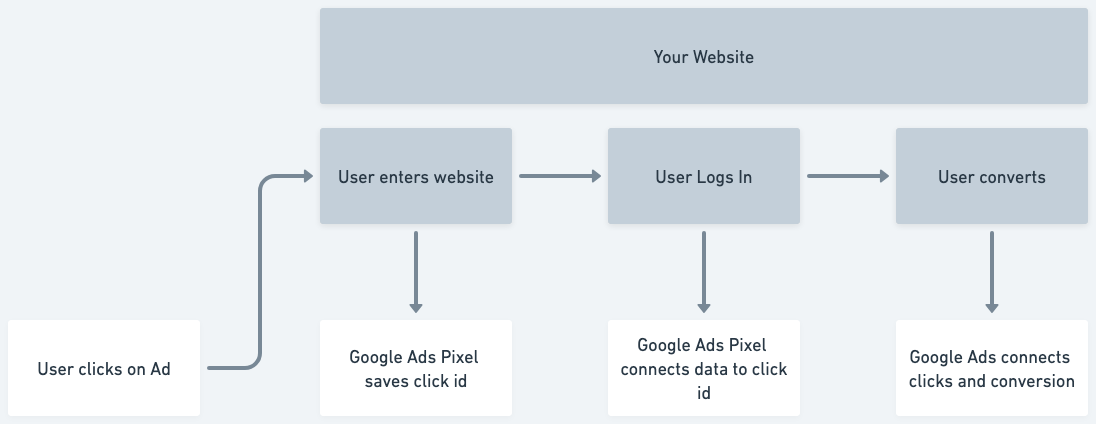
Google Ads conversion tracking faces major accuracy losses from privacy changes and cross-device journeys. This guide provides actionable solutions: essential gtag.js setup, strategic conversion values for tROAS optimization, and enhanced conversions using encrypted customer data to recover lost attribution. Includes implementation checklists and real-world examples. Companies building proper tracking now gain decisive advantages as AI-driven campaigns rely increasingly on accurate conversion data for automated bidding success.

Author: Hackernoon