Oracle

Oracles are essential infrastructure components that feed real-time, off-chain data (such as price feeds, weather, or sports results) into blockchain smart contracts. Without decentralized oracles like Chainlink and Pyth, DeFi could not function. In 2026, oracles have evolved to support verifiable randomness and cross-chain data synchronization. This tag covers the technical evolution of data availability, tamper-proof price feeds, and the critical role oracles play in ensuring the deterministic execution of complex decentralized applications.

5131 Articles
Created: 2026/02/02 18:52
Updated: 2026/02/02 18:52
XRP Uncertainty: Is XRP Still Worth Holding

XRP Uncertainty: Is XRP Still Worth Holding

Crypto rivalries often get noisy, and in the past few weeks, XRP has again become the target of sharp criticisms.  Particularly, Chainlink and Litecoin proponents have renewed attacks on XRP, questioning whether XRP still has a place in the future of digital assets. However, despite the chatter, XRP continues to show strength through its performance with rebuttals from within its community. Chainlink's Growing Institutional Appeal Leads to XRP Criticisms Notably, Chainlink's growing institutional presence has been a major point. Having secured partnerships with SWIFT, Mastercard, and others, Chainlink has built a reputation as the go-to provider of oracle services for decentralized finance and tokenized markets.  As a result, Chainlink community figures have recently claimed that these moves put LINK ahead of XRP as the "banking coin" for major institutions. Interestingly, Chainlink's new deal with the U.S. Department of Commerce provided another reason for these commentaries. Notably, the partnership will bring major economic data to different blockchains, but the XRP Ledger was not included.  This led to some critics suggesting the government snubbed XRPL due to a lack of trust. However, XRP proponents have pushed back. XRP Proponents Push Back For instance, dUNL validator Vet explained that the issue surrounding XRPL's snob was due to infrastructure. According to Vet, the government leveraged Chainlink and Pyth, and since neither of them has yet to support XRPL, the network wasn't part of the rollout. He argued that the decision had nothing to do with bias. Meanwhile, in another commentary, some Chainlink advocates claimed these recent developments had enlightened investors, leading to a rotation of capital from XRP to LINK. Nonetheless, attorney Bill Morgan dismissed these claims with chart data. He pointed to trading data that shows XRP holding its ground against LINK and reminded critics that XRP has delivered stronger gains this year.  Also, former Ripple developer Matt Hamilton stressed that both communities should recognize that XRP and LINK serve very different purposes. Specifically, XRP drives payments and settlement, while LINK primarily powers oracles. These are two roles that don't cancel each other out. https://twitter.com/HammerToe/status/1958533970372571385 Litecoin Fuels the XRP Attacks Meanwhile, Litecoin also joined the campaign when its official account mocked XRP's adoption story, comparing it to the foul smell of a comet. The post led to backlash from XRP's community. In his response, attorney Morgan compared XRP's current market ranking and rising market cap with Litecoin's steady decline. He also noted that XRP plays a role in major policy conversations, including at a White House crypto roundtable, while Litecoin has largely faded from relevance. Other community voices also stepped up. For one, Digital Asset Investor brushed off claims that XRP holders were leaving for Chainlink. He called the idea nothing more than a fear campaign designed to create doubt. Multiple XRP community figures share this view, arguing that the project continues to attract unfair criticism that doesn't match its actual track record. Subtle Jab from SWIFT CIO Even outside these community skirmishes, XRP faced shots from industry leaders. Notably, SWIFT's Chief Innovation Officer, Tom Zschach, recently took a subtle jab at Ripple and XRP, arguing that surviving lawsuits does not prove resilience. He said real adoption depends on trust and shared governance, not legal battles.  In response, Osama E., Agile Lead at Sharkforce Consulting, argued that XRP's years of legal scrutiny have actually strengthened its position. He said the network has proven itself more than most other blockchains and now stands out as one of the most battle-tested systems in the industry. Despite all the drama, XRP has kept its momentum. Notably, it stands out as one of the biggest gainers in the past year, up 403% within this period despite the recent drop to $2.82. This outpaces the growth from LINK (+111%) and LTC (+71%) in the same timeframe.

Author: The Crypto Basic
What Is DeFi? Inside MakerDAO, DAI, and the Future of Finance

What Is DeFi? Inside MakerDAO, DAI, and the Future of Finance

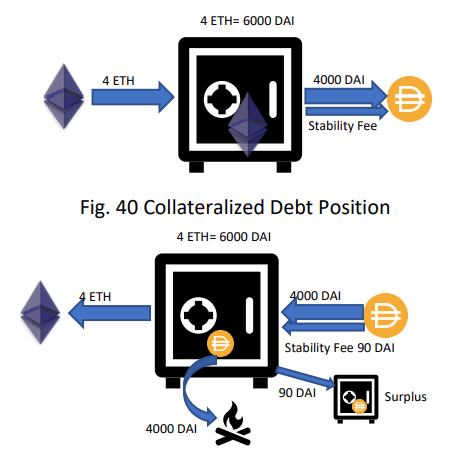
Decentralized Finance (DeFi) is transforming financial intermediation by replacing banks with smart contracts. Platforms like MakerDAO issue DAI, a stablecoin pegged to the US dollar, through overcollateralized crypto loans, governed by MKR token holders. This ecosystem enables lending, savings, and passive income without intermediaries, but also raises challenges for regulation, taxation, and financial stability. MakerDAO’s mechanisms—collateralized debt positions, governance votes, auctions, and external actors like oracles and keepers—keep the system running. Together with platforms like Uniswap, DeFi illustrates both the promise of financial innovation and the complexity of decentralized governance.

Author: Hackernoon
Curve launches FXSwap: on-chain forex aims for tighter spreads and deep liquidity

Curve launches FXSwap: on-chain forex aims for tighter spreads and deep liquidity

Curve has introduced FXSwap, an AMM model that combines concentrated liquidity and external refuel for on‑chain forex.

Author: The Cryptonomist
Trump is hosting a private policy dinner with two dozen tech leaders

Trump is hosting a private policy dinner with two dozen tech leaders

Trump is calling the shots again, and this time he’s doing it from the White House’s freshly upgraded Rose Garden, where he’ll host a closed-door dinner on Thursday night with two dozen top tech and business executives. The high-level gathering will follow a separate event on artificial intelligence hosted earlier in the day by First […]

Author: Cryptopolitan
Chainlink Partners With PublicAI as LINK Price Targets $47 Breakout Move

Chainlink Partners With PublicAI as LINK Price Targets $47 Breakout Move

Chainlink (LINK) has partnered with PublicAI as part of its BUILD program for AI-powered prediction markets and reputation systems. PublicAI’s Data Hub includes over 2.9 million verified contributors. Analysts note that LINK is holding support at $23, with resistance expected around $31. At the time of writing, LINK is trading at $23.75 with a 24-hour […]

Author: Tronweekly
Ark Invest: The Birth of a DeFi Super App

Ark Invest: The Birth of a DeFi Super App

By Lorenzo Valente As the crypto market matures, investors are looking for clues from past tech booms to predict the next big trend or inflection point. Historically, digital assets have been difficult to compare to previous technology cycles, making it difficult for users, developers, and investors to predict their long-term trajectory. This dynamic is changing. According to our research, the “application layer” in the crypto space is evolving, much like the unbundling and rebundling cycles experienced by SaaS (Software as a Service) and FinTech platforms. In this article, I’ll describe how the unbundling and rebundling cycle seen in SaaS and Fintech plays out in DeFi (decentralized finance) and crypto applications. The pattern evolves as follows: The concept of "Composability" is key to understanding the unbundling and rebundling cycle. This is an analytical term used in the fintech and crypto communities to refer to the ability of financial or decentralized applications and services—particularly at the application layer—to seamlessly interact, integrate, and build upon each other like Lego blocks. With this concept at the core, we describe the shift in product structure in the following two subsections. From Verticalization to Modularization: The Great Unbundling In 2010, Spark Capital’s Andrew Parker published a blog post outlining how dozens of startups were capitalizing on the unbundling opportunity presented by Craigslist, the then-horizontal internet marketplace offering everything from apartments and gig work to merchandise sales, as shown in the image below. Source: Parker 2010. For illustrative purposes only and should not be considered investment advice or a recommendation to buy, sell, or hold any specific security. Parker concludes that many successful companies—Airbnb, Uber, GitHub, Lyft—started by focusing on and verticalizing a small part of Craigslist's broad functionality and dramatically improving it. This trend ushered in the first major phase of "marketplace unbundling," during which Craigslist's fully bundled, multi-purpose marketplace gave way to single-purpose apps. The newcomers didn't just improve Craigslist's user experience (UX)—they redefined it. In other words, unbundling broke a broad-based platform into narrowly defined, autonomous verticals, disrupting Craigslist by serving users in unique ways. What made that wave of unbundling possible? Fundamental shifts in technology infrastructure, including advances in APIs (application programming interfaces), cloud computing, mobile user experiences, and embedded payments, lowered the barrier to entry for building focused applications with world-class user experiences. The same unbundling is also evolving in the banking industry. For decades, banks have offered a bundled set of financial services—everything from savings and loans to insurance—under a single brand and app. However, over the past decade, fintech startups have been precisely dismantling this bundle, each focusing on a specific vertical. Traditional banking bundles include: Payments and Remittances Checking and savings accounts Interest-bearing products Budgeting and financial planning Loans and Credit Investment and wealth management Insurance Credit and debit cards Over the past decade, the banking bundle has systematically unbundled into a series of venture-backed fintech companies, many of which are now unicorns, decacorns, or near-centacorns: Payments and remittances: PayPal, Venmo, Revolut, Stripe Bank accounts: Chime, N26, Monzo, SoFi Savings and Earnings: Marcus, Ally Bank Personal finance and budgeting: Mint, Truebill, Plum Loans and credit: Klarna, Upstart, Cash App, Affirm Investing and Wealth Management: Robinhood, eToro, Coinbase Insurance: Lemonade, Root, Hippo Card and expense management: Brex, Ramp, Marqeta Each company focuses on a service it can hone and deliver better than the incumbent, combining its skill set with new technology levers and distribution models to offer growth-oriented niche financial services in a modular manner. In both SaaS and FinTech, unbundling is not only disrupting incumbents but also creating entirely new categories, ultimately expanding the total addressable market (TAM). From modularity back to bundling: The Great Rebundling Airbnb recently launched its new Services & Experiences app and redesigned it to allow users to not only book accommodations but also explore and purchase add-on services such as museum visits, food tours, dining experiences, gallery walks, fitness classes, and beauty treatments. Airbnb, once a peer-to-peer accommodations marketplace, is evolving into a vacation superapp—rebundling travel, lifestyle, and local services into a single, cohesive platform. Furthermore, over the past two years, the company has expanded its product offerings beyond home rentals and is now integrating payments, travel insurance, local guides, concierge-style tools, and curated experiences into its core booking service. Robinhood is undergoing a similar transformation. The company, which disrupted the brokerage industry with commission-free stock trading, is now aggressively expanding into a full-stack financial platform and is re-bundling many of the verticals previously unbundled by fintech startups. Over the past two years, Robinhood has: Launch of payment and cash management features (Robinhood Cash Card) Increase cryptocurrency trading Launch of retirement accounts Launch of margin investing and credit cards Acquired Pluto, an AI-powered research and wealth advisory platform The moves suggest that Robinhood, like Airbnb, is bundling together previously fragmented services to build a comprehensive financial super app. By controlling more of the financial stack—savings, investing, payments, lending, and advice—Robinhood is reinventing itself from a brokerage to a full-service consumer finance platform. Our research shows that this unbundling and rebundling dynamic is impacting the crypto industry. In the remainder of this article, we provide two case studies: Uniswap and Aave. DeFi’s Unbundling and Rebundling Cycle: Two Case Studies Case Study 1: Uniswap — From Monolithic AMM to Liquidity Lego and Back to a Trading Super App In 2018, Uniswap launched on Ethereum as a simple yet revolutionary automated market maker (AMM). In its early stages, Uniswap was a vertically integrated application: a small smart contract codebase with an official frontend hosted by its team. The core AMM functionality—swapping ERC-20 tokens in a constant product pool—existed within a single on-chain protocol. Users primarily accessed it through Uniswap's own web interface. This design proved highly successful, with Uniswap's cumulative on-chain trading volume exploding to over $1.5 trillion by mid-2023. With its tightly controlled technology stack, Uniswap provided a smooth user experience for token swaps, which guided the development of DeFi in its early days. At the time, Uniswap v1/v2 implemented all trading logic on-chain, requiring no external price oracles or off-chain order books. The protocol internally determined prices within a closed system, using its liquidity pool reserves (the x*y=k formula). The Uniswap team developed the primary user interface (app.uniswap.org) to interact directly with the Uniswap contracts. Early on, most users accessed Uniswap through this dedicated front-end, similar to a proprietary exchange portal. Beyond Ethereum itself, Uniswap does not rely on any other infrastructure. Liquidity providers and traders interact directly with Uniswap contracts, with no built-in external data feeds or plugin hooks. The system was simple but isolated. As DeFi expanded, Uniswap evolved into a composable liquidity "Lego" rather than a standalone application. The protocol's open, permissionless nature meant other projects could integrate Uniswap's pools and add layers. Uniswap Labs gradually relinquished control over parts of the stack, allowing external infrastructure and community-built features to play a greater role: Decentralized Exchange (DEX) Aggregators and Wallet Integrations: The majority of Uniswap's trading volume began flowing through external aggregators like the 0x API and 1inch, rather than through Uniswap's own interface. By the end of 2022, an estimated 85% of Uniswap's swap volume was routed through aggregators like 1inch as users sought the best prices across multiple exchanges. Wallets like MetaMask also integrated Uniswap liquidity into their swap functionality, allowing users to trade on Uniswap from their wallet applications. This external routing reduced reliance on Uniswap's native frontend and made AMMs more like a plug-and-play module in the DeFi stack. Oracles and Data Indexers: While Uniswap's contracts did not and still do not require price oracles to trade, the broader ecosystem built around Uniswap does. Other protocols use Uniswap's pool prices as on-chain oracles, and the Uniswap interface itself relies on external indexing services. For example, Uniswap's frontend uses subgraphs from The Graph to query pool data off-chain for a smoother user interface (UI) experience. Rather than building its own indexing nodes, Uniswap leverages community-driven data infrastructure—a modular approach that offloads the heavy lifting of data queries to specialized indexers. Multi-chain Deployment: During its modularization phase, Uniswap expanded beyond Ethereum to numerous blockchains and Rollups, including Polygon, Arbitrum, BSC, and Optimism. Uniswap's governance mandated the deployment of its core protocol on these networks, effectively treating each blockchain as a base-layer plugin for Uniswap's liquidity. This multi-chain strategy emphasizes Uniswap's composability: the protocol can exist on any Ethereum Virtual Machine (EVM)-compatible chain, rather than tying its fate to a single, vertically integrated environment. Recently, Uniswap has been moving back towards vertical integration, seemingly with the goal of capturing more of the user journey and optimizing the stack for its use cases. Key reintegration developments include: Native Mobile Wallet: In 2023, Uniswap released the Uniswap Wallet—a self-hosted mobile application—followed by a browser extension, allowing users to store tokens and interact directly with Uniswap products. The launch of the wallet was a significant step toward controlling the user interface layer, rather than ceding it to wallets like MetaMask. With its own wallet, Uniswap now vertically integrated user access, ensuring that swaps, browsing non-fungible tokens (NFTs), and other activities occurred within an environment it controlled and could potentially be routed to Uniswap liquidity. Integrated Aggregation (Uniswap X): Instead of relying on third-party aggregators to find the best prices, Uniswap also introduced Uniswap X, a built-in aggregation and trade execution layer. Using an open network of off-chain "fillers," Uniswap X sources liquidity from various AMMs and private market makers, then settles trades on-chain. As a result, Uniswap has transformed its interface into a one-stop trading portal that aggregates liquidity sources for the benefit of users—similar to the services provided by 1inch or Paraswap. By running its own aggregator protocol, Uniswap Labs has reintegrated this functionality, keeping users in-house while guaranteeing the best prices. Importantly, Uniswap X is integrated into the Uniswap web app itself—and potentially into the wallet in the future—so users no longer need to leave Uniswap for the aggregator. Application-Specific Chain (Unichain): In 2024, Uniswap announced its own Layer 2 blockchain—dubbed "Unichain"—as part of the Optimism Superchain. Taking vertical integration to the infrastructure level, Unichain is a custom rollup tailored for Uniswap and DeFi trading, aiming to reduce Uniswap user fees by approximately 95% and latency to approximately 250 milliseconds. Uniswap will control the blockchain environment in which its contracts operate, rather than operating as an application on another chain. By operating Unichain, Uniswap will be able to optimize everything from gas costs to maximum extractable value (MEV) mitigation for its exchange and introduce native protocol fee sharing with UNI holders. This full-circle transformation transforms Uniswap from an Ethereum-dependent decentralized application (dApp) to a vertically integrated platform with a proprietary UI, execution layer, and dedicated blockchain. Case Study 2: Aave — From P2P Lending Market to Multi-Chain Deployment and Back to a Credit Super App Aave's origins can be traced back to ETHLend in 2017, a self-contained lending application that gave way to a decentralized peer-to-peer lending marketplace, renamed Aave, in 2018. The team developed smart contracts for lending and provided an official web interface for user participation. During this phase, ETHLEND/Aave matched lenders and borrowers using an order book approach and handled everything from interest rate logic to loan matching. As it evolved toward a pooled lending model similar to Compound, Aave underwent vertical integration. The Aave v1 and v2 contracts on Ethereum incorporated innovations like flash loans—an in-protocol feature that allows for uncollateralized borrowing with repayments in the same transaction—as well as interest rate algorithms. Users primarily accessed the protocol through the Aave web dashboard. The protocol managed key functions, such as interest accrual and liquidations, internally, with minimal reliance on third-party services. In short, Aave's early design was a monolithic money market: a dApp with its own UI that handled deposits, loans, and liquidations in a single location. Aave is part of the broader DeFi symbiosis, integrating MakerDAO's DAI stablecoin as a key collateral and lending asset from the outset. In fact, in its incarnation as ETHLend, Aave launched simultaneously with Maker and immediately supported DAI, reflecting the tight coupling between those vertically integrated pioneers and demonstrating early on that no protocol is an island. Even in its "vertical" phase, Aave benefited from the product of another protocol—its stablecoin—to operate. As DeFi has grown, Aave has unbundled and adopted a modular architecture, outsourcing parts of its infrastructure and encouraging others to build on its platform. Several shifts illustrate Aave’s move toward composability and external dependencies: External Oracle Network: Rather than operating its own price feeds, Aave uses Chainlink's decentralized oracles to provide reliable asset prices for collateral valuation. Price oracles are crucial to any lending protocol, as they determine when loans become undercollateralized. Aave governance has selected Chainlink Price Feeds as the primary oracle source for most assets on aave.com, outsourcing pricing infrastructure to a specialized third-party network. While this modular approach improves security—for example, Chainlink aggregates many data sources—it also means Aave's stability relies on external services. Wallet and App Integration: Aave's lending pools have become the building blocks for numerous other dApp integrations. Portfolio managers and dashboards like Zapper and Zerion, DeFi automation tools like DeFi Saver, and yield optimizers all access Aave's contracts through its open software development kit (SDK). Users can deposit or borrow through third-party frontends that interface with Aave, but the official Aave interface is just one of many access points. Even DEX aggregators indirectly leverage Aave's flash loans for complex, multi-step trades executed by services like 1inch. By open-sourcing its design, Aave allows for composability: other protocols can integrate Aave's functionality—for example, using Aave flash loans within a Uniswap arbitrage bot—all coordinated by external aggregators. As a liquidity module rather than a standalone application, its composability expands Aave's influence in the DeFi ecosystem. Multi-chain deployment and isolated models: Similar to Uniswap, Aave is deployed on multiple networks—such as Polygon, Avalanche, Arbitrum, and Optimism—essentially cross-chain modularity. Aave v3 introduced features such as isolated markets for certain assets—architectural modularity—creating different risk parameters for each market, sometimes operating separately from the main pool. It also introduced permissioned variants, such as "Aave Arc" for Know Your Customer (KYC) institutions, which are conceptually independent "module instances" of Aave. These examples demonstrate Aave's flexibility to operate in a variety of environments, not just one integrated one. During this unbundling phase, Aave relies on a broader infrastructure stack: Chainlink oracles for data, The Graph for indexing, wallets and dashboards for user access, and tokens from other protocols—like Maker's DAI or Lido's staked ETH—as collateral. This modular approach increases Aave's composability and reduces the need to "reinvent the wheel." The tradeoff is a partial loss of control over those parts of the stack, and the risks associated with relying on external services. Lately, Aave has shown signs of returning to vertical integration by developing in-house versions of key components that it previously relied on others. For example, in 2023, Aave launched its own stablecoin, GHO. Historically, Aave has facilitated lending and borrowing of various assets, notably MakerDAO’s DAI stablecoin, which has scaled significantly on Aave. With GHO, Aave now has a native stablecoin on its platform that acts as a distribution channel for other protocol stablecoins. Like DAI, GHO is an overcollateralized, decentralized, USD-pegged stablecoin. Users can mint GHO with their deposits on Aave V3, which allows Aave to acquire a previously outsourced vertical part of the lending stack—stablecoin issuance. Therefore: Aave is an issuer of a stablecoin—not just a lending venue for existing stablecoins—and directly controls the parameters and revenue of the stablecoin. GHO is a competitor to DAI, so now Aave can recycle interest payments into its own ecosystem. GHO interest can benefit AAVE token stakers rather than indirectly increasing MakerDAO fees. The introduction of GHO also requires dedicated infrastructure. Aave has facilitators—including the main Aave pool—that can mint and burn GHO and set governance policies. By controlling this new layer of functionality, Aave has built an internal version of the MakerDAO product to serve its own community. In another notable move, Aave is leveraging Chainlink's Smart Value Routing (SVR), or a similar mechanism, to recapture MEV (maximum extractable value, similar to payment for order flow in stocks) for Aave users. Tighter coupling with the oracle layer to redirect arbitrage profits back into the protocol is blurring the line between the Aave platform and the underlying blockchain mechanisms. This move suggests Aave's interest in customizing even lower-level infrastructure, such as oracle behavior and MEV capture, for its own benefit. While Aave hasn't yet launched its own wallet or chain like Uniswap and others, its founder's other ventures suggest his goal is to build a self-sustaining ecosystem. For example, the Lens Protocol, a social network, could be integrated with Aave for social reputation-based finance. Architecturally, Aave is moving towards providing all key financial primitives: lending, stablecoins (GHO), and potentially decentralized social identity (Lens), rather than relying on external protocols. In my opinion, this product strategy is about deepening the platform: with stablecoins, lending, and other services, Aave's user retention and protocol revenue should benefit. In short, Aave has evolved from a closed-loop lending dApp to an open lego that connects to DeFi and relies on others such as Chainlink and Maker, and is now returning to a more expansive vertically integrated financial suite. In particular, the launch of GHO emphasizes Aave's intention to reintegrate the stablecoin layer it once outsourced to MakerDAO. Our research suggests that the journeys of Uniswap, Aave, MakerDAO, Jito, and other protocols illustrate broader cyclical patterns in the crypto industry. In the early days, vertical integration—building a single, monolithic product with a very specific purpose—was necessary to pioneer new features like automated trading, decentralized lending, stablecoins, or MEV capture. These self-contained designs allowed for rapid iteration and quality control in emerging markets. As the space matured, modularity and composability became priorities: protocols unbundled portions of their stack to launch new features or provide more value to external stakeholders, becoming "money Legos" by leveraging the strengths of other protocols. However, the success of modularity and composability has brought new challenges. Relying on external modules introduces dependency risk and limits the ability to capture value created elsewhere within the protocol. Now, the largest players and protocols with strong product-market fit (PMF) and revenue streams are shifting their strategies back toward vertical integration. While not abandoning decentralization or composability, these projects are reintegrating key components for strategic reasons: launching their own chains, wallets, stablecoins, frontends, and other infrastructure. Their goal is to provide a more seamless user experience, capture additional revenue streams, and protect against dependency on competitors. Uniswap is building a wallet and chain, Aave is issuing GHO, MakerDAO is forking Solana to build NewChain, and Jito is merging staking/re-staking with MEV. We believe that any sufficiently large DeFi application will eventually seek its own vertically integrated solution. in conclusion History doesn't repeat itself, but it does rhyme. The crypto world is humming a familiar tune. Much like the SaaS and marketplace revolutions of the past decade, DeFi and application-layer protocols are focusing on new technical primitives, evolving user expectations, and a desire for greater value capture, all while moving along a trajectory of unbundling and rebundling. In the 2010s, startups specializing in niche segments of the massive Craigslist marketplace effectively atomized it into distinct companies. This unbundling gave rise to giants—Airbnb, Uber, Robinhood, Coinbase—all of which have since embarked on their own rebundling journeys, integrating new verticals and services into cohesive, sticky platforms. The crypto space is following the same path at a revolutionary pace. What started as strictly scoped vertical experiments—Uniswap as an AMM, Aave as a money market, Maker as a stablecoin treasury—became modularized into permissionless Lego blocks, opening up liquidity, outsourcing key functions, and allowing composability to flourish. Now that usage has scaled, the market is fragmenting, and the pendulum is starting to swing back. Today, Uniswap is becoming a trading super-app with its own wallet, chain, cross-chain standards, and routing logic. Aave is issuing its own stablecoin, bundling lending, governance, and credit primitives. Maker is building an entirely new chain to improve the governance of its currency ecosystem. Jito unifies staking, MEV, and validator logic into a full-stack protocol. Hyperliquid merges exchanges, L1 infrastructure, and the EVM into a seamless on-chain financial operating system (OS). In crypto, primitives are unbundled by design, but the best user experiences — and the most defensible businesses — are increasingly rebundled. This isn’t a betrayal of composability, but an implementation of it: build the best possible Lego brick and use it to build the best possible castle. DeFi is compressing the entire cycle into just a few years. How? DeFi operates in a completely different way: Permissionless infrastructure reduces the friction of experimentation: any developer can fork, copy, or extend an existing protocol in hours rather than months. Capital formation is instant — With tokens, teams can fund new projects, ideas, or incentives faster than ever before. Liquidity is highly liquid. Total value locked (TVL) moves at an incentivized pace, making it easier for new experiments to gain traction and successful experiments to scale exponentially. Larger addressable market size. Protocols have access to a global, permissionless pool of users and capital from day one, typically achieving scale faster than their Web2 counterparts that are limited by geography, regulation, or distribution channels. DeFi’s super apps are rapidly expanding in real time. We believe the winners won’t be the protocols with the most modular stack, but rather those that know exactly which parts of the stack to own, which to share, and when to switch between the two.

Author: PANews
From Wisdom of Crowds to Manipulation Risks

From Wisdom of Crowds to Manipulation Risks

The post From Wisdom of Crowds to Manipulation Risks appeared on BitcoinEthereumNews.com. Prediction markets are rising strongly, from the hundreds of millions of dollars raised by Kalshi and Polymarket to their growing applications across crypto and traditional finance.  Considered a new asset class, prediction markets promise to change how people consume information — instead of reading headlines, they will look at odds to assess probabilities. Behind this enormous potential, however, lie the risks of regulation, manipulation, and herd behavior, forcing investors to remain cautious in the face of this “data wave.” When Prediction Markets Become “An Asset Class” Prediction markets are emerging as forecasting tools and a new asset class within the crypto ecosystem. Platforms and venture funds are beginning to bet on commoditizing information and probabilities. Sponsored Sponsored This has triggered a “prediction market war,” with massive fundraising rounds, backing from top venture capital firms, and expansion into new use cases — all fueling competition. It shows how the market is shifting from “news” to “odds” as a source of value. Comparison between Polymarket & Kalshi platforms. Source: Delphi Digital Investors increasingly view prediction markets as a strategic asset class, not just entertainment or research products. While this competition accelerates innovation, it also introduces systemic risks if the business models are not yet sustainable. Many community members call this the “next big wave” of the current cycle. They argue that the next generation of users won’t read headlines anymore but will “check the odds.” In theory, prediction markets work well because they aggregate scattered information from many participants and turn it into a number representing collective wisdom — sometimes even more accurate than expert forecasts. This explains why protocols and projects focused on prediction highlight the “wisdom of crowds” advantage in pricing event probabilities. On the other hand, this advantage only materializes when the market has enough liquidity, transparency, and protection…

Author: BitcoinEthereumNews
Presale Momentum Builds: BullZilla Ranks Among the Top Cryptos to Buy Now as Bonk Surges and LINK Expands DeFi Reach

Presale Momentum Builds: BullZilla Ranks Among the Top Cryptos to Buy Now as Bonk Surges and LINK Expands DeFi Reach

The competition for the top cryptos to buy now is intensifying in 2025. Markets are no longer driven by hype […] The post Presale Momentum Builds: BullZilla Ranks Among the Top Cryptos to Buy Now as Bonk Surges and LINK Expands DeFi Reach appeared first on Coindoo.

Author: Coindoo
Unified security layers may accelerate institutional crypto adoption

Unified security layers may accelerate institutional crypto adoption

The post Unified security layers may accelerate institutional crypto adoption appeared on BitcoinEthereumNews.com. Shared security protocols are positioning themselves as solutions to infrastructure challenges that have complicated institutional blockchain adoption due to unified security layers’ potential ability to reduce development costs and technical barriers for enterprises. According to Symbiotic CEO Misha Putiatin, the shared security model allows organizations to leverage existing blockchain security infrastructure rather than building custom systems. Shared security consists of a unified layer where users stake assets, and multiple applications can build upon that security-focused infrastructure. This structure enables institutions to address development timelines and allocate resources effectively. In an interview with CryptoSlate, Putiatin described the value proposition as immediate scalability through reusable security primitives. Organizations can utilize existing operator sets and benefit from established infrastructure rather than developing systems independently over multiple years. Multi-chain infrastructure challenges Traditional cross-chain verification has presented enterprises with limited options, each carrying distinct trade-offs. Trusted messenger systems require allowlisting specific authorities and relying on off-chain agreements, while light client implementations demand extensive development resources and ongoing maintenance. Shared security protocols aim to provide a middle ground by enabling the verification of consensus results across multiple blockchain ecosystems. For example, users can stake Ethereum (ETH) on Symbiotic, and institutions developing applications on Solana can utilize this validation power. Although the execution architecture is different, the security layer is the same, simplifying validation processes. This approach could support various enterprise applications, including liquidity protocols, cross-chain bridges, and oracle systems, without requiring separate verification infrastructure for each blockchain. The Crypto Investor Blueprint: A 5-Day Course On Bagholding, Insider Front-Runs, and Missing Alpha Nice 😎 Your first lesson is on the way. Please add [email protected] to your email whitelist. The unified model creates native connectivity between supported blockchains, potentially simplifying multi-chain deployment for institutions exploring blockchain integration strategies. Centralization and control considerations Shared security implementations face scrutiny regarding centralization risks,…

Author: BitcoinEthereumNews
Zero Fees + 500x Leverage: Understanding Avantis, the Largest Derivatives Exchange on Base

Zero Fees + 500x Leverage: Understanding Avantis, the Largest Derivatives Exchange on Base

Source: Alea Research Daily Newsletter Compiled by: Zhou, ChainCatcher Synthetic derivatives, decentralized oracles, and composable liquidity protocols enable traders to access everything from Bitcoin and ETH to gold and FX using stablecoin collateral. Since Avantis launched on the mainnet in February 2024, it has become the largest derivatives exchange on Base and the largest DEX in the RWA trading and market making field. The protocol has processed over $18 billion in cumulative trading volume and executed over 2 million trades for over 38,500 traders. With $23 million in TVL across 25,000+ LPs and over 80 markets, Avantis is solidifying its position as a hub for perps. This article will explore Universal Leverage, Avantis's architecture, and the launch of $AVNT. About Avantis Avantis is a perps DEX that allows users to trade cryptocurrencies, forex, commodities, and indices using stablecoin collateral. The protocol abstracts away individual order books and instead builds a “universal leverage layer” where any asset with a reliable price feed can be listed. Synthetic leverage is achieved through a USDC-based liquidity vault that acts as the counterparty for all trades, enabling capital-efficient exposure to multiple markets. Traders can choose up to 500x leverage, allowing them to express directional views with minimal capital, while liquidity providers (LPs) earn a yield by providing USDC to support their positions. Avantis distinguishes itself from other perpetual swap exchanges in that users can trade non-crypto markets like the Japanese Yen, gold, and US stock indices alongside BTC or ETH. The protocol's design also supports features like zero trading fees, loss rebates, and positive slippage, aligning incentives between traders and limited partners by returning a portion of fees or profits to users when they improve the protocol's risk profile. Avantis Architecture At its core, Avantis is a capital-efficient synthetic engine. Traders use the protocol's interface to open positions on supported assets. Instead of matching orders in an order book, Avantis pairs each trader with a USDC vault that takes the other side of the trade. This vault aggregates deposits from thousands of limited partners and acts as a single counterparty. This structure allows the protocol to offer deep liquidity across many markets without requiring separate liquidity pools for each pair, enabling Avantis to list over 80 markets, including 22 RWA assets. Avantis introduces risk tranches and time-lock parameters so that LPs can choose their preferred exposure. LPs can passively deposit in the senior tranche or take more risk in the junior tranche, which has higher return potential but also absorbs a greater share of losses. Additionally, LPs can choose a time lock (e.g., 30 or 90 days) to control the duration of their capital commitment, with longer locks incurring more fees. This design mimics the centralized liquidity model of Uniswap v3 while applying it to the risk management of perps exchanges. Trader <> LP Alignment Avantis' innovative mechanism further aligns the interests of traders and LPs. Loss Rebates: Traders who take the opposite side of open interest (helping balance the platform’s long/short skew) can receive up to 20% loss rebates. This encourages traders to arbitrage open interest and stabilize LP exposure. Positive Slippage: When a trader's order reduces the vault's risk (e.g., closing out a heavily long position), Avantis offers an entry price above the Mark Price. This "better-than-market" execution rewards traders for helping to balance flows. Zero Trading Fees: Avantis pioneered a product where traders pay no fees to open, close, or borrow positions. Instead, they pay only a portion of their profits when closing a winning trade. Available for $BTC, $SOL, and $ETH, with leverage up to 250x, this tool is popular with scalpers and high-frequency traders. Advanced Risk Management: LPs can act as passive lenders or active market makers by selecting risk tranches and time locks. Each tranche has its own share of fees and potential losses, enabling LPs to control risk and return. $AVNT: Token Issuance and Token Economics To facilitate its next phase of growth, Avantis has launched $AVNT, a utility and governance token. $AVNT has multiple functions: Security and Staking: Holders can stake $AVNT in the Avantis Security Module to support the USDC vault during periods of extreme market volatility. Stakers receive $AVNT rewards and discounted trading fees. Community Rewards: 50.1% of the total 1 billion token supply is reserved for traders, liquidity providers, referrers, and builders who contribute to Avantis. Airdrops (12.5% of the supply) will reward protocol activity starting in February 2024, while on-chain incentives (28.6%) will fund future XP seasons and community contributions. Builder and ecosystem grants (9%) will support the creation of new front-ends and trading tools, such as AI agents and Telegram bots. Governance: Token holders will be able to propose and vote on protocol decisions, ranging from asset listings and fee structures to buyback programs and cross-chain deployments. The remaining 49.9% of the supply is distributed as follows: Team (13.3%) Investors (26.61%) Avantis Foundation (4%) Liquidity reserve (6%)

Author: PANews