Dapp

Dapps are digital applications that run on a P2P network of computers rather than a single server, typically utilizing smart contracts to ensure transparency and uptime. In 2026, Dapps have achieved mass-market appeal through Account Abstraction, allowing for a "Web2-like" user experience with the security of Web3. This tag covers the entire ecosystem of decentralized software—from social media and productivity tools to governance platforms and identity management.

4935 Articles
Created: 2026/02/02 18:52
Updated: 2026/02/02 18:52
Jupiter Lend readies for public beta launch this week

Jupiter Lend readies for public beta launch this week

The post Jupiter Lend readies for public beta launch this week appeared on BitcoinEthereumNews.com. This is a segment from the Lightspeed newsletter. To read full editions, subscribe. The Solana ecosystem revolves heavily around the aptly named Jupiter protocol, and for good reason. They’re an ambitious team trying to do damn near everything in DeFi. In 2021, Jupiter launched a DEX aggregator on Solana, the dominant venue today for routing order flows to DEXs and prop AMMs. Alongside the aggregator, Jupiter founder meow also launched Mercurial DEX, rebranded today as Meteora. A perps DEX followed in 2023, then a memecoin launchpad in 2024, and then a majority stake acquisition in the Moonshot memecoin trading platform earlier this year. There’s also the upcoming omnichain network “JupNet,” which plans to aggregate liquidity across chains.  But all eyes this week are on Jupiter Lend, the superapp’s first formal foray into the Lending vertical. Jupiter’s lending product is built on Fluid’s liquidity/risk engine. If you’ve never heard of Fluid, it’s a protocol that took the Ethereum world by storm over the past year. To see the promise of Jupiter Lend requires a baseline understanding of how Fluid actually works. It’s not the most straightforward product, but here’s the gist. Fluid (previously Instadapp) is an integrated application consisting of DEX, lending and borrowing. All three draw from a unified liquidity layer, which enables unique features that just aren’t possible on other DEXs or lending protocols. For instance, a borrower on Fluid can denominate their debt to serve as liquidity for Fluid DEX (what the team calls “smart debt”), rather than letting it sit idle as posted collateral. This, in effect, puts a borrower’s debt to “work.” As traders on the DEX side are paying fees to trade, that lets borrowers earn fees to reduce their debt. It’s somewhat unintuitive, for it inverts the logic of how we commonly think of…

Author: BitcoinEthereumNews
Users Can Connect to Uniswap, Aave, Opensea via Trezor Suite

Users Can Connect to Uniswap, Aave, Opensea via Trezor Suite

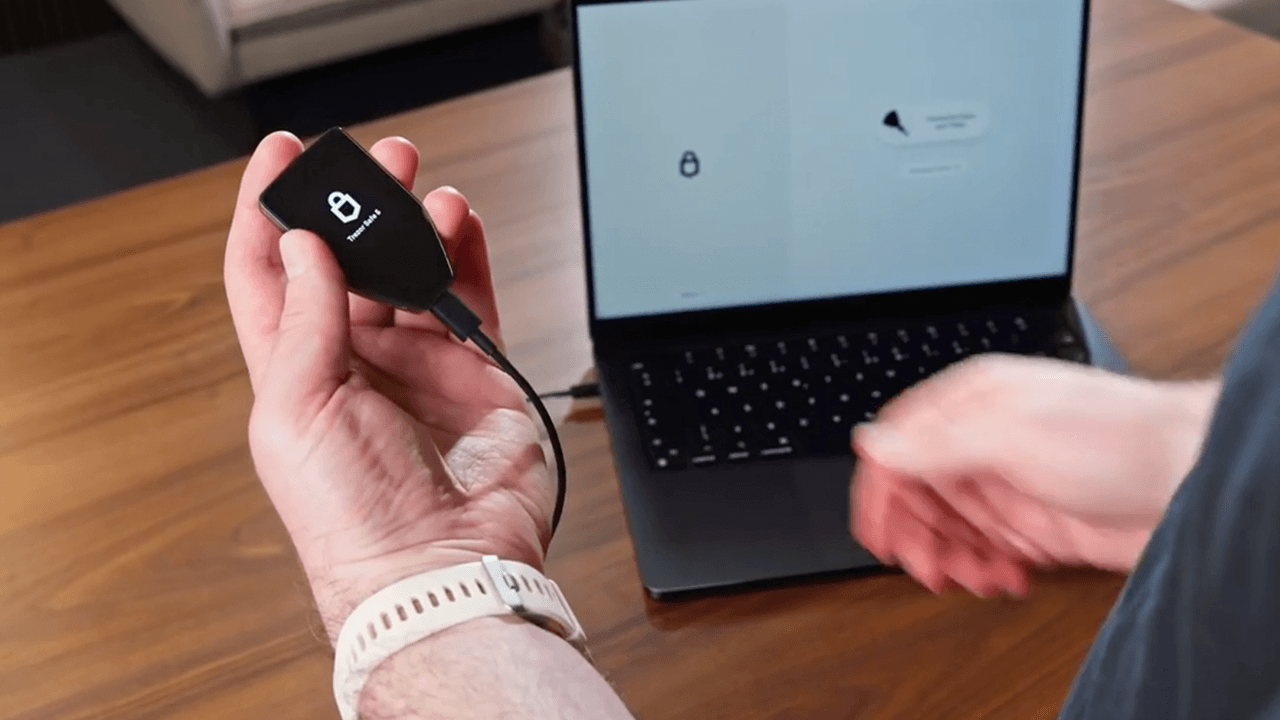
The post Users Can Connect to Uniswap, Aave, Opensea via Trezor Suite appeared on BitcoinEthereumNews.com. Trezor Suite now supports Walletconnect, enabling users to connect their hardware wallets securely to decentralized applications. The integration was announced by the company on Aug. 20. New Walletconnect Feature Lets Trezor Users Connect to Decentralized Applications Securely This feature allows Trezor users to interact directly with various decentralized applications (dApps) from the Trezor Suite interface. […] Source: https://news.bitcoin.com/users-can-connect-to-uniswap-aave-opensea-via-trezor-suite/

Author: BitcoinEthereumNews
Best Crypto to Buy Now to Turn $100 Into $10,000: 6 Top Picks

Best Crypto to Buy Now to Turn $100 Into $10,000: 6 Top Picks

Bitcoin Hyper, Sapien, Wall Street Pepe, Qtum, Best Wallet, and Seraph headline the best crypto to buy now, each with breakout potential to turn $100 into $10,000.

Author: Blockchainreporter
Flow records strongest quarter yet with DeFi growth: Messari report

Flow records strongest quarter yet with DeFi growth: Messari report

Flow's DeFi TVL rose 46.3% to $68 million, making Q2 its best quarter yet.

Author: Crypto.news
2025’s Biggest Letdown? Holders Hunt New Tokens to Recover Heavy Losses

2025’s Biggest Letdown? Holders Hunt New Tokens to Recover Heavy Losses

The post 2025’s Biggest Letdown? Holders Hunt New Tokens to Recover Heavy Losses appeared on BitcoinEthereumNews.com. Crypto News Pi Coin was once hailed as the “people’s crypto,” a project that promised accessibility and massive adoption without the usual technical barriers. Millions downloaded the app, mining coins on their phones with dreams of life-changing wealth. But by 2025, reality hit hard. With little utility, no open mainnet, and plummeting confidence, Pi Coin has become a painful lesson in overhype versus delivery. Now, attention is shifting toward tokens that actually do something. Enter Layer Brett (LBRETT), a meme-powered Layer 2 project built on speed, low fees, and real rewards. With gamified staking, NFT integrations, and a $1 million giveaway, LBRETT is capturing the attention of weary Pi Coin holders. Priced at just $0.0044 the entry level is super low. In this article, we’ll explore why Pi Coin collapsed under its own weight, and why projects like Layer Brett could represent the future of crypto utility. Pi Coin (PI): When hype becomes a heavy backpack Pi Coin was supposed to be the crypto revolution everyone could join from their phones. With 60 million users mining “free” tokens, expectations skyrocketed. But in 2025, the dream has soured. PI’s price has plunged 80% year-to-date, volume shrank from $140 million to just $43 million in August, and frustrated holders are left wondering where the promised open mainnet and ecosystem went. The delays haven’t helped. The open mainnet remains locked, while rumors of insider selling swirl. Pi Coin once promised 100 DApps and a $100 million developer fund, but both feel like ghost stories now. Instead of flourishing, the network looks stuck in quicksand. Still, Pi Coin isn’t totally out. With a $3.16 billion market cap and a surprise 154% rally, there’s a sliver of fight left. Yet compared to its scale of expectation, Pi Coin may just be 2025’s biggest letdown, proof…

Author: BitcoinEthereumNews
Crypto AI Agents: Automating the Future of Web3

Crypto AI Agents: Automating the Future of Web3

Crypto AI Agents: Automating the Future of Web3The swift fusion of artificial intelligence (AI) and blockchain technology has created a groundbreaking new era. Crypto AI Agents. These autonomous, intelligent entities are not just reshaping how transactions are executed but also redefining the very foundation of Web3 ecosystems. By integrating the decision-making capabilities of AI with the transparency and decentralization of blockchain, Crypto AI Agents represent a powerful innovation that promises to automate, optimize, and revolutionize everything from trading and asset management to governance and security.This blog dives deep into Crypto AI Agents, exploring their mechanics, applications, benefits, challenges, and their role in automating the future of Web3. By the end, you’ll have a comprehensive understanding of why Crypto AI Agents are poised to become the backbone of decentralized automation.What Are Crypto AI Agents?A Crypto AI Agent is an autonomous software agent that leverages artificial intelligence to perform actions within blockchain and Web3 environments. Unlike traditional bots, which are rule-based and limited in scope, AI agents can learn, adapt, and make decisions dynamically. When combined with blockchain’s decentralized infrastructure, they enable trustless automation across crypto markets, decentralized finance (DeFi), tokenization platforms, and Web3 applications.In simple terms:✦AI gives agents the intelligence to analyze, predict, and optimize actions.✦Blockchain ensures transparency, security, and immutability.✦Web3 provides the decentralized ecosystem where these agents can operate autonomously.The Evolution of Automation in CryptoPhase 1: Trading BotsEarly automation in crypto revolved around algorithmic trading bots that executed buy/sell orders based on pre-set conditions. These bots couldn’t adapt well, leading to failures during high market volatility.Phase 2: Smart ContractsSmart contracts brought rule-based automation to blockchain but still required human developers to code the logic.Phase 3: AI-Driven AgentsNow, AI agents are emerging as the next phase - autonomous systems that don’t just follow static rules but learn from data, adjust strategies, and interact intelligently with decentralized ecosystems.How Crypto AI Agents Work?Crypto AI Agents typically operate through a three-layered framework:Data Layer✦Collects on-chain and off-chain data (price feeds, transaction histories, sentiment analysis, social media insights, etc.).✦Leverages APIs and oracles to access external data feeds.Intelligence Layer✦Powered by machine learning models (neural networks, reinforcement learning, natural language processing).✦Enables agents to make predictions, optimize yields, or detect fraud.Execution Layer✦Interacts with smart contracts, decentralized applications (dApps), wallets, and exchanges.✦Executes actions such as trading, lending, voting, staking, or governance decisions autonomously.Key Applications of Crypto AI Agents1. Automated Trading and Market MakingWith real-time data analysis, AI agents identify patterns, forecast market directions, and execute trades better than humans. They can also serve as liquidity providers on decentralized exchanges (DEXs).2. DeFi Yield OptimizationCrypto AI Agents can move assets across protocols like Aave, Compound, and Curve to maximize yields automatically while assessing risks in real-time.3. Governance ParticipationIn decentralized autonomous organizations (DAOs), AI agents can analyze proposals, evaluate community sentiment, and even cast votes aligned with predefined strategies.4. Fraud Detection and SecurityWith machine learning, agents can detect abnormal transaction patterns, phishing attempts, and potential hacks, alerting the community or even blocking transactions.5. NFT and Tokenization AutomationFrom dynamic NFT pricing to real-world asset (RWA) tokenization, AI agents can manage issuance, pricing, and fractional ownership automatically.6. Personalized Financial AssistantsCrypto AI Agents can serve as personalized assistants, managing portfolios, executing risk-adjusted strategies, and offering tailored investment advice.Benefits of Crypto AI Agents24/7 AutomationUnlike humans, AI agents can operate non-stop in global crypto markets.Data-Driven DecisionsProcessing huge amounts of on-chain and off-chain data, AI drives quicker decisions with greater accuracy.Reduced Human ErrorAutomated systems minimize errors caused by emotional trading or manual mismanagement.ScalabilityA single agent can manage thousands of assets, protocols, and transactions simultaneously.Transparency and SecuritySince operations are logged on-chain, all actions taken by an AI agent remain auditable.Challenges and Risks1. Bias in AI ModelsIf an AI model is trained on biased or incomplete data, it may produce inaccurate results.2. Smart Contract VulnerabilitiesAgents rely on smart contracts, which may have exploitable bugs or loopholes.3. Regulatory UncertaintyAs AI-driven automation grows, regulators may struggle to define accountability for AI agent actions.4. Over-AutomationComplete reliance on autonomous agents may lead to systemic risks if too many agents act simultaneously in volatile markets.5. Security ThreatsMalicious actors may attempt to manipulate AI inputs or exploit vulnerabilities to control agent behavior.Crypto AI Agents and Web3 SynergyWeb3 is about decentralization, trustlessness, and community-driven ecosystems. AI agents complement these goals by providing:Autonomous Governance - DAOs powered by AI agents can manage themselves with minimal human intervention.Enhanced User Experience - AI agents abstract away complexity, allowing mainstream users to interact with Web3 seamlessly.Cross-Chain Interoperability - AI agents can manage assets across Ethereum, Solana, Polkadot, and other blockchains effortlessly.Together, they lay the foundation for a more self-sustaining and intelligent Web3 ecosystem.Future Outlook of Crypto AI Agents1. Integration with Real-World Assets (RWAs)Agents will manage tokenized assets like real estate, stocks, and commodities, bridging TradFi and DeFi.2. AI-DAO HybridsDecentralized organizations may be fully run by AI agents that oversee treasuries, vote on proposals, and manage operations.3. Agent-to-Agent EconomiesFuture Web3 ecosystems could feature AI agents transacting, negotiating, and contracting with each other without human oversight.4. Enhanced User AdoptionBy simplifying crypto complexity, AI agents could attract mainstream users into Web3 through personalized, automated services.5. Global Financial AutomationFrom micro-payments to billion-dollar treasuries, AI agents will automate every layer of finance, ensuring efficiency and transparency.Real-World Examples and Emerging ProjectsFetch.ai - A platform creating AI agents that interact with digital economies.SingularityNET - Decentralized AI marketplace enabling integration of AI services with blockchain.Ocean Protocol - Focused on data sharing where AI agents can consume and analyze datasets.Autonolas - A project working on autonomous services and governance.These forerunners are paving the way for Crypto AI Agents to reach global adoption.ConclusionCrypto AI Agents stand as a pivotal innovation driving the progression of Web3. By combining the predictive power of artificial intelligence with the decentralized integrity of blockchain, these agents promise to automate, optimize, and democratize digital economies. While challenges such as regulatory hurdles, data biases, and security threats remain, the potential of Crypto AI Agents far outweighs the risks.In the future, we may see entire decentralized ecosystems autonomously run by intelligent agents - creating a world where financial decisions, governance, and asset management are more efficient, secure, and equitable than ever before.The age of Crypto AI Agents is not just coming - it’s already here, and it’s set to automate the future of Web3.Crypto AI Agents: Automating the Future of Web3 was originally published in Coinmonks on Medium, where people are continuing the conversation by highlighting and responding to this story.

Author: Medium
Pi Coin (PI): 2025’s Biggest Letdown? Holders Hunt New Tokens to Recover Heavy Losses

Pi Coin (PI): 2025’s Biggest Letdown? Holders Hunt New Tokens to Recover Heavy Losses

Millions downloaded the app, mining coins on their phones with dreams of life-changing wealth. But by 2025, reality hit hard. […] The post Pi Coin (PI): 2025’s Biggest Letdown? Holders Hunt New Tokens to Recover Heavy Losses appeared first on Coindoo.

Author: Coindoo
MetaMask Rolls Out $mUSD, Its Own Native Stablecoin

MetaMask Rolls Out $mUSD, Its Own Native Stablecoin

TLDR: MetaMask introduced $mUSD, its first native stablecoin, created with Bridge and M0 to support on-ramps, swaps, and bridging. $mUSD will debut on Ethereum and Linea, designed to integrate across MetaMask’s DeFi ecosystem and future payment products. The stablecoin will soon link to MetaMask’s Mastercard-powered card, allowing users to spend crypto at millions of merchants. [...] The post MetaMask Rolls Out $mUSD, Its Own Native Stablecoin appeared first on Blockonomi.

Author: Blockonomi
SOL Holdings: SOL Strategies Unveils Massive $77.72M Investment

SOL Holdings: SOL Strategies Unveils Massive $77.72M Investment

BitcoinWorld SOL Holdings: SOL Strategies Unveils Massive $77.72M Investment The cryptocurrency world often buzzes with news of significant investments, and a recent announcement from Toronto-based investment firm SOL Strategies has certainly captured attention. The firm publicly shared on X that it currently manages an impressive portfolio of 423,555 SOL. This substantial amount of SOL holdings is valued at approximately $77.72 million, marking a notable move in the digital asset space. This disclosure by SOL Strategies highlights a growing trend: institutional players are increasingly confident in the long-term potential of specific digital assets. Such significant SOL holdings can send strong signals to the broader market, influencing both individual investors and other institutional entities. What Do These SOL Holdings Signify for the Market? When a reputable investment firm like SOL Strategies reveals such substantial SOL holdings, it often acts as a vote of confidence for the asset. This isn’t just about the dollar amount; it reflects a calculated decision based on research and market analysis. Institutional Validation: Large investments from firms suggest they see real value and future growth in Solana. Increased Legitimacy: Such moves help legitimize the cryptocurrency market in the eyes of traditional finance. Potential for Stability: Institutional involvement can sometimes lead to greater market stability by reducing extreme volatility. Moreover, these significant SOL holdings indicate a deepening integration of digital assets into mainstream investment portfolios. It shows that professional money managers are moving beyond just Bitcoin and Ethereum to explore other promising ecosystems. Why Are Firms Accumulating Such Large SOL Holdings? The decision to accumulate a substantial amount of SOL, like the SOL holdings by SOL Strategies, isn’t arbitrary. Several factors likely contribute to this strategic choice: Solana’s Performance: Solana has demonstrated remarkable scalability and speed, making it attractive for decentralized applications (dApps) and various blockchain projects. Ecosystem Growth: The Solana ecosystem continues to expand rapidly, with new projects, NFTs, and DeFi protocols emerging regularly. This growth creates a robust environment for the SOL token. Technological Advancements: Solana’s underlying technology, including its proof-of-history consensus mechanism, offers high transaction throughput and low fees, addressing common pain points in other blockchain networks. These attributes position Solana as a strong contender in the race for blockchain dominance, attracting firms looking for long-term growth opportunities beyond the top two cryptocurrencies. Consequently, strategic SOL holdings become a key part of their digital asset strategy. Navigating the Impact of Large SOL Holdings While institutional SOL holdings are generally positive, it’s crucial to understand their potential impact on the market. On one hand, they can boost investor confidence and potentially drive up demand. On the other hand, concentrated holdings could raise concerns about market manipulation or sudden large sales, though regulated firms typically operate with transparency and long-term views. For individual investors, observing these trends offers valuable insights. It suggests that experts are identifying Solana as a high-potential asset. However, always remember that past performance does not guarantee future results, and thorough personal research remains paramount. This significant announcement from SOL Strategies serves as a compelling example of how institutional capital is increasingly shaping the cryptocurrency landscape. Their substantial SOL holdings reflect a calculated bet on Solana’s future, a trend that many in the crypto community will be watching closely. Conclusion: A New Era for Digital Asset Investment The revelation of SOL Strategies’ substantial SOL holdings underscores a pivotal shift in the cryptocurrency investment landscape. Institutional players are not just dabbling; they are making significant, long-term commitments to specific digital assets. This growing confidence helps mature the market and opens new avenues for mainstream adoption. As the digital asset space evolves, such strategic investments will undoubtedly play a crucial role in shaping its future trajectory. Frequently Asked Questions (FAQs) What are SOL holdings? SOL holdings refer to the amount of Solana (SOL) cryptocurrency held by an individual, firm, or entity. In this context, it specifically refers to the substantial amount held by the investment firm SOL Strategies. Why are institutional investors interested in Solana (SOL)? Institutional investors are drawn to Solana due to its high transaction speed, low fees, and rapidly expanding ecosystem of decentralized applications (dApps), NFTs, and DeFi projects. Its technological capabilities make it a strong contender in the blockchain space. How do large SOL holdings impact the crypto market? Large institutional SOL holdings can signal strong confidence in Solana’s future, potentially attracting more investment and increasing market legitimacy. They can also contribute to price stability and reduce extreme volatility, though concentration risks are always a consideration. Is SOL Strategies a well-known investment firm? SOL Strategies is a Toronto-based investment firm that has publicly disclosed its significant digital asset investments, indicating its active participation and confidence in the cryptocurrency market. What should individual investors learn from these SOL holdings? Individual investors can learn that institutional players see long-term value in Solana. However, it’s crucial to conduct your own research, understand the risks, and consider your personal financial goals before making investment decisions, rather than solely following institutional moves. Did you find this article insightful? Share your thoughts and spread the word about the growing institutional interest in digital assets! Your shares help us reach more crypto enthusiasts and investors. To learn more about the latest crypto market trends, explore our article on key developments shaping Solana institutional adoption. This post SOL Holdings: SOL Strategies Unveils Massive $77.72M Investment first appeared on BitcoinWorld and is written by Editorial Team

Author: Coinstats
Missed Shiba Inu Legendary Rally? Whales Jump Onto This Utility Presale Beast Raised Almost $8.5M

Missed Shiba Inu Legendary Rally? Whales Jump Onto This Utility Presale Beast Raised Almost $8.5M

Missed Shiba Inu’s legendary rally? Discover why whales are calling Coldware ($COLD) the best crypto presale to buy right now, raising nearly $8.5M in its new token presale.

Author: Cryptodaily