1) Immunefi focuses on continuous Web3 security coordination, not one-time audits.
2) Bug bounties and audit competitions form the core of its security model.
3) Magnus serves as an operational platform for managing security workflows.
4) IMU is a governance and incentive token, not a revenue-sharing asset.
5) Immunefi’s long-term relevance depends on adoption and trust, not market hype.
The Web3 security landscape underwent a critical stress test in 2025. According to Chainalysis's mid-year crypto crime report, cryptocurrency services lost over $2.17 billion to exploits and thefts in the first half of the year alone—surpassing the entirety of 2024's losses.
chainalysis CertiK's independent analysis placed the figure even higher at $2.47 billion, with wallet compromises accounting for 69% of stolen value. These figures demonstrate that Web3's security challenge is not diminishing despite years of tooling development and increased awareness.
This guide examines
Immunefi, the largest bug bounty platform in cryptocurrency, and its upcoming governance token IMU scheduled for launch in February 2026. Our analysis draws exclusively from verified public sources, official documentation, and on-chain data to provide an evidence-based educational resource for understanding this security infrastructure platform.
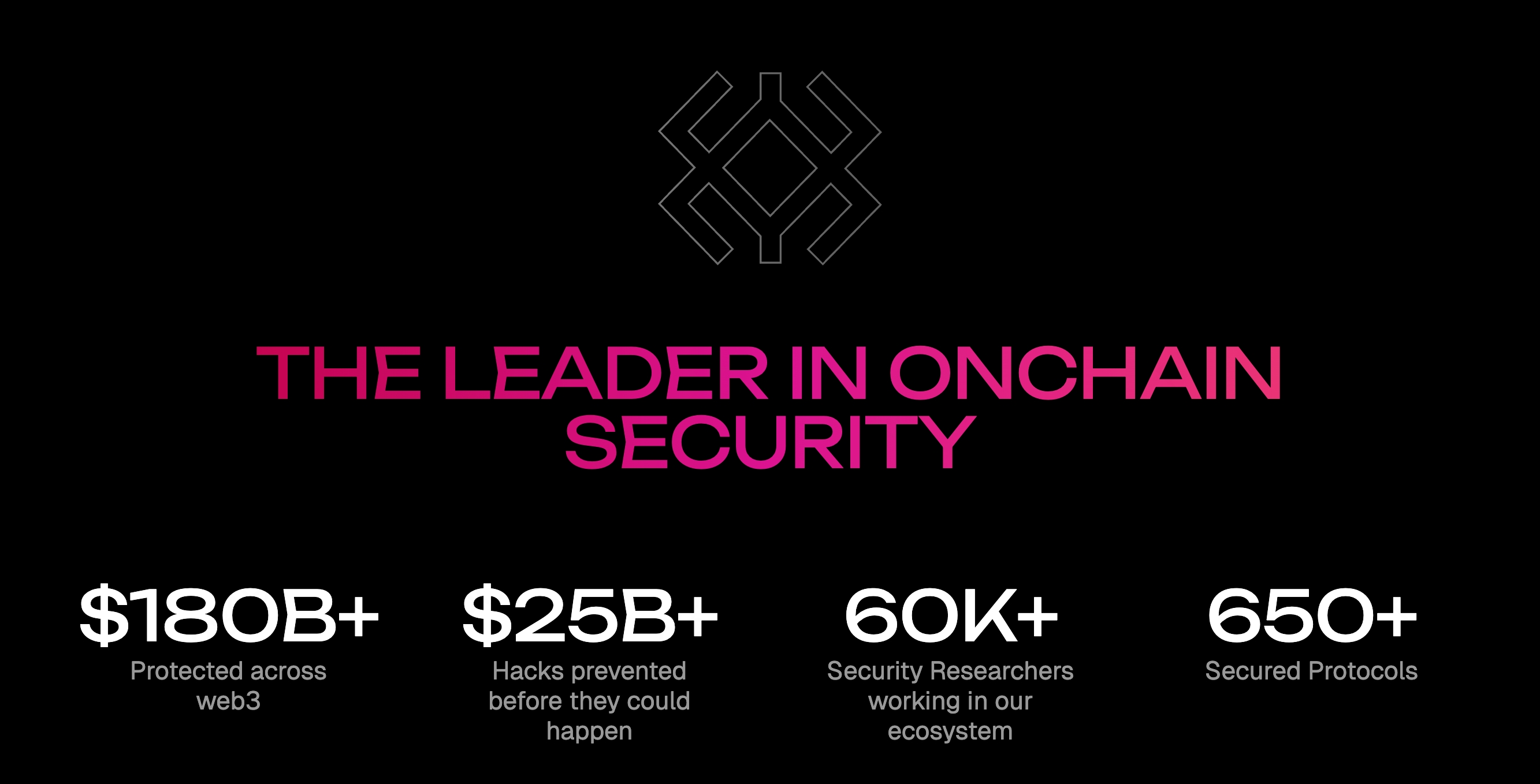
Immunefi operates as a Web3-native security coordination platform connecting protocol teams with independent security researchers who are incentivized to disclose vulnerabilities responsibly rather than exploit them. As of December 2025, the platform coordinates security efforts across more than 650 protocols and infrastructure providers, working with a global community of over 60,000 security researchers.
immunefi The assets under protection through these programs exceed $180 billion, representing a significant portion of total value locked in decentralized finance and Layer 1/Layer 2 networks.
Unlike traditional security firms that primarily deliver one-time audits, Immunefi is designed around continuous security operations. This approach reflects a fundamental characteristic of Web3 systems: smart contracts are immutable once deployed, assets are highly liquid and transferable, and attacks unfold in real time without circuit breakers. Under these conditions, static point-in-time security assessments alone prove insufficient. The platform has facilitated over $116 million in bounty payments to security researchers who identified critical vulnerabilities before malicious actors could exploit them, according to platform data updated through November 2025.
The distinction between security tools and security coordination is central to understanding Immunefi's positioning. While many Web3 security providers focus on specific technical capabilities—automated scanning, formal verification, or manual code review—Immunefi operates as an intermediary layer that reduces the gap between vulnerability discovery and mitigation. Through structured disclosure protocols and economic incentive mechanisms, the platform enables security researchers and protocol teams to coordinate responses before vulnerabilities are exploited at scale.
The demand for platforms like Immunefi stems from Web3's unique risk profile, which differs fundamentally from traditional software security. Blockchain transactions operate under strict finality—once confirmed, they cannot be reversed through administrative action or regulatory intervention. Attack surfaces are entirely public, with all smart contract code and transaction data visible to potential adversaries who have unlimited time to study targets. Perhaps most critically, failures are largely irreversible, creating an environment where single vulnerabilities can result in immediate, catastrophic losses.
Industry data validates these concerns. Halborn's analysis of the top 100 DeFi hacks between 2014 and 2024 documented $10.77 billion in total losses.
halborn Notably, 20% of exploited protocols had undergone security audits prior to incidents, yet still accounted for 10.8% of total value lost. This pattern demonstrates that one-time audits, while valuable, provide insufficient security assurance in isolation.
The 2025 loss data reveals concerning evolution in attack vectors. While technical vulnerabilities in smart contract code remain significant, off-chain compromises increasingly dominate. Halborn's research shows that in 2024, off-chain attacks represented 56.5% of total incidents but accounted for 80.5% of funds stolen. The February 2025 Bybit breach—attributed to North Korean state actors and confirmed by FBI public service announcement—exemplifies this pattern.
ic3.gov The $1.5 billion theft, the largest single hack in cryptocurrency history, resulted from manipulated multisignature wallet operations rather than smart contract vulnerabilities.
Access control failures continue to represent the most exploited vulnerability category despite years of industry awareness. The OWASP Smart Contract Top 10 for 2025 ranks access control issues as the number one risk, responsible for hundreds of millions in losses. These recurring patterns indicate that the Web3 industry faces not only technical challenges but organizational and process failures in implementing known security measures.
Bug bounties form the foundation of Immunefi's platform, operating on straightforward economic principles. Protocols establish structured reward tiers based on vulnerability severity, typically ranging from a few hundred dollars for low-impact issues to over $1 million for critical vulnerabilities that could drain protocol funds or compromise user assets. According to platform analytics, smart contract vulnerabilities account for 77.5% of total payout value, reflecting where the highest-severity risks concentrate in Web3 systems.
When security researchers discover potential vulnerabilities in participating protocols, they submit detailed reports through Immunefi's platform, which then mediates the disclosure process. The platform maintains 287 active bug bounty programs as of November 27, 2025, with maximum bounties ranging up to $1 million for protocols including SSV Network and Scroll. The average payout for valid critical vulnerability reports approximates $52,800, though this figure varies significantly based on protocol size and the specific nature of discovered issues.
Immunefi's economic model distinguishes itself through its revenue structure. The platform does not charge security researchers any portion of their earned bounties. Instead, revenue generation occurs through platform fees charged to protocols for hosting bug bounty programs, running audit competitions, and providing access to Magnus monitoring services. This alignment ensures that researchers retain 100% of earned rewards, creating cleaner incentive structures for vulnerability disclosure.
The platform's track record demonstrates tangible career outcomes for participants. According to Immunefi, thirty security researchers have earned over one million dollars through the platform since its inception, creating viable professional paths in ethical hacking that compete with the financial incentives of malicious exploitation. Payments are typically processed in stablecoins, primarily USDC, to avoid volatility issues in researcher compensation.
Beyond traditional bug bounties, Immunefi has expanded into audit competitions—time-bounded events where multiple independent researchers simultaneously review protocol codebases. These competitions, referred to internally as "Boosts," typically span seven to fourteen days and expose smart contracts to competitive pressure that often uncovers edge-case vulnerabilities missed in traditional single-auditor reviews.
The Firelight audit competition, conducted from November 7-17, 2025, provides a documented case study.
immunefi The ten-day review identified multiple critical vulnerabilities, with the full $15,000 reward pool distributed to participating researchers by December 11, 2025. This rapid turnaround demonstrates operational maturity in Immunefi's competition management and payout processing.
Audit competitions differ from traditional security audits through their competitive dynamics. When multiple skilled researchers examine the same codebase simultaneously, overlapping coverage increases while individual researchers are incentivized to discover unique vulnerabilities that others miss. This mechanism can surface complex interaction bugs and edge cases that might escape detection in sequential, single-party audit processes, particularly in highly composable DeFi systems where protocol integrations create emergent risk surfaces.
In February 2025, Immunefi launched Magnus, positioning it as a unified security operations platform that extends beyond reactive vulnerability disclosure.
theblock Magnus is designed to aggregate multiple security functions—continuous integration/continuous deployment testing, audits, bug bounties, real-time monitoring, and firewall protection—into a single operational interface for protocol security teams.
At the technical core sits the Security Swarm automation engine, described as an orchestration layer for AI-powered security agents trained on CODEX, Immunefi's proprietary dataset of historical exploits, vulnerability reports, and remediation patterns. According to platform documentation, CODEX represents one of the largest collections of on-chain vulnerability data, continuously expanding as new incidents are analyzed and catalogued. While the effectiveness of AI-assisted threat detection systems remains dependent on data quality and model architecture, the underlying technical approach—using historical exploit patterns to train anomaly detection models—aligns with established practices in security operations.
Magnus integration partnerships announced throughout 2025 include OtterSec for multichain audit expertise (partnership announced June 10, 2025), Dedaub for on-chain firewall and threat detection capabilities (announced May 5, 2025), Shield3 for incident response coordination (announced November 18, 2025), and Range for real-time monitoring and threat intelligence (announced November 17, 2025). Additional partners mentioned in February 2025 announcements include Sigma Prime, Nexus Mutual, Halborn, and Asymmetric Research, though specific integration details for these collaborations have not been publicly detailed.
As of December 2025, Magnus remains in early access registration phase. Immunefi states that participating projects represent over $81 billion in protected assets, including protocols such as
Arbitrum, zkSync. The platform's monitoring capabilities and AI-assisted threat detection represent design goals currently being validated through operational deployment rather than empirically proven outcomes at ecosystem scale.
In June 2025, Immunefi faced a significant test of its dispute resolution framework. Spectra Finance, after receiving 331 vulnerability reports from 103 security researchers during an April audit competition, refused to honor the agreed $40,000 reward pool. The project claimed misunderstanding about reward distribution methodology despite having reviewed and approved competition terms over a three-week period without raising objections.
Immunefi publicly addressed the situation through official communications on June 23, 2025, refuting Spectra's claims and detailing the approval timeline. After more than one month of unsuccessful negotiation, Immunefi made the decision to cover the full $40,000 payout from its own operational funds to protect researcher interests. The platform confirmed completion of these payments on July 2, 2025.
This incident marked the first occurrence in 43 audit competitions where a protocol failed to honor its financial commitment. The dispute raised questions about platform reliability and counterparty risk in security coordination. In response, Immunefi implemented a policy change requiring pre-payment escrow for all future competitions, eliminating the structural possibility of project-side payment refusal after vulnerability disclosure.
While Immunefi's decision to cover the shortfall demonstrated commitment to researcher protection, the incident highlighted operational limitations. Such interventions represent direct financial costs that cannot scale indefinitely without the updated escrow requirements. The resolution strengthened short-term trust with researchers while exposing vulnerabilities in the original competition structure that required systematic correction.
IMU is the native token associated with the immunefi ecosystem. Based on currently available public information from
immunefi x announcement , it is positioned primarily as a
governance and incentive coordination token, not as a payment token or a direct claim on platform revenues.
This design reflects a broader pattern among infrastructure-focused Web3 projects, where tokens are used to align participation and long-term governance rather than facilitate transactions.
The
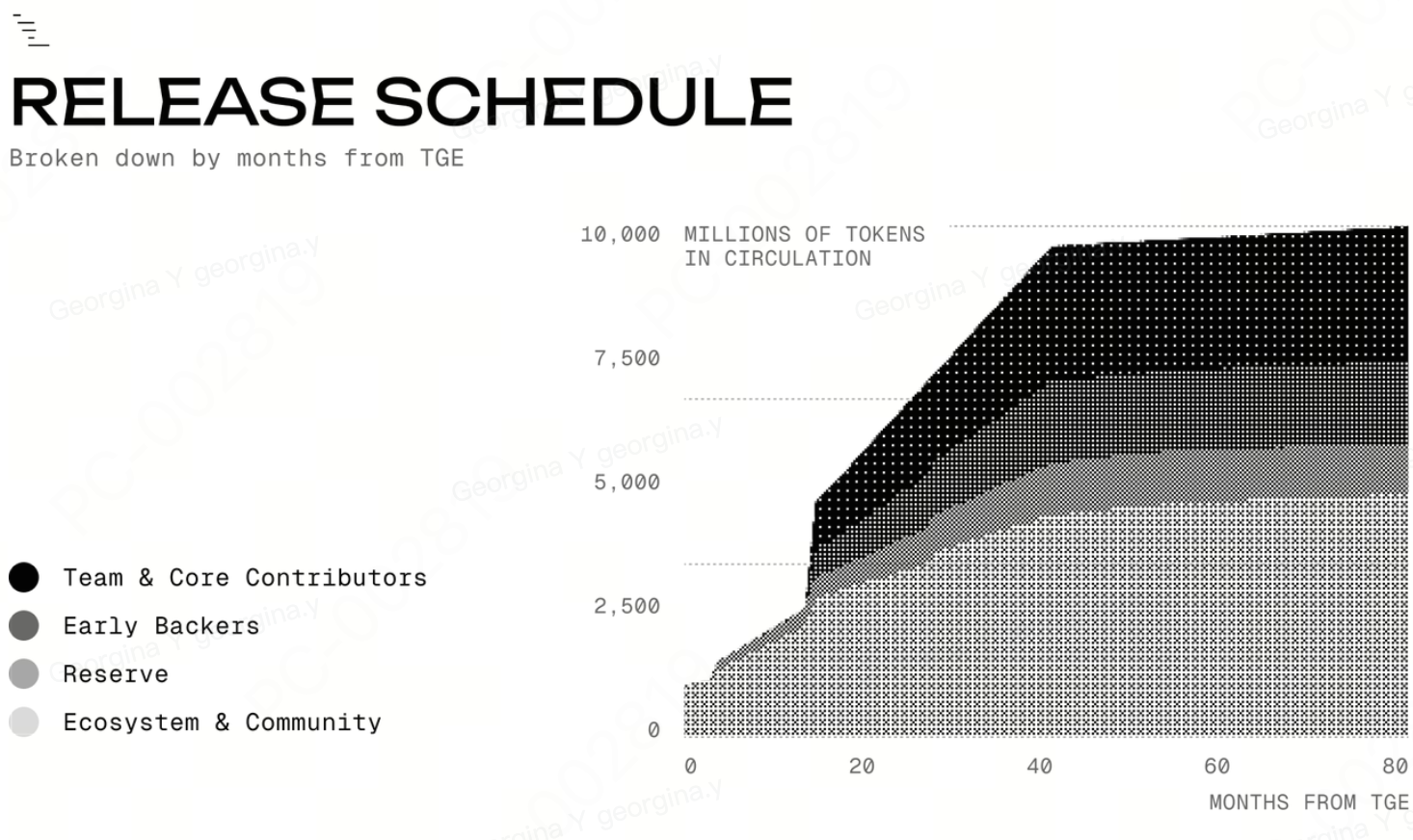
IMU token operates under a fixed total supply of 10 billion tokens with no inflation mechanism. The allocation structure divides this supply across four primary categories, each with distinct vesting schedules designed to balance immediate liquidity needs with long-term stakeholder alignment.
Allocation | % Supply |
Ecosystem & Community | 47.5% |
Reserve | 10% |
Early Backers | 16% |
Team & Core Contributors | 26.5% |
According to Immunefi's published documentation available at
docs.immunefi.foundation, IMU is designed as a governance and ecosystem coordination token rather than a fee-capture or revenue-distribution mechanism. This structural choice has significant implications for how the token's value proposition should be understood.
The stated utility functions include governance rights allowing token holders to vote on platform upgrades, bounty program standards, and Magnus feature prioritization. Additional proposed mechanisms include researcher incentive programs where IMU staking may provide priority access to high-value bug bounty programs or enhanced reward multipliers, though specific implementation details remain subject to finalization before the February 2026 TGE.
Access to premium Magnus analytics and threat intelligence features represents another potential utility vector, alongside rewards for contributors who provide verified security insights that expand the CODEX vulnerability dataset. These mechanisms aim to create incentive alignment across the distributed network of protocols, researchers, and security contributors comprising Immunefi's ecosystem.
Critically, the token does not represent a claim on Immunefi's platform revenues or protocol cash flows. This distinguishes IMU from application-layer tokens in decentralized finance that capture direct fees from protocol activity. The value proposition is indirect—tied to whether Immunefi becomes indispensable security infrastructure for Web3 and whether governance participation and ecosystem incentives drive genuine utility adoption rather than purely speculative trading dynamics.
This design introduces inherent valuation complexity. Without direct revenue accrual, IMU's long-term relevance depends on governance utility, network participation rates, and the platform's strategic importance to Web3 security operations. These factors make economic analysis more abstract compared to tokens with explicit cash-flow generation mechanisms.
Immunefi has raised $34.5 million in venture capital across multiple funding rounds since 2021, providing context for understanding the token's pre-launch valuation. The seed round in October 2021 secured $5.5 million led by Electric Capital, with participation from IDEO CoLab Ventures, The LAO, Bitscale Capital, Framework Ventures, BR Capital, and North Island Ventures.
The Series A round in September 2022 raised $24 million, led by Framework Ventures alongside continued participation from Electric Capital.
theblock Additional investors in this round included P2 Ventures (Polygon's venture arm), Samsung Next, The LAO, and Bitscale Capital. The recent November 2025 public token sales added approximately $4.23 million to total capitalization.
The $133.7 million fully diluted valuation established by the $0.01337 token sale price represents a 3.9-times markup over the $34.5 million in venture funding. This positioning is conservative relative to some infrastructure token launches that have debuted at ten-times or higher markups to their equity raise valuations, though direct comparisons require careful consideration of market conditions, circulating supply at launch, and specific utility mechanisms.
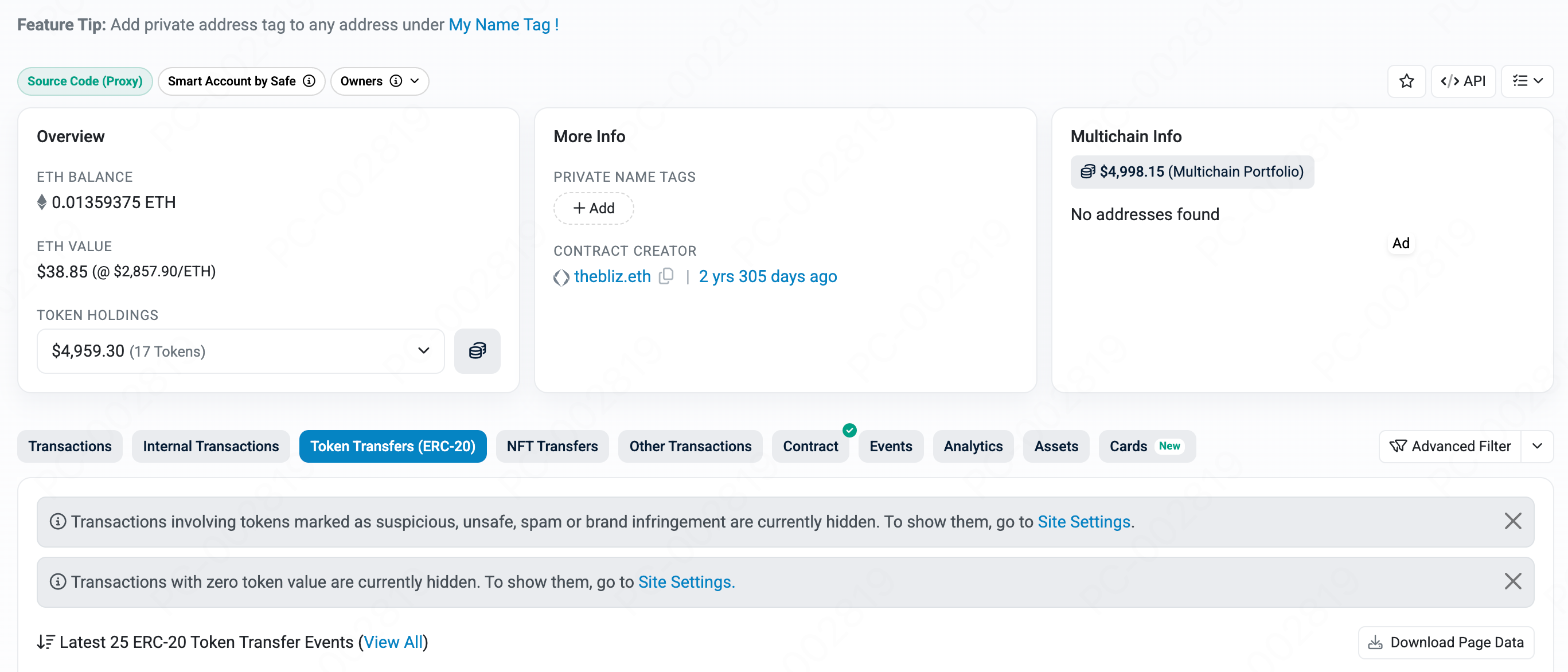
Immunefi maintains a public vault contract on Ethereum mainnet at address
0xf4a8714f6ca5Bf232F10b308C693448738be0661, which serves as a transparent proof-of-assets mechanism.
etherscan This Gnosis Safe multisignature contract enables protocols to deposit funds for bounty escrow and facilitates on-chain payments to verified researchers.
As of December 18, 2025, the vault holds approximately $4,999 in assets consisting of 4,946.52 USDC, 0.0136 ETH (valued at $38.49), and 13.59 DAI. Transaction history over the past 30 days shows periodic activity including a 10,000 USDC deposit on November 12, 2025, followed by a corresponding 10,000 USDC outbound payment to a researcher address on the same date. All transactions are executed through the multisig's execTransaction method requiring multiple signer approvals.
The relatively low vault balance does not indicate platform inactivity or financial weakness. Instead, this pattern reflects that protocols maintain their own escrow reserves rather than centralizing all bounty funds in Immunefi's vault. Historical transaction data shows typical deposit amounts ranging from $1,000 to $10,000, with corresponding researcher payouts processed shortly thereafter. This structure distributes custody risk while allowing Immunefi to facilitate secure, transparent release mechanisms.
Immunefi operates on the infrastructure layer of Web3 security, emphasizing continuous vulnerability disclosure and response rather than point-in-time audits. Its model is built on bug bounties, audit competitions, and an emerging security operations platform, Magnus. The upcoming IMU token is designed for governance and incentive coordination, not direct revenue capture, making Immunefi’s long-term relevance dependent on protocol adoption and trust rather than short-term market narratives.
Disclaimer: This educational content is provided for informational purposes only by MEXC and does not constitute financial, investment, legal, or tax advice. All data presented reflects publicly available information as of December 18, 2025 UTC. The IMU token is pre-launch with Token Generation Event scheduled for February 2026. Cryptocurrency markets involve substantial risk including potential total loss of capital. Readers should conduct independent research, verify all claims through official sources, and consult qualified professionals before making any financial decisions. Past performance of security platforms does not guarantee future results. This article is intended solely for educational purposes and should not be construed as an endorsement or recommendation.