The post Russia’s bid to replace 177,000 foreign components stalls amid sanctions squeeze appeared on BitcoinEthereumNews.com. Russia’s plan to stop depending onThe post Russia’s bid to replace 177,000 foreign components stalls amid sanctions squeeze appeared on BitcoinEthereumNews.com. Russia’s plan to stop depending on

Russia’s bid to replace 177,000 foreign components stalls amid sanctions squeeze

Russia’s plan to stop depending on foreign-made parts is not going well. A 2025 report from the economy ministry shows the country still leans heavily on outside tech to keep key industries alive.

That includes military weapons, drones, energy equipment, and aviation systems. This same report was supposed to prove Russia was on track to fix that by 2030. Instead, it confirms they’re stuck.

The whole plan was built around Vladimir Putin’s goal of being self-reliant by the time his current term ends in 2030. But the numbers don’t match the ambition. The report admits Russia still depends on critical imports. It also says the plan to grow non-energy exports and fix broken supply routes has basically gone nowhere.

Sanctions blocked parts, China filled the gap

The problem got worse after Western sanctions cut Russia off from global suppliers. The report calls out weapons like the Kh-101 cruise missile, which needs over 50 parts from abroad, including chips from Intel, Texas Instruments, and Analog Devices. These are American companies, and they’re no longer shipping anything to Moscow.

Russia has been trying to swap Western gear with parts from China. That plan exploded in 2023, when China made up 90% of all microelectronics Russia imported. A 2025 breakdown of Russia’s new Delta drone showed every piece inside was Chinese. That includes the engine, camera, sensors, batteries, controllers, and video system. Everything.

The aviation sector is in even worse shape. Airlines are using smuggling rings to get spare parts for Western planes. Some jets that were taken out of use years ago are being flown again just to keep things going.

Russia tried to build its own passenger jet called the MC-21, made by Yakovlev, which is owned by Rostec. The jet had to be redesigned after 2022, when foreign suppliers were cut off. Test flights only began in 2025. Nothing has been delivered.

Putin demands speed, but experts don’t buy the plan

Putin complained in December that his team still hadn’t nailed down what he called Russia’s “technological sovereignty.” He told them to stop dragging their feet. “I understand that technological leadership projects are difficult and unusual, that they require solving a whole host of issues with supplying scientific resources and smoothing out industrial co-operation,” he said. “Nonetheless, we need to move faster.”

The plan includes a six-year roadmap to replace imports with Russian products. It says the country will double R&D spending to 2% of GDP. That’s both public and private money. But many economists don’t believe it.

Heli Simola, from the Bank of Finland Institute for Emerging Economies, said, “For many goals, they already have had to abandon some of the requirements because there are no domestic alternatives. In some cases Chinese goods are simply labelled as Russian to achieve the targets.”

Another goal in the report is to get 80% of companies in key sectors using Russian software by 2030. Right now, it’s at 46%. There’s also a target to grow non-energy exports by two-thirds. But Alexandra Prokopenko, a researcher at the Carnegie Russia Eurasia Center, said, “The targets for 2030 look like a fantasy for Putin rather than a realistic plan.”

The report shows that even now, in 2026, Russia is still rebuilding its economy with parts and systems it does not control. It’s painting Chinese tech as Russian, flying patched-up planes, and talking about independence while still importing everything that matters.

Don’t just read crypto news. Understand it. Subscribe to our newsletter. It’s free.

Source: https://www.cryptopolitan.com/russias-replace-177000-foreign-components/

Sorumluluk Reddi: Bu sitede yeniden yayınlanan makaleler, halka açık platformlardan alınmıştır ve yalnızca bilgilendirme amaçlıdır. MEXC'nin görüşlerini yansıtmayabilir. Tüm hakları telif sahiplerine aittir. Herhangi bir içeriğin üçüncü taraf haklarını ihlal ettiğini düşünüyorsanız, kaldırılması için lütfen service@support.mexc.com ile iletişime geçin. MEXC, içeriğin doğruluğu, eksiksizliği veya güncelliği konusunda hiçbir garanti vermez ve sağlanan bilgilere dayalı olarak alınan herhangi bir eylemden sorumlu değildir. İçerik, finansal, yasal veya diğer profesyonel tavsiye niteliğinde değildir ve MEXC tarafından bir tavsiye veya onay olarak değerlendirilmemelidir.

Ayrıca Şunları da Beğenebilirsiniz

This Bitcoin Metric Has Never Been This Wrong: BTC Price Prediction

This Bitcoin Metric Has Never Been This Wrong: BTC Price Prediction

Bitcoin trades 35.5% below its power-law trend, marking the largest statistical pricing deviation in its history. Backtests since 2010 show every similar oversold
Paylaş
LiveBitcoinNews2026/02/01 23:15
ProFX Summit Dubai 2026

ProFX Summit Dubai 2026

The post ProFX Summit Dubai 2026 appeared on BitcoinEthereumNews.com. ProFX Summit Dubai 2026 is a premium financial industry event bringing together the global
Paylaş
BitcoinEthereumNews2026/02/01 22:58
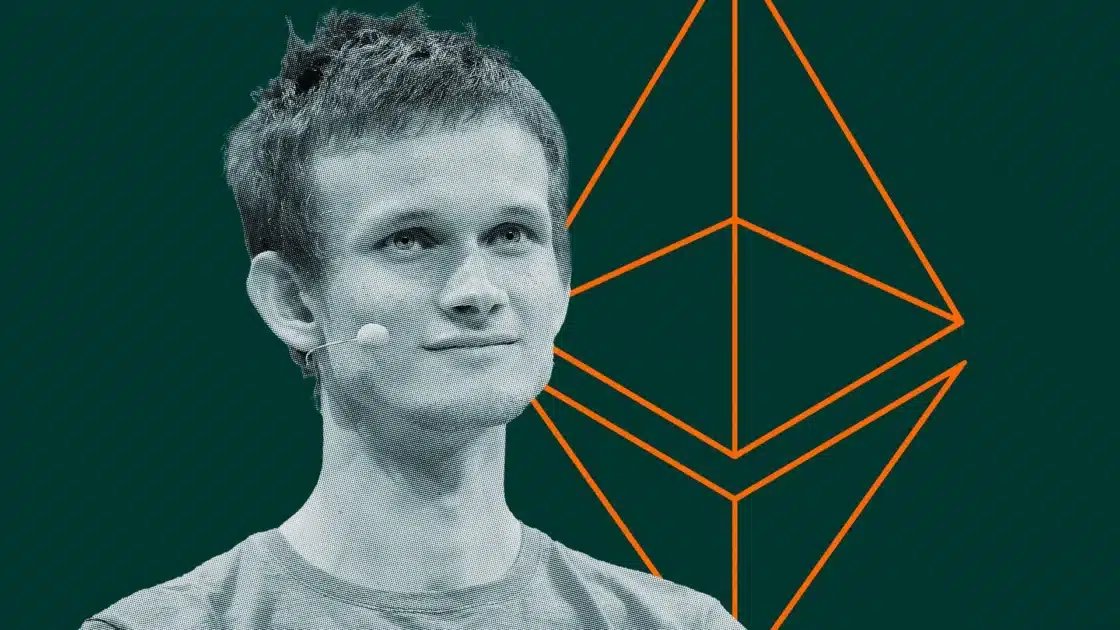
Vitalik Buterin Reveals Ethereum’s Bold Plan to Stay Quantum-Secure and Simple!

Vitalik Buterin Reveals Ethereum’s Bold Plan to Stay Quantum-Secure and Simple!

Buterin unveils Ethereum’s strategy to tackle quantum security challenges ahead. Ethereum focuses on simplifying architecture while boosting security for users. Ethereum’s market stability grows as Buterin’s roadmap gains investor confidence. Ethereum founder Vitalik Buterin has unveiled his long-term vision for the blockchain, focusing on making Ethereum quantum-secure while maintaining its simplicity for users. Buterin presented his roadmap at the Japanese Developer Conference, and splits the future of Ethereum into three phases: short-term, mid-term, and long-term. Buterin’s most ambitious goal for Ethereum is to safeguard the blockchain against the threats posed by quantum computing.  The danger of such future developments is that the future may call into question the cryptographic security of most blockchain systems, and Ethereum will be able to remain ahead thanks to more sophisticated mathematical techniques to ensure the safety and integrity of its protocols. Buterin is committed to ensuring that Ethereum evolves in a way that not only meets today’s security challenges but also prepares for the unknowns of tomorrow. Also Read: Ethereum Giant The Ether Machine Takes Major Step Toward Going Public! However, in spite of such high ambitions, Buterin insisted that Ethereum also needed to simplify its architecture. An important aspect of this vision is to remove unnecessary complexity and make Ethereum more accessible and maintainable without losing its strong security capabilities. Security and simplicity form the core of Buterin’s strategy, as they guarantee that the users of Ethereum experience both security and smooth processes. Focus on Speed and Efficiency in the Short-Term In the short term, Buterin aims to enhance Ethereum’s transaction efficiency, a crucial step toward improving scalability and reducing transaction costs. These advantages are attributed to the fact that, within the mid-term, Ethereum is planning to enhance the speed of transactions in layer-2 networks. According to Butterin, this is part of Ethereum’s expansion, particularly because there is still more need to use blockchain technology to date. The other important aspect of Ethereum’s development is the layer-2 solutions. Buterin supports an approach in which the layer-2 networks are dependent on layer-1 to perform some essential tasks like data security, proof, and censorship resistance. This will enable the layer-2 systems of Ethereum to be concerned with verifying and sequencing transactions, which will improve the overall speed and efficiency of the network. Ethereum’s Market Stability Reflects Confidence in Long-Term Strategy Ethereum’s market performance has remained solid, with the cryptocurrency holding steady above $4,000. Currently priced at $4,492.15, Ethereum has experienced a slight 0.93% increase over the last 24 hours, while its trading volume surged by 8.72%, reaching $34.14 billion. These figures point to growing investor confidence in Ethereum’s long-term vision. The crypto community remains optimistic about Ethereum’s future, with many predicting the price could rise to $5,500 by mid-October. Buterin’s clear, forward-thinking strategy continues to build trust in Ethereum as one of the most secure and scalable blockchain platforms in the market. Also Read: Whales Dump 200 Million XRP in Just 2 Weeks – Is XRP’s Price on the Verge of Collapse? The post Vitalik Buterin Reveals Ethereum’s Bold Plan to Stay Quantum-Secure and Simple! appeared first on 36Crypto.
Paylaş
Coinstats2025/09/18 01:22