

Must Watch
Detached from the nuts and bolts of governance, President Marcos should realize that this can no longer be business as usual. This moment is fraught with alarm Detached from the nuts and bolts of governance, President Marcos should realize that this can no longer be business as usual. This moment is fraught with alarm
Marcos faces his most difficult year yet
Pressure from a hugely dissatisfied public will mount on President Ferdinand Marcos Jr. to send the guilty to jail in the worst corruption scandal that has hit the country in decades. Around $1.3 billion (P79 billion) has likely been lost to ghost flood control projects and those that have hardly been completed (2016-2025) with anywhere from 25% to 70% of project cost going to kickbacks.
Marcos faces his most difficult year yet. The economy has slowed down with growth dipping to a four-year low, public confidence has eroded, and the President’s approval ratings have plummeted. Conversations are animated by frustration and anger that the big fishes — and whales — are not yet behind bars, contrary to the President’s promise of a Christmas deadline.
Vice President Sara Duterte is doing better at the polls, making political capital out of the mess. The diehard Duterte supporters will continue their disinformation campaign on social media, troll Marcos, and deceive the public that the Dutertes did not benefit from the flood control loot. This is false. (You can read some of the news stories on their involvement here and here.)
Original sin
When Marcos exposed the top contractors who cornered flood control projects across the country, he said he started something “disruptive…to change the entire system.” This led to a big thing that he had not anticipated: the unearthing of the plunder of the budget, the original sin. He blew the whistle on the systemic looting of the country’s national budget apparently without knowing its magnitude, the extent of the involvement of his relatives and key allies — and that it would eventually lead to his doorstep.
As chief executive, Marcos committed a major lapse in failing to oversee the integrity of the budget process and, in effect, presided over the brazen plunder of the country’s funds.
Was his budget secretary, Amenah Pangandaman, complicit? Her office prepared the National Expenditure Program (NEP), also called the President’s budget, but she did not flag the huge chunks skimmed off and diverted to flood control projects. How could she have ignored the massive cuts from the NEP which reached P395 billion in 2023, rising to P564.5 billion in 2024 and tapering off to P487 billion in 2025? These are data provided by former budget secretary Florencio “Butch” Abad based on his review of available bicameral committee conference or bicameral reports.
Add these up and, during Marcos’s first three years in office, legislators from both houses of Congress sliced off a total of P1.4 trillion from the pie and moved these to various programs — mainly flood control — and agencies, with the Department of Public Works and Highways (DPWH) getting the most. Abad shared this and other findings in a lecture he delivered at the Ateneo School of Government.
Patterns of cuts and diversions
This is the pattern that emerged: the cuts and diversions were done by a bicameral committee, the group of senators and House representatives that reconciles both chambers’ versions of the General Appropriations Bill — the NEP, as filed in Congress — in an opaque process hidden from the public. Billions of pesos were taken from foreign-assisted projects (the Philippine counterpart fund to approved projects); the pension and guaranty fund of the military and uniformed personnel; miscellaneous personnel and benefit fund covering all government agencies; Philhealth; the Armed Forces of the Philippines modernization; and the National Disaster Risk Reduction and Management Fund — and were siphoned off to their pork: flood control and their favorite agency, the DPWH.
This is a “new scheme of plundering public funds through the budget legislation process with the layered bicameral conference committee as the main generator of pork,” Abad said.
The Senate and House of Representatives (HOR) gave themselves billions and the Office of the President (OP), too, ballooning their budgets, compared to 2016, by 458% (OP), Senate 275%, and HOR 380%.
Dole-out programs were heavily funded, coursed through the Department of Social Welfare and Development (DSWD), Department of Labor and Employment, and the Department of Health. Various forms of ayuda, avenues of political patronage, were dressed up in these unwieldy acronyms: AICS or Assistance to Individuals in Crisis Situations, AKAP or Ayuda para sa Kapos ang Kita), MAIFIP or Medical Assistance to the Indigent and Financially Incapacitated Patients, and TUPAD or Tulong Panghanapbuhay sa Ating Disadvantaged/Displaced Workers.
All this is unprecedented in the magnitude of public funds involved, Abad said, and the participation of high officials who eventually resigned from their posts — former Speaker Martin Romualdez (he remains a member of Congress), former congressman and chairman of the powerful appropriations committee Zaldy Co, DPWH Secretary Manuel Bonoan, Executive Secretary Lucas Bersamin, and Pangandaman.
What now?
To regain the public’s trust, Marcos has to accomplish two things: hold the guilty to account, especially the high officials, and institutionalize reforms to make the budget process transparent, and strengthen its oversight. The task he has set for himself, to do a “major surgery… to excise a cancer,” demands nothing less.
So far, two contractors and eight DPWH officials have been arrested and face trial. No elected official or former cabinet member is behind bars.
Marcos appears constrained as the shadow of his first cousin, Romualdez — under whose watch the plunder of the budget took place — looms large over him. Marcos said he wanted to dismantle a system that enabled large-scale corruption, a system he was on top of. In the process, he got inundated, treading water as he confronts the impunity with which his cousin and allies ransacked the public coffers.
Moreover, Congressman Sandro Marcos, the President’s son, and Romualdez benefited most from the awkward sounding “allocables” or the new pork from DPWH.
In the area of reforms, Marcos has an opportunity to engage with civil-society groups that have rigorously monitored the bicam deliberations. They have called for the creation of an “Open Budget Transparency Server” that can be accessed by the public and the inclusion of multi-sectoral committees to review the 2027 budget as early as the preparation stage.
Alarm bells
This man-made disaster has put a glaring spotlight on Marcos’s poor leadership. He did not set the tone for a clean, corruption-wary government as he himself stands on low moral ground, clouded by his late father’s reputation.
Moreover, he is detached from the nuts and bolts of governance. The President appeared to be unaware of the major changes in the most important piece of legislation that supports his administration’s programs: the budget. As Marcos himself admitted in a candid address last December, he himself was “shocked” by the “abuse and the entitlement” that took place.
The other downside to this fiasco is this: Wounded by domestic troubles, Marcos will be distracted, his attention drawn away from China’s continued aggression in the West Philippine Sea. China, most likely, will smell an opportunity at this time when the region has become more volatile, with the US intervention in Venezuela upending the rules-based international order, enabling our giant neighbor to pursue its reunification designs on Taiwan.
This fraught moment rings alarm bells for Marcos who has two-and-half more years to fix the mess. It can no longer be business as usual. He should do everything he can to achieve justice and institutional reforms that will restore the integrity of the budget process. – Rappler.com
Piyasa Fırsatı
USUAL Fiyatı(USUAL)
$0.02286
$0.02286$0.02286
USD
USUAL (USUAL) Canlı Fiyat Grafiği
Sorumluluk Reddi: Bu sitede yeniden yayınlanan makaleler, halka açık platformlardan alınmıştır ve yalnızca bilgilendirme amaçlıdır. MEXC'nin görüşlerini yansıtmayabilir. Tüm hakları telif sahiplerine aittir. Herhangi bir içeriğin üçüncü taraf haklarını ihlal ettiğini düşünüyorsanız, kaldırılması için lütfen service@support.mexc.com ile iletişime geçin. MEXC, içeriğin doğruluğu, eksiksizliği veya güncelliği konusunda hiçbir garanti vermez ve sağlanan bilgilere dayalı olarak alınan herhangi bir eylemden sorumlu değildir. İçerik, finansal, yasal veya diğer profesyonel tavsiye niteliğinde değildir ve MEXC tarafından bir tavsiye veya onay olarak değerlendirilmemelidir.
Ayrıca Şunları da Beğenebilirsiniz

UK Looks to US to Adopt More Crypto-Friendly Approach
The post UK Looks to US to Adopt More Crypto-Friendly Approach appeared on BitcoinEthereumNews.com. The UK and US are reportedly preparing to deepen cooperation on digital assets, with Britain looking to copy the Trump administration’s crypto-friendly stance in a bid to boost innovation. UK Chancellor Rachel Reeves and US Treasury Secretary Scott Bessent discussed on Tuesday how the two nations could strengthen their coordination on crypto, the Financial Times reported on Tuesday, citing people familiar with the matter. The discussions also involved representatives from crypto companies, including Coinbase, Circle Internet Group and Ripple, with executives from the Bank of America, Barclays and Citi also attending, according to the report. The agreement was made “last-minute” after crypto advocacy groups urged the UK government on Thursday to adopt a more open stance toward the industry, claiming its cautious approach to the sector has left the country lagging in innovation and policy. Source: Rachel Reeves Deal to include stablecoins, look to unlock adoption Any deal between the countries is likely to include stablecoins, the Financial Times reported, an area of crypto that US President Donald Trump made a policy priority and in which his family has significant business interests. The Financial Times reported on Monday that UK crypto advocacy groups also slammed the Bank of England’s proposal to limit individual stablecoin holdings to between 10,000 British pounds ($13,650) and 20,000 pounds ($27,300), claiming it would be difficult and expensive to implement. UK banks appear to have slowed adoption too, with around 40% of 2,000 recently surveyed crypto investors saying that their banks had either blocked or delayed a payment to a crypto provider. Many of these actions have been linked to concerns over volatility, fraud and scams. The UK has made some progress on crypto regulation recently, proposing a framework in May that would see crypto exchanges, dealers, and agents treated similarly to traditional finance firms, with…
Paylaş
BitcoinEthereumNews2025/09/18 02:21
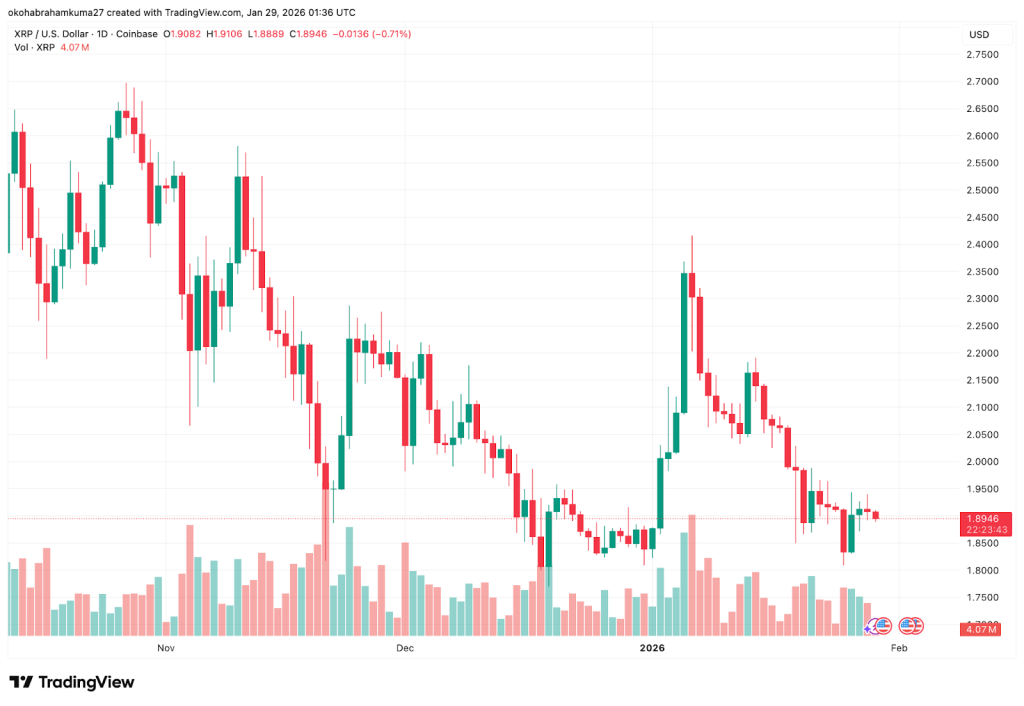
XRP Price Prediction 2026: Ripple Innovates and Hyperliquid Soars, but DeepSnitch AI Is the 250x Project for Massive Returns
While Ripple expands its empire into enterprise finance with a corporate treasury platform, the token itself remains sluggish. This disconnection is forcing investors
Paylaş
Captainaltcoin2026/01/29 19:15

Tesla Bets Big on AI With $2 Billion Investment in xAI
Tesla Plans $2 Billion Investment in xAI, Deepening Its Push Into Artificial Intelligence
Tesla is preparing to invest $2 billion into xAI, the artificial intel
Paylaş
Hokanews2026/01/29 19:11