

Pocket Network Tokenomics Transforms with Revolutionary Deflationary Proposal

BitcoinWorld
Pocket Network Tokenomics Transforms with Revolutionary Deflationary Proposal
In a landmark decision for decentralized infrastructure, the Pocket Network DAO has fundamentally reshaped its economic future by passing the pivotal PIP-41 proposal, introducing a deflationary tokenomics model for its POKT token. This governance vote, concluded in December 2024, mandates a permanent change to the protocol’s core monetary policy, scheduled for implementation in mid-January 2025. Consequently, the network will systematically reduce its total token supply over time, marking a significant strategic shift from its previous inflationary design. This move directly addresses long-term sustainability concerns and aligns the protocol’s incentives with value accrual for network participants.
Pocket Network Tokenomics Undergoes a Fundamental Shift
The approved proposal, PIP-41, modifies the existing Shannon tokenomics model by altering the token mint-and-burn cycle. Previously, the protocol re-minted 100% of the POKT tokens burned to pay for network relays. However, the new model will re-mint only 97.5% of these burned tokens. Therefore, a 2.5% portion of all POKT used in relay transactions will be permanently removed from circulation. This mechanism creates a consistent deflationary pressure. Each transaction processed on the decentralized RPC network now contributes to a gradual reduction in the total supply of POKT.
This change represents a deliberate pivot in economic strategy. The original Shannon model, launched with the network’s mainnet, was designed to incentivize node runners with new token emissions. Network analysts and blockchain economists have frequently debated the long-term viability of such purely inflationary models, especially for utility-driven protocols. The DAO’s vote demonstrates a collective move towards a scarcity-driven value proposition. Furthermore, this update is technically enacted through the v1.31 protocol upgrade, ensuring all network participants operate under the new economic rules simultaneously.
Understanding the Mechanics of the New Deflationary Model
The core mechanic is elegantly simple but profoundly impactful. When an application uses Pocket Network to query blockchain data—a process called a “relay”—it pays a fee in POKT. This fee is burned. Under the old system, an equivalent amount of POKT was minted and distributed to the node runners who serviced the request. Now, with PIP-41, the minting amount is 2.5% less than the burn amount. The deflationary effect is directly tied to network usage. Higher network activity accelerates the burn rate, while lower activity slows it down.
Key components of the new tokenomics include:
- Burn Rate: 100% of relay fees are permanently burned.
- Mint Rate: Only 97.5% of the burned value is re-minted for rewards.
- Net Supply Change: A 2.5% net reduction in supply per unit of burned POKT.
- Implementation: Hard-coded into the protocol via the v1.31 consensus upgrade.
This structure ensures the deflation is algorithmic and trustless. No central party controls the burn; it is an automatic function of the protocol’s code. The design also maintains strong incentives for node runners, as they continue to receive the vast majority of the minted rewards for providing reliable infrastructure. The balance between reducing supply and sustaining node operator revenue was a central focus of the proposal’s community debate.
Expert Analysis on Protocol Sustainability and Value Accrual
Blockchain tokenomics experts often highlight the challenge of aligning long-term token value with protocol utility. Michael Anderson, a co-founder of a Web3 investment framework, noted in a recent industry report, “Protocols with pure emission-based rewards can face downward price pressure if utility demand doesn’t outpace new supply. Introducing a deflationary mechanism tied directly to usage creates a natural economic flywheel.” This perspective underscores the strategic thinking behind PIP-41. By linking supply reduction to network demand, Pocket Network aims to create a more robust economic foundation.
The decision follows months of community discussion, technical modeling, and comparative analysis with other decentralized infrastructure projects. Governance archives show the proposal went through multiple revision cycles, incorporating feedback from node operators, developers, and token holders. This process exemplifies the E-E-A-T (Experience, Expertise, Authoritativeness, Trustworthiness) principles in action, as the DAO leveraged the deep technical expertise of its community to arrive at a data-informed consensus. The final vote saw strong participation, indicating high stakeholder engagement with the protocol’s future.
Comparative Impact on Network Participants and the Broader Market
The deflationary shift has distinct implications for different network stakeholders. For POKT holders, the change introduces a potential store-of-value characteristic alongside the token’s utility. The decreasing supply, assuming constant or growing demand for relays, applies a fundamental economic pressure. For node runners, the immediate impact on rewards is marginal—a 2.5% reduction in minted POKT relative to the old model. However, they may benefit from a potential increase in the value of the rewards they do earn. For dApp developers using the network, the fee structure remains stable; they still pay the same amount in POKT per relay.
Comparison of Pre- and Post-PIP-41 Tokenomics| Parameter | Pre-PIP-41 (Shannon Model) | Post-PIP-41 (v1.31 Update) |
|---|---|---|
| Token Burn | 100% of relay fee | 100% of relay fee |
| Token Mint | 100% of burned amount | 97.5% of burned amount |
| Net Supply Effect | Neutral (inflationary via other emissions) | Deflationary (-2.5% per burn cycle) |
| Node Runner Reward Source | Full mint | 97.5% partial mint |
| Primary Economic Goal | Network growth & security | Growth, security & value accrual |
Within the broader decentralized infrastructure sector, this move positions Pocket Network uniquely. While some competitors rely on stablecoin payments or inflationary token models, Pocket Network now employs a usage-based deflationary model. This could influence governance discussions in other DAOs, setting a precedent for mature protocols seeking to transition their economic models. The change also reflects a growing trend where DAOs use governance to iteratively optimize their protocols post-launch, moving beyond initial token distribution and into sophisticated monetary policy.
Conclusion
The Pocket Network DAO’s approval of the deflationary tokenomics proposal PIP-41 marks a critical evolution in the protocol’s economic design. By instituting a permanent 2.5% burn on all relay fees, the network transitions to a model where usage directly combats inflation and reduces the total POKT supply. This strategic shift, enacted through community governance and technical upgrade, aims to enhance long-term sustainability and align tokenholder value with network utility. The successful mid-January 2025 implementation of the v1.31 update will be a key milestone to watch, as the real-world effects of this new deflationary tokenomics model begin to unfold across the decentralized infrastructure landscape.
FAQs
Q1: What exactly does the Pocket Network PIP-41 proposal do?
The PIP-41 proposal changes Pocket Network’s tokenomics from a neutral mint-and-burn cycle to a deflationary one. It mandates that only 97.5% of burned POKT tokens are re-minted, permanently removing 2.5% from supply with every relay transaction.
Q2: When will the new deflationary tokenomics take effect?
The changes are scheduled to be implemented in mid-January 2025 through a protocol-wide software update known as v1.31. All nodes on the network must upgrade to this version to enforce the new rules.
Q3: How does this affect someone running a Pocket Network node?
Node runners will see the POKT rewards they earn per relay decrease by 2.5% compared to the old model. However, this may be offset if the value of POKT increases due to the deflationary supply pressure.
Q4: Does this change how developers pay to use the network?
No. Application developers still pay the same amount of POKT per relay request. The change happens on the protocol’s backend, where a portion of that paid POKT is not re-issued after being burned.
Q5: Why would a DAO vote to make its token deflationary?
A DAO might enact deflationary tokenomics to create long-term scarcity, potentially increasing the token’s value as a store of value. It aligns the interests of token holders with network growth, as increased usage leads to greater supply reduction.
This post Pocket Network Tokenomics Transforms with Revolutionary Deflationary Proposal first appeared on BitcoinWorld.
Ayrıca Şunları da Beğenebilirsiniz

UK Looks to US to Adopt More Crypto-Friendly Approach
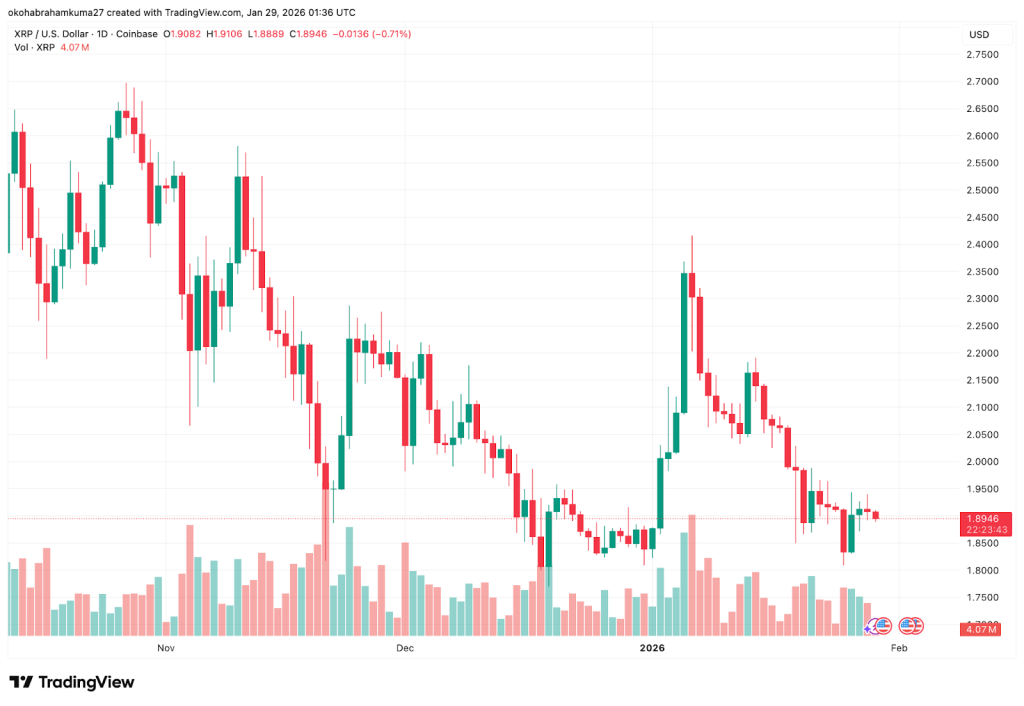
XRP Price Prediction 2026: Ripple Innovates and Hyperliquid Soars, but DeepSnitch AI Is the 250x Project for Massive Returns
