Pantera Capital founder Dan Morehead believes a geopolitical shift in reserve management will push adversaries of the United States into Bitcoin at massive scale, calling it “inevitable” that China and Russia eventually hold “trillions of dollars” worth of the asset. Speaking on Blockworks’ Empire podcast released this week, the billionaire framed the prediction as part of a longer-term rotation in global reserve assets and a response to sanction risk embedded in dollar-denominated holdings. “I think it’ll take a decade or two,” Morehead said, adding that the first movers will likely include US-aligned Gulf states before “the big one” arrives with countries “antagonistic to the United States, like China or Russia.” Why Russia And China Will Adopt Bitcoin Morehead anchored his argument in the historical cadence of reserve transitions and the vulnerability of holding claims on a rival’s financial system. “You gotta remember, the reserve currency’s changed every 80 or 100 years… no one’s ever really lasted for more than, let’s call it 100, 110 years,” he said. While calling it “inconceivable that the dollar will be supplanted” overnight, he warned that countries with large US Treasury positions face concentrated political risk. Citing China’s portfolio, he argued: “It’s really pretty crazy to have your entire country’s life savings in an asset that your potential adversary could literally just cancel.” In his view, that calculus makes it “inevitable” that such countries “will have started to save in Bitcoin and other cryptocurrencies” within the next decade. Related Reading: Bitcoin Dip-Buy Calls Spike: Why This Could Actually Be Bearish The provocation lands amid measurable changes in how major economies hold US debt. Official Treasury data for July 2025 show China’s reported Treasury holdings at $730.7 billion, the lowest since 2008 and down markedly over the past decade, a decline often read as gradual diversification of reserves rather than abrupt abandonment. JUST IN: BILLIONAIRE DAN MOREHEAD JUST SAID IT’S “INEVITABLE” CHINA AND RUSSIA WILL HOLD TRILLIONS OF DOLLARS IN #BITCOIN NATION STATE GAME THEORY. IT’S HERE 🚀 pic.twitter.com/tOQO9tHYNi — The Bitcoin Historian (@pete_rizzo_) September 23, 2025 Japan remains the largest holder at roughly $1.15 trillion, with the United Kingdom near $900 billion. The broader pool of foreign-held Treasuries nonetheless hit a record in July. These figures illustrate that while the dollar system remains deep and liquid, China’s share is slipping at the margin—the exact dynamic Morehead argues could accelerate alternative reserve strategies over time. Morehead’s timeline also intersects with a flurry of policy proposals that, if enacted, would normalize sovereign Bitcoin exposure. In March, US President Donald Trump signed an executive order establishing a Strategic Bitcoin Reserve and a national digital asset stockpile. Wyoming legislators separately advanced a bill to permit limited Bitcoin investments—capped at 3%—within certain state funds, an incremental step toward institutional reserve management in digital assets at the state level. Related Reading: Bitcoin Falls Below $113,000, But This Indicator Says It’s Time To Buy Outside the US, Gulf governments are already experimenting at the edges of sovereign crypto exposure—another plank in Morehead’s thesis. The United Arab Emirates’ has launched state-backed mining initiatives and disclosures suggesting several thousand BTC accumulated on the balance sheet via those operations. Skeptics will note that moving “trillions” of dollars into Bitcoin would require not only policy shifts but also market structure capable of absorbing sustained sovereign demand without disorderly volatility. Liquidity depth has improved with US spot ETF adoption and growing derivatives markets, yet Bitcoin’s free float, custody frameworks, and cross-border payment rails still face periodic stress. Morehead, however, situates the thesis in a long arc rather than a short-term trade. “I don’t think it’s gonna happen overnight,” he said, emphasizing a horizon of “a decade or two” and a phased path in which US-aligned adopters pave the way for politically non-aligned states that prize censorship resistance and sanction insulation. For China and Russia specifically, the impetus would be as much strategic as financial. China’s willingness to chip away at Treasuries aligns with its broader push to diversify reserves into gold and other assets, while Russia’s post-2014 and 2022 sanctions experience has already driven a dramatic reconfiguration of its reserve composition. At press time, Bitcoin traded at $112,639. Featured image created with DALL.E, chart from TradingView.comPantera Capital founder Dan Morehead believes a geopolitical shift in reserve management will push adversaries of the United States into Bitcoin at massive scale, calling it “inevitable” that China and Russia eventually hold “trillions of dollars” worth of the asset. Speaking on Blockworks’ Empire podcast released this week, the billionaire framed the prediction as part of a longer-term rotation in global reserve assets and a response to sanction risk embedded in dollar-denominated holdings. “I think it’ll take a decade or two,” Morehead said, adding that the first movers will likely include US-aligned Gulf states before “the big one” arrives with countries “antagonistic to the United States, like China or Russia.” Why Russia And China Will Adopt Bitcoin Morehead anchored his argument in the historical cadence of reserve transitions and the vulnerability of holding claims on a rival’s financial system. “You gotta remember, the reserve currency’s changed every 80 or 100 years… no one’s ever really lasted for more than, let’s call it 100, 110 years,” he said. While calling it “inconceivable that the dollar will be supplanted” overnight, he warned that countries with large US Treasury positions face concentrated political risk. Citing China’s portfolio, he argued: “It’s really pretty crazy to have your entire country’s life savings in an asset that your potential adversary could literally just cancel.” In his view, that calculus makes it “inevitable” that such countries “will have started to save in Bitcoin and other cryptocurrencies” within the next decade. Related Reading: Bitcoin Dip-Buy Calls Spike: Why This Could Actually Be Bearish The provocation lands amid measurable changes in how major economies hold US debt. Official Treasury data for July 2025 show China’s reported Treasury holdings at $730.7 billion, the lowest since 2008 and down markedly over the past decade, a decline often read as gradual diversification of reserves rather than abrupt abandonment. JUST IN: BILLIONAIRE DAN MOREHEAD JUST SAID IT’S “INEVITABLE” CHINA AND RUSSIA WILL HOLD TRILLIONS OF DOLLARS IN #BITCOIN NATION STATE GAME THEORY. IT’S HERE 🚀 pic.twitter.com/tOQO9tHYNi — The Bitcoin Historian (@pete_rizzo_) September 23, 2025 Japan remains the largest holder at roughly $1.15 trillion, with the United Kingdom near $900 billion. The broader pool of foreign-held Treasuries nonetheless hit a record in July. These figures illustrate that while the dollar system remains deep and liquid, China’s share is slipping at the margin—the exact dynamic Morehead argues could accelerate alternative reserve strategies over time. Morehead’s timeline also intersects with a flurry of policy proposals that, if enacted, would normalize sovereign Bitcoin exposure. In March, US President Donald Trump signed an executive order establishing a Strategic Bitcoin Reserve and a national digital asset stockpile. Wyoming legislators separately advanced a bill to permit limited Bitcoin investments—capped at 3%—within certain state funds, an incremental step toward institutional reserve management in digital assets at the state level. Related Reading: Bitcoin Falls Below $113,000, But This Indicator Says It’s Time To Buy Outside the US, Gulf governments are already experimenting at the edges of sovereign crypto exposure—another plank in Morehead’s thesis. The United Arab Emirates’ has launched state-backed mining initiatives and disclosures suggesting several thousand BTC accumulated on the balance sheet via those operations. Skeptics will note that moving “trillions” of dollars into Bitcoin would require not only policy shifts but also market structure capable of absorbing sustained sovereign demand without disorderly volatility. Liquidity depth has improved with US spot ETF adoption and growing derivatives markets, yet Bitcoin’s free float, custody frameworks, and cross-border payment rails still face periodic stress. Morehead, however, situates the thesis in a long arc rather than a short-term trade. “I don’t think it’s gonna happen overnight,” he said, emphasizing a horizon of “a decade or two” and a phased path in which US-aligned adopters pave the way for politically non-aligned states that prize censorship resistance and sanction insulation. For China and Russia specifically, the impetus would be as much strategic as financial. China’s willingness to chip away at Treasuries aligns with its broader push to diversify reserves into gold and other assets, while Russia’s post-2014 and 2022 sanctions experience has already driven a dramatic reconfiguration of its reserve composition. At press time, Bitcoin traded at $112,639. Featured image created with DALL.E, chart from TradingView.com
Bitcoin Will Soak Up Trillions From China And Russia, Billionaire Predicts

2025/09/24 16:00

Pantera Capital founder Dan Morehead believes a geopolitical shift in reserve management will push adversaries of the United States into Bitcoin at massive scale, calling it “inevitable” that China and Russia eventually hold “trillions of dollars” worth of the asset.

Speaking on Blockworks’ Empire podcast released this week, the billionaire framed the prediction as part of a longer-term rotation in global reserve assets and a response to sanction risk embedded in dollar-denominated holdings. “I think it’ll take a decade or two,” Morehead said, adding that the first movers will likely include US-aligned Gulf states before “the big one” arrives with countries “antagonistic to the United States, like China or Russia.”

Why Russia And China Will Adopt Bitcoin

Morehead anchored his argument in the historical cadence of reserve transitions and the vulnerability of holding claims on a rival’s financial system. “You gotta remember, the reserve currency’s changed every 80 or 100 years… no one’s ever really lasted for more than, let’s call it 100, 110 years,” he said.

While calling it “inconceivable that the dollar will be supplanted” overnight, he warned that countries with large US Treasury positions face concentrated political risk. Citing China’s portfolio, he argued: “It’s really pretty crazy to have your entire country’s life savings in an asset that your potential adversary could literally just cancel.” In his view, that calculus makes it “inevitable” that such countries “will have started to save in Bitcoin and other cryptocurrencies” within the next decade.

The provocation lands amid measurable changes in how major economies hold US debt. Official Treasury data for July 2025 show China’s reported Treasury holdings at $730.7 billion, the lowest since 2008 and down markedly over the past decade, a decline often read as gradual diversification of reserves rather than abrupt abandonment.

Japan remains the largest holder at roughly $1.15 trillion, with the United Kingdom near $900 billion. The broader pool of foreign-held Treasuries nonetheless hit a record in July. These figures illustrate that while the dollar system remains deep and liquid, China’s share is slipping at the margin—the exact dynamic Morehead argues could accelerate alternative reserve strategies over time.

Morehead’s timeline also intersects with a flurry of policy proposals that, if enacted, would normalize sovereign Bitcoin exposure. In March, US President Donald Trump signed an executive order establishing a Strategic Bitcoin Reserve and a national digital asset stockpile. Wyoming legislators separately advanced a bill to permit limited Bitcoin investments—capped at 3%—within certain state funds, an incremental step toward institutional reserve management in digital assets at the state level.

Outside the US, Gulf governments are already experimenting at the edges of sovereign crypto exposure—another plank in Morehead’s thesis. The United Arab Emirates’ has launched state-backed mining initiatives and disclosures suggesting several thousand BTC accumulated on the balance sheet via those operations.

Skeptics will note that moving “trillions” of dollars into Bitcoin would require not only policy shifts but also market structure capable of absorbing sustained sovereign demand without disorderly volatility. Liquidity depth has improved with US spot ETF adoption and growing derivatives markets, yet Bitcoin’s free float, custody frameworks, and cross-border payment rails still face periodic stress.

Morehead, however, situates the thesis in a long arc rather than a short-term trade. “I don’t think it’s gonna happen overnight,” he said, emphasizing a horizon of “a decade or two” and a phased path in which US-aligned adopters pave the way for politically non-aligned states that prize censorship resistance and sanction insulation.

For China and Russia specifically, the impetus would be as much strategic as financial. China’s willingness to chip away at Treasuries aligns with its broader push to diversify reserves into gold and other assets, while Russia’s post-2014 and 2022 sanctions experience has already driven a dramatic reconfiguration of its reserve composition.

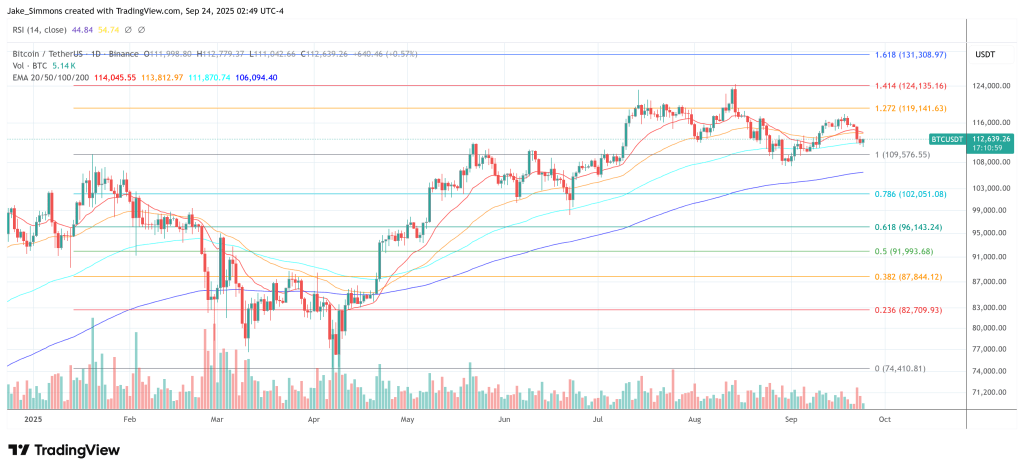
At press time, Bitcoin traded at $112,639.

Bitcoin price
Piyasa Fırsatı
NEAR Logosu
NEAR Fiyatı(NEAR)
$1.508
$1.508$1.508
-3.27%
USD
NEAR (NEAR) Canlı Fiyat Grafiği
Sorumluluk Reddi: Bu sitede yeniden yayınlanan makaleler, halka açık platformlardan alınmıştır ve yalnızca bilgilendirme amaçlıdır. MEXC'nin görüşlerini yansıtmayabilir. Tüm hakları telif sahiplerine aittir. Herhangi bir içeriğin üçüncü taraf haklarını ihlal ettiğini düşünüyorsanız, kaldırılması için lütfen service@support.mexc.com ile iletişime geçin. MEXC, içeriğin doğruluğu, eksiksizliği veya güncelliği konusunda hiçbir garanti vermez ve sağlanan bilgilere dayalı olarak alınan herhangi bir eylemden sorumlu değildir. İçerik, finansal, yasal veya diğer profesyonel tavsiye niteliğinde değildir ve MEXC tarafından bir tavsiye veya onay olarak değerlendirilmemelidir.

Ayrıca Şunları da Beğenebilirsiniz

Top 3 Cryptos That Could Turn $100 Into $5,000 in 2025 – Including This Meme-to-Earn Token’s Game-Changing Potential

Top 3 Cryptos That Could Turn $100 Into $5,000 in 2025 – Including This Meme-to-Earn Token’s Game-Changing Potential

Discover 3 cryptos with explosive growth potential - Ethereum, Shiba Inu, and MAGAX. Here’s why early investors are eyeing them for 2025.
Paylaş
Blockchainreporter2025/09/18 07:45
Robert W. Baird & Co. Discloses Core AI Design Parameters and Launches Public Testing of Baird NEUROFORGE™ Equity AI

Robert W. Baird & Co. Discloses Core AI Design Parameters and Launches Public Testing of Baird NEUROFORGE™ Equity AI

New York, United States (PinionNewswire) — Robert W. Baird & Co. (“Baird”) today announced the public disclosure of selected core system design parameters of its
Paylaş
AI Journal2025/12/23 02:16
Best Crypto to Buy as Saylor & Crypto Execs Meet in US Treasury Council

Best Crypto to Buy as Saylor & Crypto Execs Meet in US Treasury Council

The post Best Crypto to Buy as Saylor & Crypto Execs Meet in US Treasury Council appeared on BitcoinEthereumNews.com. Michael Saylor and a group of crypto executives met in Washington, D.C. yesterday to push for the Strategic Bitcoin Reserve Bill (the BITCOIN Act), which would see the U.S. acquire up to 1M $BTC over five years. With Bitcoin being positioned yet again as a cornerstone of national monetary policy, many investors are turning their eyes to projects that lean into this narrative – altcoins, meme coins, and presales that could ride on the same wave. Read on for three of the best crypto projects that seem especially well‐suited to benefit from this macro shift:  Bitcoin Hyper, Best Wallet Token, and Remittix. These projects stand out for having a strong use case and high adoption potential, especially given the push for a U.S. Bitcoin reserve.   Why the Bitcoin Reserve Bill Matters for Crypto Markets The strategic Bitcoin Reserve Bill could mark a turning point for the U.S. approach to digital assets. The proposal would see America build a long-term Bitcoin reserve by acquiring up to one million $BTC over five years. To make this happen, lawmakers are exploring creative funding methods such as revaluing old gold certificates. The plan also leans on confiscated Bitcoin already held by the government, worth an estimated $15–20B. This isn’t just a headline for policy wonks. It signals that Bitcoin is moving from the margins into the core of financial strategy. Industry figures like Michael Saylor, Senator Cynthia Lummis, and Marathon Digital’s Fred Thiel are all backing the bill. They see Bitcoin not just as an investment, but as a hedge against systemic risks. For the wider crypto market, this opens the door for projects tied to Bitcoin and the infrastructure that supports it. 1. Bitcoin Hyper ($HYPER) – Turning Bitcoin Into More Than Just Digital Gold The U.S. may soon treat Bitcoin as…
Paylaş
BitcoinEthereumNews2025/09/18 00:27