Gold Price Plummets to Monthly Low as Anxious Traders Await Fed Verdict

BitcoinWorld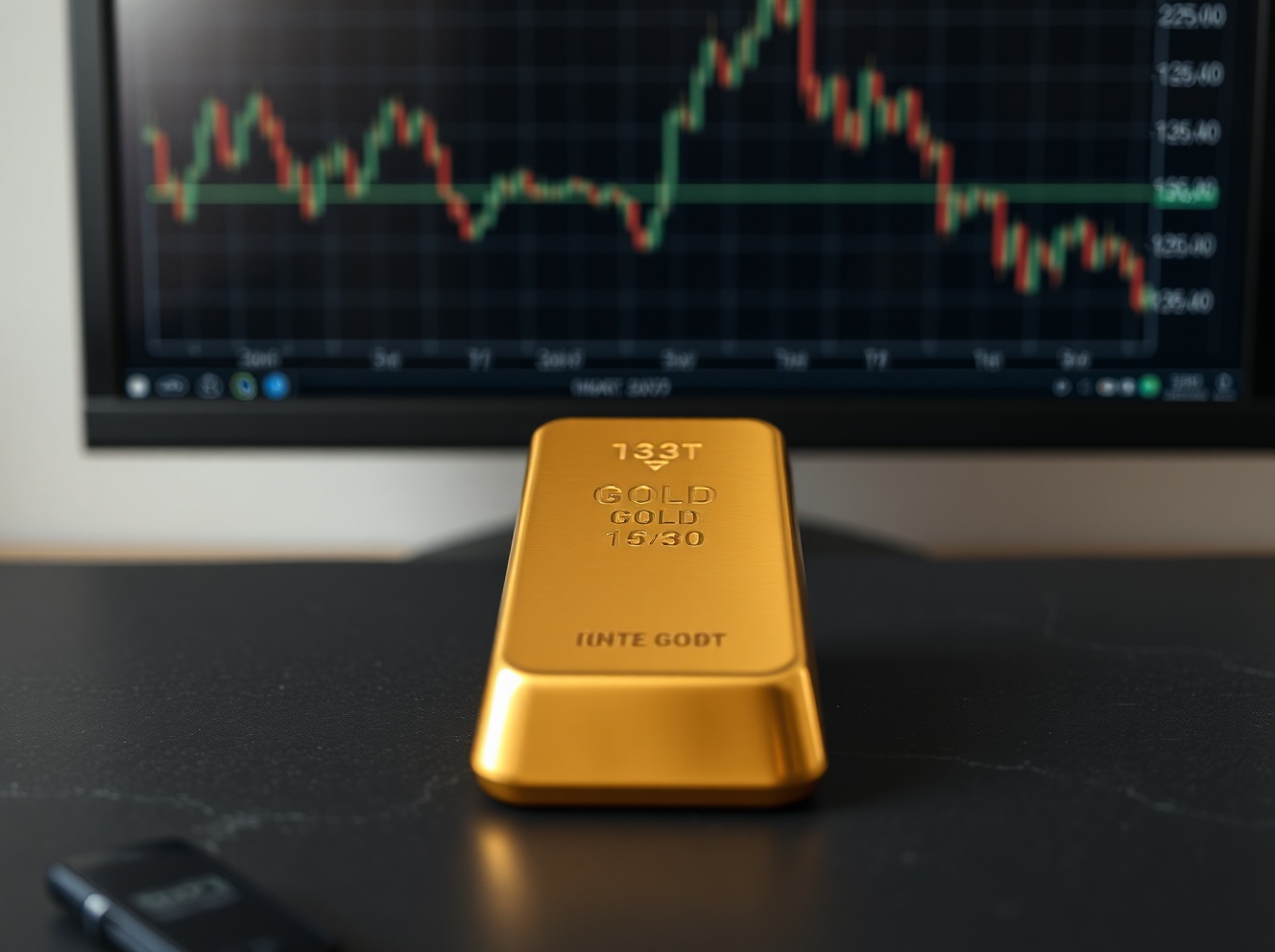
Gold Price Plummets to Monthly Low as Anxious Traders Await Fed Verdict
Gold prices have plunged to their lowest level in a month, a stark prelude to the Federal Reserve’s pivotal policy announcement that has global markets on edge. This significant drop reflects a profound shift in investor sentiment, as traditional safe-haven assets face intense pressure from shifting macroeconomic expectations. Consequently, traders are rapidly repositioning portfolios, bracing for potential volatility. The precious metal’s decline underscores the dominant narrative currently driving financial markets. Therefore, understanding the confluence of factors behind this move is crucial for any market participant.
Gold Price Action and Technical Breakdown
The spot price of gold slid decisively below the psychologically important $2,300 per ounce level, marking a fresh monthly trough. This decline represents a continuation of the corrective phase that began after prices failed to sustain record highs earlier in the quarter. On a technical basis, the metal has breached several key short-term support levels, triggering automated sell orders and exacerbating the downward momentum. Market analysts point to increased trading volume during the sell-off, confirming the move’s significance. Moreover, the Relative Strength Index (RSI) has dipped into oversold territory, which sometimes precedes a technical rebound. However, the prevailing fundamental headwinds currently outweigh these technical signals.
This price action is not occurring in isolation. It mirrors broader movements across the commodity and currency complexes. For instance, the U.S. Dollar Index (DXY) has concurrently strengthened, applying classic downward pressure on dollar-denominated gold. Simultaneously, Treasury yields have edged higher, increasing the opportunity cost of holding non-yielding bullion. The following table illustrates key price levels and indicators from the recent session:
| Metric | Value | Change |
|---|---|---|
| Spot Gold (XAU/USD) | $2,285.50 | -1.8% |
| Key Support Breach | $2,300 | Broken |
| 14-Day RSI | 28.5 | Oversold |
| U.S. Dollar Index | 105.20 | +0.5% |
| 10-Year Treasury Yield | 4.65% | +8 bps |
The Federal Reserve’s Dominant Influence
All market eyes are fixed squarely on the Federal Open Market Committee (FOMC). The central bank’s upcoming decision on interest rates and its accompanying economic projections are the primary catalysts for the current gold market weakness. Investors widely anticipate the Fed will maintain its current benchmark rate. However, the critical uncertainty lies in the committee’s forward guidance, known as the “dot plot,” and Chair Jerome Powell’s post-meeting press conference. Recent inflation data has shown stubborn persistence, complicating the path toward policy easing. Consequently, traders are pricing in a more hawkish stance, meaning rates could remain higher for longer than previously expected.
This expectation creates a hostile environment for gold. Higher interest rates directly increase the carrying cost of gold, which offers no yield. They also bolster the U.S. dollar, making gold more expensive for foreign buyers. Historical analysis shows a strong inverse correlation between real yields—adjusted for inflation—and gold prices. As real yields rise, gold typically falls. The current market repricing reflects a recalibration of these expectations. Analysts from major financial institutions note that any hint from the Fed of delayed or fewer rate cuts in 2025 could trigger further liquidation in gold holdings.
Expert Analysis on Market Sentiment
Market strategists emphasize that the sell-off is largely a positioning adjustment rather than a structural change in gold’s long-term narrative. “We are witnessing a classic ‘risk-off’ to ‘risk-on’ rotation in anticipation of the Fed,” notes a senior commodity strategist at a global bank. “Speculative long positions in gold futures were at extreme levels. The approaching Fed meeting provided a clear catalyst for profit-taking and de-risking.” This view is supported by Commitments of Traders (COT) report data, which recently showed managed money net longs near multi-year highs. Such crowded positioning often leaves a market vulnerable to a sharp correction on any negative catalyst.
Furthermore, physical demand indicators present a mixed picture. Central bank purchases, a major support pillar in recent years, are expected to continue but may not be aggressive enough to offset speculative selling in the short term. Meanwhile, demand from key consumer markets like India and China has been seasonally subdued. This temporary softness in physical buying removes a potential floor for prices during this period of financial market stress. Therefore, the immediate price trajectory remains almost entirely dependent on the financial market reaction to the Fed’s communication.
Broader Economic Context and Impact
The movement in gold is a key signal within a larger macroeconomic tapestry. A stronger dollar and higher yields, if sustained, have implications far beyond the precious metals market. They tighten global financial conditions, which can pressure emerging market currencies and equities. For consumers, a weaker gold price can translate to lower costs for jewelry and technology components. For mining companies, declining margins may impact production forecasts and capital expenditure plans. This interconnectedness highlights gold’s role as a financial barometer.
Other asset classes are reacting in tandem. Equity markets, particularly rate-sensitive technology stocks, are also experiencing volatility. Cryptocurrencies, which some investors treat as digital “risk-off” assets, have shown correlated weakness. This synchronized movement underscores that the Fed’s decision is the dominant macro driver across all risk assets. Key factors the market is monitoring include:
- Inflation Outlook: The Fed’s assessment of recent CPI and PCE data.
- Labor Market Strength: Any mention of wage growth or employment trends.
- Balance Sheet Policy: Guidance on the pace of quantitative tightening (QT).
- Global Risks: Commentary on geopolitical tensions or global growth.
Each of these elements will feed into the market’s perception of the future rate path.
Historical Precedents and Price Outlook
Examining past Fed cycles provides valuable context. Historically, gold often experiences weakness in the immediate run-up to a anticipated hawkish Fed meeting, followed by a “sell the rumor, buy the news” reaction if the guidance is not more severe than expected. The metal’s performance in the weeks following the decision will likely hinge on the nuance of the Fed’s message and the subsequent flow of economic data. If the central bank acknowledges progress on inflation while maintaining a cautious stance, gold may find a footing. Conversely, explicitly hawkish rhetoric could extend the downtrend.
The long-term fundamentals for gold remain intact, according to many analysts. These include:
- Geopolitical Uncertainty: Ongoing conflicts continue to underpin safe-haven demand.
- Central Bank Diversification: A strategic shift away from the U.S. dollar in reserves.
- Fiscal Concerns: Persistent high government debt levels in major economies.
- Inflation Hedge: Gold’s traditional role as a store of value over the very long term.
However, in the short term, these factors are being overshadowed by the dominant monetary policy narrative. The immediate technical target for traders is now the next major support zone around $2,250, a level that held firm during a previous correction.
Conclusion
The slide in the gold price to a fresh monthly low is a direct reflection of heightened market anxiety ahead of the Federal Reserve’s critical policy decision. This move is driven by a potent mix of technical breakdowns, a strengthening dollar, rising yields, and a strategic reduction in speculative long positions. While long-term supportive factors for gold persist, the short-term trajectory is unequivocally tied to the central bank’s guidance on interest rates. The coming days will determine whether this decline is a healthy correction within a longer bull market or the beginning of a more sustained period of pressure for the precious metal. Consequently, investors should prepare for elevated volatility as the market digests the Fed’s verdict and projects its implications for the future path of inflation and growth.
FAQs
Q1: Why does the Federal Reserve decision impact the gold price?
The Federal Reserve sets U.S. interest rates. Higher rates increase the opportunity cost of holding gold (which pays no interest) and typically strengthen the U.S. dollar, making dollar-priced gold more expensive for international buyers. Therefore, expectations for hawkish policy often pressure gold prices.
Q2: What are “real yields” and why are they important for gold?
Real yields are the inflation-adjusted return on government bonds (like U.S. Treasuries). Gold, which offers no yield, becomes less attractive when investors can earn a higher real return on safe government debt. There is a strong historical inverse correlation between real yields and gold prices.
Q3: Has physical gold demand changed during this price drop?
Reports indicate physical demand from major markets like India and China has been seasonally quiet. While central bank buying is a consistent long-term support, it often does not react quickly enough to offset rapid speculative selling in futures and ETF markets, which is driving the current short-term decline.
Q4: What key level are gold traders watching next?
Technical analysts are monitoring the $2,250 per ounce support level. A decisive break below this zone could signal a deeper correction toward $2,200. Conversely, holding above it could provide a base for a potential rebound if the Fed’s message is perceived as less hawkish than feared.
Q5: Do other assets behave similarly to gold before Fed meetings?
Yes, there is often correlated movement. The U.S. dollar tends to strengthen, and Treasury yields often rise on expectations of a hawkish hold. Rate-sensitive assets like technology stocks and cryptocurrencies can also show weakness, as all markets adjust to the anticipated shift in the cost of capital and financial conditions.
This post Gold Price Plummets to Monthly Low as Anxious Traders Await Fed Verdict first appeared on BitcoinWorld.
You May Also Like

Playnance Announces GCOIN Trading on MEXC as Token Officially Goes Live

Nomba’s new API lets fintechs pay out to 5 countries without the FX headache