The post Crypto Hackers are Shifting Focus to RWA Projects, CertiK Report Shows appeared on BitcoinEthereumNews.com. A new report from CertiK assessed the RWA (real-world assets) market in 2025 and found a growing wave of hacks. Criminals have started shifting their approach during the first half of the year, hammering on the technology’s weaknesses. Also, the report highlights how the majority of tokenized assets sit on Ethereum and a few dominant protocols. This concentration means a single major exploit could ripple through the entire $13.9 billion+ RWA sector. RWA Hacks on the Rise Blockchain security researchers at CertiK published their Skynet RWA Security Report today. It shows how threats against RWA projects have evolved since 2023, and the attack surface now extends across both on and off-chain assets. RWA Hacks By Year. Source: Certik From January to July, the RWA sector lost $14.6 million to hacks and frauds, which is almost as much as the entirety of 2023. So far, there are no signs of stopping, especially since RWAs received a lot of market attention this year. Unique Hybrid Vulnerabilities Nonetheless, CertiK doesn’t ascribe economic forces as the reason for this shift. In previous years, RWA crime focused on off-chain threats, with credit and loan defaults representing a substantial chunk of all incidents. Today, however, the RWA market is undoubtedly becoming more susceptible to hacks: “The data highlights a clear transformation in the RWA threat landscape. The first half of 2025 shows a complete shift: losses jumped to nearly $14.6 million, and were caused entirely by on-chain and operational failures. The threat has evolved from exploiting external financial arrangements to attacking the core technology…itself,” CertiK claimed. And yet, RWA’s unique integration with TradFi makes it vulnerable to hacks on both ends. Oracles are the key link between the on-chain and off-chain worlds, which means a single breach here can cause smart contracts to behave irrationally. It… The post Crypto Hackers are Shifting Focus to RWA Projects, CertiK Report Shows appeared on BitcoinEthereumNews.com. A new report from CertiK assessed the RWA (real-world assets) market in 2025 and found a growing wave of hacks. Criminals have started shifting their approach during the first half of the year, hammering on the technology’s weaknesses. Also, the report highlights how the majority of tokenized assets sit on Ethereum and a few dominant protocols. This concentration means a single major exploit could ripple through the entire $13.9 billion+ RWA sector. RWA Hacks on the Rise Blockchain security researchers at CertiK published their Skynet RWA Security Report today. It shows how threats against RWA projects have evolved since 2023, and the attack surface now extends across both on and off-chain assets. RWA Hacks By Year. Source: Certik From January to July, the RWA sector lost $14.6 million to hacks and frauds, which is almost as much as the entirety of 2023. So far, there are no signs of stopping, especially since RWAs received a lot of market attention this year. Unique Hybrid Vulnerabilities Nonetheless, CertiK doesn’t ascribe economic forces as the reason for this shift. In previous years, RWA crime focused on off-chain threats, with credit and loan defaults representing a substantial chunk of all incidents. Today, however, the RWA market is undoubtedly becoming more susceptible to hacks: “The data highlights a clear transformation in the RWA threat landscape. The first half of 2025 shows a complete shift: losses jumped to nearly $14.6 million, and were caused entirely by on-chain and operational failures. The threat has evolved from exploiting external financial arrangements to attacking the core technology…itself,” CertiK claimed. And yet, RWA’s unique integration with TradFi makes it vulnerable to hacks on both ends. Oracles are the key link between the on-chain and off-chain worlds, which means a single breach here can cause smart contracts to behave irrationally. It…

Crypto Hackers are Shifting Focus to RWA Projects, CertiK Report Shows

3 min read

A new report from CertiK assessed the RWA (real-world assets) market in 2025 and found a growing wave of hacks. Criminals have started shifting their approach during the first half of the year, hammering on the technology’s weaknesses.

Also, the report highlights how the majority of tokenized assets sit on Ethereum and a few dominant protocols. This concentration means a single major exploit could ripple through the entire $13.9 billion+ RWA sector.

RWA Hacks on the Rise

Blockchain security researchers at CertiK published their Skynet RWA Security Report today. It shows how threats against RWA projects have evolved since 2023, and the attack surface now extends across both on and off-chain assets.

RWA Hacks By Year CertikRWA Hacks By Year. Source: Certik

From January to July, the RWA sector lost $14.6 million to hacks and frauds, which is almost as much as the entirety of 2023. So far, there are no signs of stopping, especially since RWAs received a lot of market attention this year.

Unique Hybrid Vulnerabilities

Nonetheless, CertiK doesn’t ascribe economic forces as the reason for this shift. In previous years, RWA crime focused on off-chain threats, with credit and loan defaults representing a substantial chunk of all incidents.

Today, however, the RWA market is undoubtedly becoming more susceptible to hacks:

And yet, RWA’s unique integration with TradFi makes it vulnerable to hacks on both ends. Oracles are the key link between the on-chain and off-chain worlds, which means a single breach here can cause smart contracts to behave irrationally. It may totally untether the RWA from the underlying assets, allowing for profitable exploits.

In other words, a firm may offer RWAs solely based on “rock solid” assets like gold or US Treasury bonds, but a well-placed hack could cause the entire security structure to collapse.

Plenty of firms base RWAs on other sturdy assets like real estate, but the illiquid nature of this market also enables oracle manipulation. Most RWAs on the US market currently consist of assets like these, not private credit, but that doesn’t necessarily offer real protection.

RWA Underlying AssetsRWA Underlying Assets. Source: Certik

Security Measures and TradFi’s Role

CertiK describes a few layers of security, some of which may be a little counterintuitive. To be clear, it prioritizes the classic hallmarks of crypto protection, but it also includes other steps.

For example, CertiK firmly stressed the importance of legally sound contracts as “a poorly drafted agreement might…render the entire structure unenforceable.” This would be catastrophic in the event of a major breach.

For this reason, the firm claimed that TradFi institutional participation is a vital component of RWA security. Firms like BlackRock already have well-established principles for most of CertiK’s recommendations, from legal language, solid asset storage, administrative guardrails, and more.

Unfortunately, this makes JPMorgan’s recent report that TradFi institutions are losing interest in RWAs all the more concerning. If crypto-native firms will soon represent the bulk of the RWA market, they’ll need diligent preparations to avoid this growing hack wave.

For now, this report details many measures that can be taken, and it assesses all the largest players in today’s RWA market on their security principles. As long as these companies keep proactively improving their security posture, they can outpace these attacks.

The post Crypto Hackers are Shifting Focus to RWA Projects, CertiK Report Shows appeared first on BeInCrypto.

Source: https://beincrypto.com/rwa-hacks-surge-certik-report-highlights-2025/

Market Opportunity
Threshold Logo
Threshold Price(T)
$0.008134
$0.008134$0.008134
0.00%
USD
Threshold (T) Live Price Chart
Disclaimer: The articles reposted on this site are sourced from public platforms and are provided for informational purposes only. They do not necessarily reflect the views of MEXC. All rights remain with the original authors. If you believe any content infringes on third-party rights, please contact service@support.mexc.com for removal. MEXC makes no guarantees regarding the accuracy, completeness, or timeliness of the content and is not responsible for any actions taken based on the information provided. The content does not constitute financial, legal, or other professional advice, nor should it be considered a recommendation or endorsement by MEXC.

You May Also Like

Three dormant wallets, suspected to belong to the same entity, purchased 5,970 ETH eight hours ago.

Three dormant wallets, suspected to belong to the same entity, purchased 5,970 ETH eight hours ago.

PANews reported on February 4 that, according to Lookonchain monitoring, three wallets that had been dormant for four years (likely controlled by the same entity
Share
PANews2026/02/04 11:36
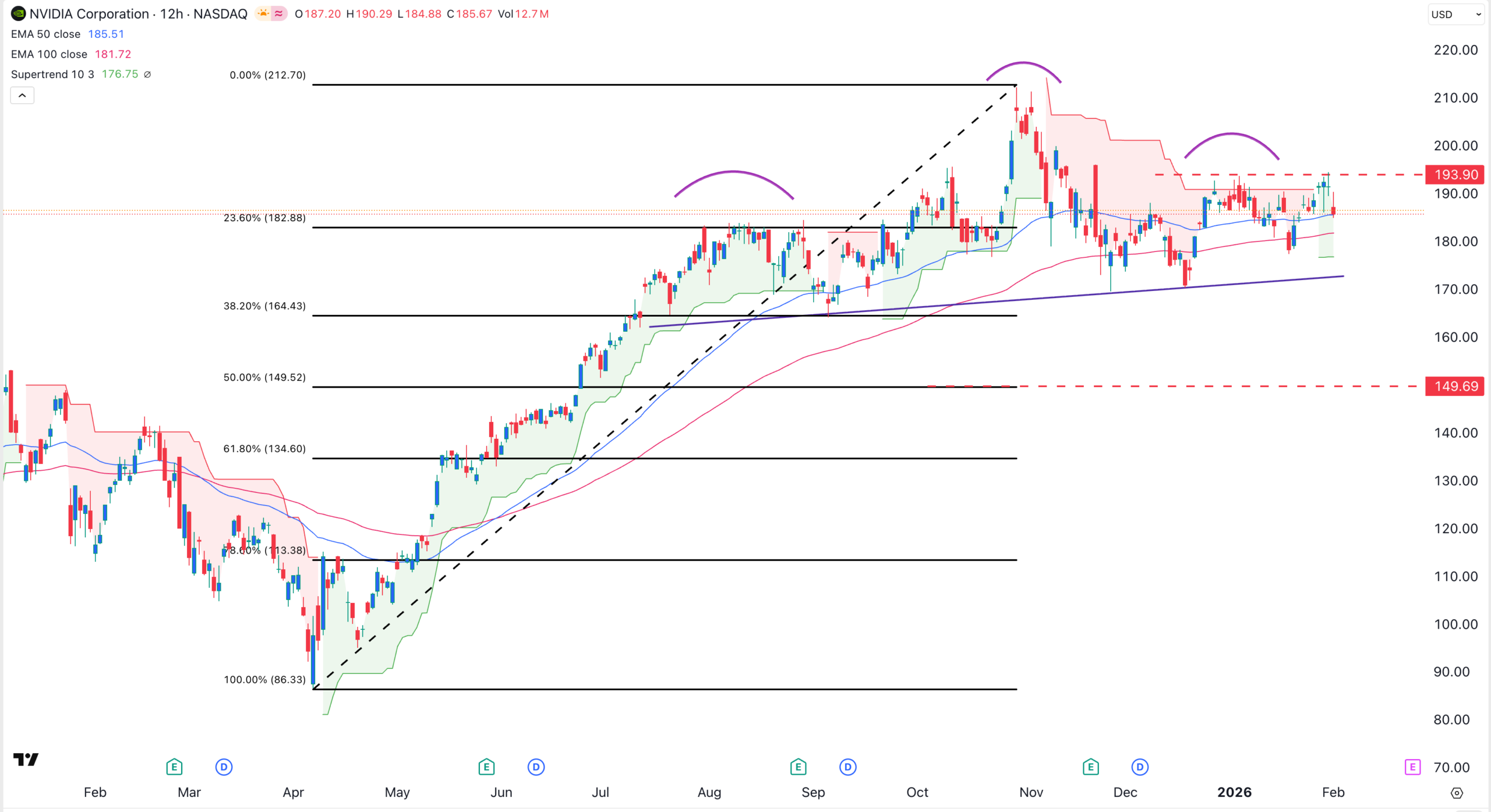
NVIDIA Stock Price Analysis as OpenAI Issues Concerns About its Chips

NVIDIA Stock Price Analysis as OpenAI Issues Concerns About its Chips

Key Insights NVIDIA stock started the week in the red. It crashed by over 2%. Meanwhile, the S&P 500, Dow Jones, and Nasdaq 100 moved close to their all-time highs
Share
Themarketperiodical2026/02/04 11:27
Ondo Finance Launches USDY Yieldcoin on Stellar, Bringing Tokenized U.S. Treasuries to Users

Ondo Finance Launches USDY Yieldcoin on Stellar, Bringing Tokenized U.S. Treasuries to Users

Ondo Finance, a U.S.-based digital asset firm specializing in bringing traditional financial products on-chain through tokenization, is expanding its yieldcoin USDY to the Stellar network. This lates update marks a step forward in merging tokenized real-world assets with a global payments infrastructure, unlocking new opportunities for users worldwide. The announcement was made at the Stellar Meridian event in Copacabana, Rio de Janeiro, on September 17. USDY Joins the Stellar Ecosystem Ondo Finance, a recognized leader in tokenized real-world assets, announced the deployment of United States Dollar Yield (USDY) on Stellar, the payments-focused blockchain known for speed and low transaction costs. USDY is the most widely available “yieldcoin,” offering investors access to onchain assets backed by U.S. Treasuries. This launch allows Stellar’s global user base to tap into permissionless, yield-bearing assets tied to one of the safest financial instruments in the world. It also aligns with Stellar’s mission of driving fast, affordable cross-border payments. Combining Yield with Payments Infrastructure “Stablecoins unlocked global access to the U.S. dollar. With USDY, we’re taking the next step by bringing U.S. Treasuries onchain in a form that combines stability, liquidity, and yield,” said Ian De Bode, Chief Strategy Officer at Ondo Finance. “Fast, affordable cross-border payments are at the center of what Stellar was designed to do. The global reach of the Stellar ecosystem combined with a yield-bearing asset like USDY levels up what is possible onchain, allowing wallets and businesses to offer yield opportunities to their users,” said Denelle Dixon, CEO of the Stellar Development Foundation. Ondo claims by pairing USDY with Stellar’s infrastructure, new possibilities open up in treasury management, collateralization, and everyday financial applications. Unlocking Institutional and Retail Use Cases USDY currently manages over $650 million in total value locked (TVL) across nine blockchains and offers a 5.3% APY. By launching on Stellar, Ondo Finance extends these benefits to global retail and institutional users. The firm explains balances on Stellar can now become productive, supporting use cases such as onchain savings, institutional treasury strategies, cost-efficient collateral for DeFi protocols, and remittance flows that carry yield rather than remaining static. A Milestone for Tokenized Treasuries With the integration of USDY, Stellar users gain more than just access to stable-value assets—they gain access to institutional-grade yield. For investors outside the U.S., the launch represents a new way to combine the safety of Treasuries with the accessibility of blockchain technology. As tokenization accelerates globally, Ondo Finance’s decision to deploy USDY on Stellar reinforces the narrative that blockchain is not just about speculation, but about reimagining the global financial system through secure, yield-bearing digital assets
Share
CryptoNews2025/09/18 00:46