The post Europol bounty for Russian crypto ransomware gang wasn’t real appeared on BitcoinEthereumNews.com. A $50,000 bounty supposedly issued by Europol to help track down administrators of the Russian-based ransomware gang Qilin was actually just a Telegram scam. News of the fictitious bounty fooled several cybersecurity news outlets into reporting that a reward would be paid to anybody who could give Europol information on two Qilin administrators known as Haise and XORacle. The pair supposedly “coordinate affiliates and oversee extortion activities,” and Europol wanted information that “directly leads to the identification or location of these administrators.” However, Europol confirmed to SecurityWeek that the supposed reward was a “scam” and that the agency never announced the bounty.  Not only that, the only social media channels run by Europol can be found on Facebook, Instagram, Bluesky, X, YouTube, and LinkedIn. SecurityWeek notes that a rival gang may have created the fake bounty to damage a rival’s reputation, steal their affiliates, or create paranoia within the gang.   Qilin attacks national security for crypto Qilin is a prominent ransomware gang that extorts crypto, including bitcoin and monero, through its ransomware-as-a-service. In March this year, Qilin claimed to have stolen and sold data including “private correspondence, personal information, decrees etc,” from the Ukrainian Ministry of Foreign Affairs.  Read more: LockBit ransomware gang sends ‘friendly advice’ to new FBI Director Kash Patel It’s also targeted hospitals in London and published stolen patient data, claiming that it shouldn’t be blamed for its actions.  One Qilin member told BBC reporter Joe Tidy, “We are very sorry for the people who were suffered because of it. Herewith we don’t consider ourselves guilty and we ask you don’t blame us in this situation.” The group instead claimed it attacked hospitals in retaliation for the UK’s role in an unspecified war.  Qilin reportedly doesn’t attack countries within the Commonwealth of Independent States, including Russia, Kyrgyzstan,… The post Europol bounty for Russian crypto ransomware gang wasn’t real appeared on BitcoinEthereumNews.com. A $50,000 bounty supposedly issued by Europol to help track down administrators of the Russian-based ransomware gang Qilin was actually just a Telegram scam. News of the fictitious bounty fooled several cybersecurity news outlets into reporting that a reward would be paid to anybody who could give Europol information on two Qilin administrators known as Haise and XORacle. The pair supposedly “coordinate affiliates and oversee extortion activities,” and Europol wanted information that “directly leads to the identification or location of these administrators.” However, Europol confirmed to SecurityWeek that the supposed reward was a “scam” and that the agency never announced the bounty.  Not only that, the only social media channels run by Europol can be found on Facebook, Instagram, Bluesky, X, YouTube, and LinkedIn. SecurityWeek notes that a rival gang may have created the fake bounty to damage a rival’s reputation, steal their affiliates, or create paranoia within the gang.   Qilin attacks national security for crypto Qilin is a prominent ransomware gang that extorts crypto, including bitcoin and monero, through its ransomware-as-a-service. In March this year, Qilin claimed to have stolen and sold data including “private correspondence, personal information, decrees etc,” from the Ukrainian Ministry of Foreign Affairs.  Read more: LockBit ransomware gang sends ‘friendly advice’ to new FBI Director Kash Patel It’s also targeted hospitals in London and published stolen patient data, claiming that it shouldn’t be blamed for its actions.  One Qilin member told BBC reporter Joe Tidy, “We are very sorry for the people who were suffered because of it. Herewith we don’t consider ourselves guilty and we ask you don’t blame us in this situation.” The group instead claimed it attacked hospitals in retaliation for the UK’s role in an unspecified war.  Qilin reportedly doesn’t attack countries within the Commonwealth of Independent States, including Russia, Kyrgyzstan,…

Europol bounty for Russian crypto ransomware gang wasn’t real

2 min read

A $50,000 bounty supposedly issued by Europol to help track down administrators of the Russian-based ransomware gang Qilin was actually just a Telegram scam.

News of the fictitious bounty fooled several cybersecurity news outlets into reporting that a reward would be paid to anybody who could give Europol information on two Qilin administrators known as Haise and XORacle.

The pair supposedly “coordinate affiliates and oversee extortion activities,” and Europol wanted information that “directly leads to the identification or location of these administrators.”

However, Europol confirmed to SecurityWeek that the supposed reward was a “scam” and that the agency never announced the bounty. 

Not only that, the only social media channels run by Europol can be found on Facebook, Instagram, Bluesky, X, YouTube, and LinkedIn.

SecurityWeek notes that a rival gang may have created the fake bounty to damage a rival’s reputation, steal their affiliates, or create paranoia within the gang.  

Qilin attacks national security for crypto

Qilin is a prominent ransomware gang that extorts crypto, including bitcoin and monero, through its ransomware-as-a-service.

In March this year, Qilin claimed to have stolen and sold data including “private correspondence, personal information, decrees etc,” from the Ukrainian Ministry of Foreign Affairs. 

Read more: LockBit ransomware gang sends ‘friendly advice’ to new FBI Director Kash Patel

It’s also targeted hospitals in London and published stolen patient data, claiming that it shouldn’t be blamed for its actions. 

One Qilin member told BBC reporter Joe Tidy, “We are very sorry for the people who were suffered because of it. Herewith we don’t consider ourselves guilty and we ask you don’t blame us in this situation.”

The group instead claimed it attacked hospitals in retaliation for the UK’s role in an unspecified war

Qilin reportedly doesn’t attack countries within the Commonwealth of Independent States, including Russia, Kyrgyzstan, Belarus and Moldova, and its affiliates take home 80% of ransom payments below $3 million.

Got a tip? Send us an email securely via Protos Leaks. For more informed news, follow us on X, Bluesky, and Google News, or subscribe to our YouTube channel.

Source: https://protos.com/europol-bounty-for-russian-crypto-ransomware-gang-wasnt-real/

Market Opportunity
Threshold Logo
Threshold Price(T)
$0.008122
$0.008122$0.008122
-0.14%
USD
Threshold (T) Live Price Chart
Disclaimer: The articles reposted on this site are sourced from public platforms and are provided for informational purposes only. They do not necessarily reflect the views of MEXC. All rights remain with the original authors. If you believe any content infringes on third-party rights, please contact service@support.mexc.com for removal. MEXC makes no guarantees regarding the accuracy, completeness, or timeliness of the content and is not responsible for any actions taken based on the information provided. The content does not constitute financial, legal, or other professional advice, nor should it be considered a recommendation or endorsement by MEXC.
Tags:

You May Also Like

Three dormant wallets, suspected to belong to the same entity, purchased 5,970 ETH eight hours ago.

Three dormant wallets, suspected to belong to the same entity, purchased 5,970 ETH eight hours ago.

PANews reported on February 4 that, according to Lookonchain monitoring, three wallets that had been dormant for four years (likely controlled by the same entity
Share
PANews2026/02/04 11:36
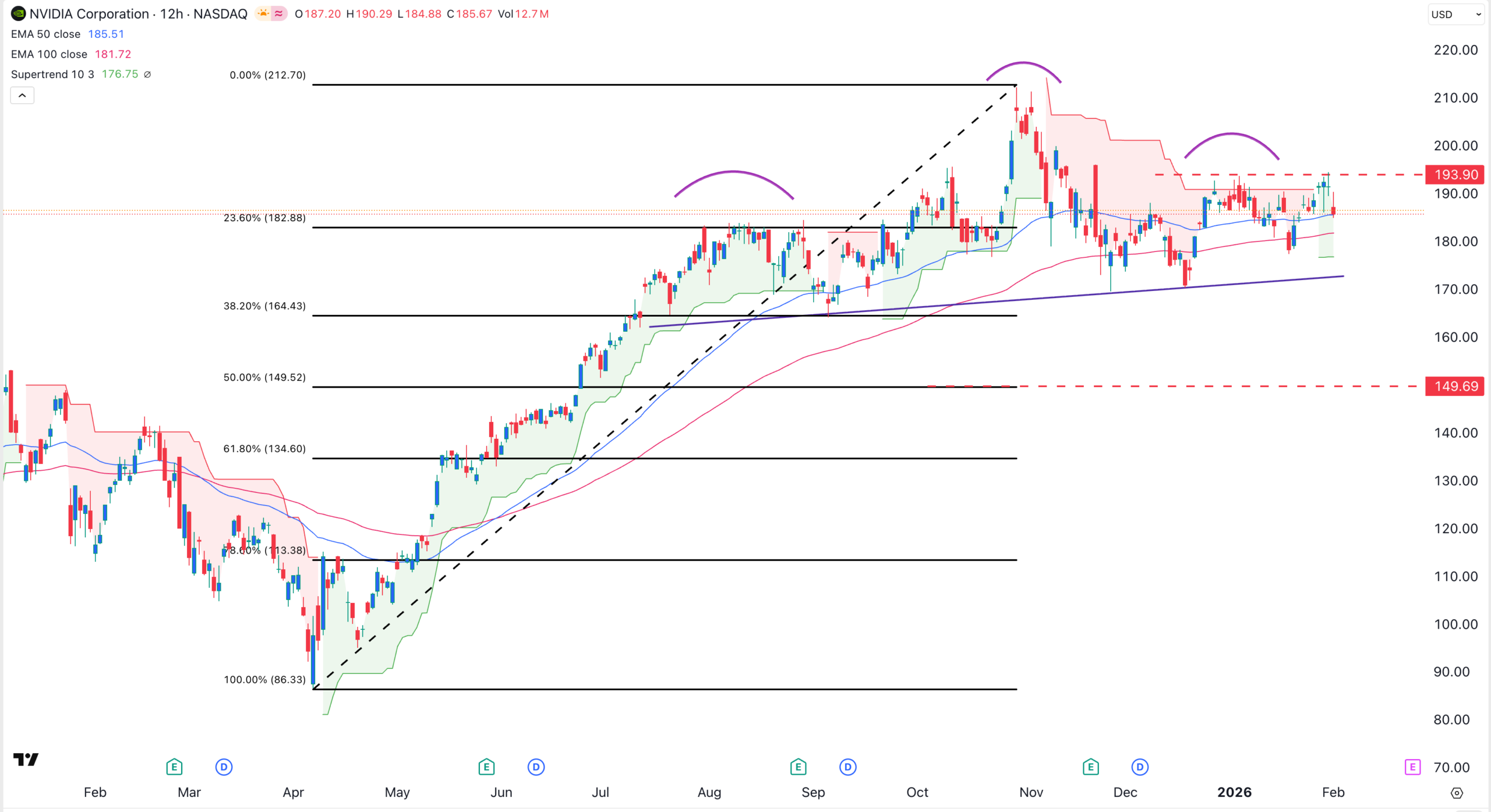
NVIDIA Stock Price Analysis as OpenAI Issues Concerns About its Chips

NVIDIA Stock Price Analysis as OpenAI Issues Concerns About its Chips

Key Insights NVIDIA stock started the week in the red. It crashed by over 2%. Meanwhile, the S&P 500, Dow Jones, and Nasdaq 100 moved close to their all-time highs
Share
Themarketperiodical2026/02/04 11:27
Ondo Finance Launches USDY Yieldcoin on Stellar, Bringing Tokenized U.S. Treasuries to Users

Ondo Finance Launches USDY Yieldcoin on Stellar, Bringing Tokenized U.S. Treasuries to Users

Ondo Finance, a U.S.-based digital asset firm specializing in bringing traditional financial products on-chain through tokenization, is expanding its yieldcoin USDY to the Stellar network. This lates update marks a step forward in merging tokenized real-world assets with a global payments infrastructure, unlocking new opportunities for users worldwide. The announcement was made at the Stellar Meridian event in Copacabana, Rio de Janeiro, on September 17. USDY Joins the Stellar Ecosystem Ondo Finance, a recognized leader in tokenized real-world assets, announced the deployment of United States Dollar Yield (USDY) on Stellar, the payments-focused blockchain known for speed and low transaction costs. USDY is the most widely available “yieldcoin,” offering investors access to onchain assets backed by U.S. Treasuries. This launch allows Stellar’s global user base to tap into permissionless, yield-bearing assets tied to one of the safest financial instruments in the world. It also aligns with Stellar’s mission of driving fast, affordable cross-border payments. Combining Yield with Payments Infrastructure “Stablecoins unlocked global access to the U.S. dollar. With USDY, we’re taking the next step by bringing U.S. Treasuries onchain in a form that combines stability, liquidity, and yield,” said Ian De Bode, Chief Strategy Officer at Ondo Finance. “Fast, affordable cross-border payments are at the center of what Stellar was designed to do. The global reach of the Stellar ecosystem combined with a yield-bearing asset like USDY levels up what is possible onchain, allowing wallets and businesses to offer yield opportunities to their users,” said Denelle Dixon, CEO of the Stellar Development Foundation. Ondo claims by pairing USDY with Stellar’s infrastructure, new possibilities open up in treasury management, collateralization, and everyday financial applications. Unlocking Institutional and Retail Use Cases USDY currently manages over $650 million in total value locked (TVL) across nine blockchains and offers a 5.3% APY. By launching on Stellar, Ondo Finance extends these benefits to global retail and institutional users. The firm explains balances on Stellar can now become productive, supporting use cases such as onchain savings, institutional treasury strategies, cost-efficient collateral for DeFi protocols, and remittance flows that carry yield rather than remaining static. A Milestone for Tokenized Treasuries With the integration of USDY, Stellar users gain more than just access to stable-value assets—they gain access to institutional-grade yield. For investors outside the U.S., the launch represents a new way to combine the safety of Treasuries with the accessibility of blockchain technology. As tokenization accelerates globally, Ondo Finance’s decision to deploy USDY on Stellar reinforces the narrative that blockchain is not just about speculation, but about reimagining the global financial system through secure, yield-bearing digital assets
Share
CryptoNews2025/09/18 00:46