XRP price prediction: How could China’s Treasury sell call impact XRP?
Ripple’s XRP has continued to weaken in recent sessions, sliding from zones above $2.00 down toward the current $1.40 area.
- XRP remains under selling pressure, sliding from above $2.00 toward $1.40 as bearish technical indicators persist.
- China’s call for banks to curb U.S. Treasury exposure has sparked risk-off sentiment, weighing on crypto markets.
- Weak technicals and macro uncertainty continue to cap XRP’s upside, leaving prices vulnerable in the near term.
A steep sell-off seen earlier this week left technical indicators in bearish territory: the 50-day moving average remains overhead resistance, and the Relative Strength Index (RSI) languishes below neutral, signaling weakened buying pressure and persistent downside momentum.
China’s Treasury guidance sparks risk-off mood
A key catalyst that market participants now point to is the latest guidance from Chinese financial authorities urging domestic banks to cut back on U.S. Treasury holdings amid heightened market volatility, a move widely interpreted as a macro “sell call” on risk assets.
Bloomberg reported that China is advising its banks to limit or reduce exposure to U.S. government debt, citing concerns about market swings and concentration risk.
While U.S. Treasuries are traditionally considered safe, China’s directive is being read by investors as a broader risk-off signal that could ripple through global financial markets. That sentiment shift has triggered volatility in equities, fixed income, and importantly, crypto markets, where speculative tokens like XRP (XRP) are especially vulnerable to sentiment swings.
Here’s how the connection is playing out:
- Macro Risk Aversion: China’s push to cut Treasury holdings feeds fear of rising volatility and tightening liquidity.
- Risk Assets Under Pressure: Stocks, risk-linked currencies, and crypto often sell off when institutional players reduce speculative exposure.
- XRP Weakness Reinforced: With bearish technicals already in place, the added macro stress accelerates selling pressure rather than lifting demand.
XRP price prediction hinges on sentiment shift
Looking ahead, XRP’s near-term price outlook is likely to remain pressured unless broader market sentiment stabilizes. XRP’s recent attempt to stabilize near $1.30–$1.40 was met with minimal buying interest.
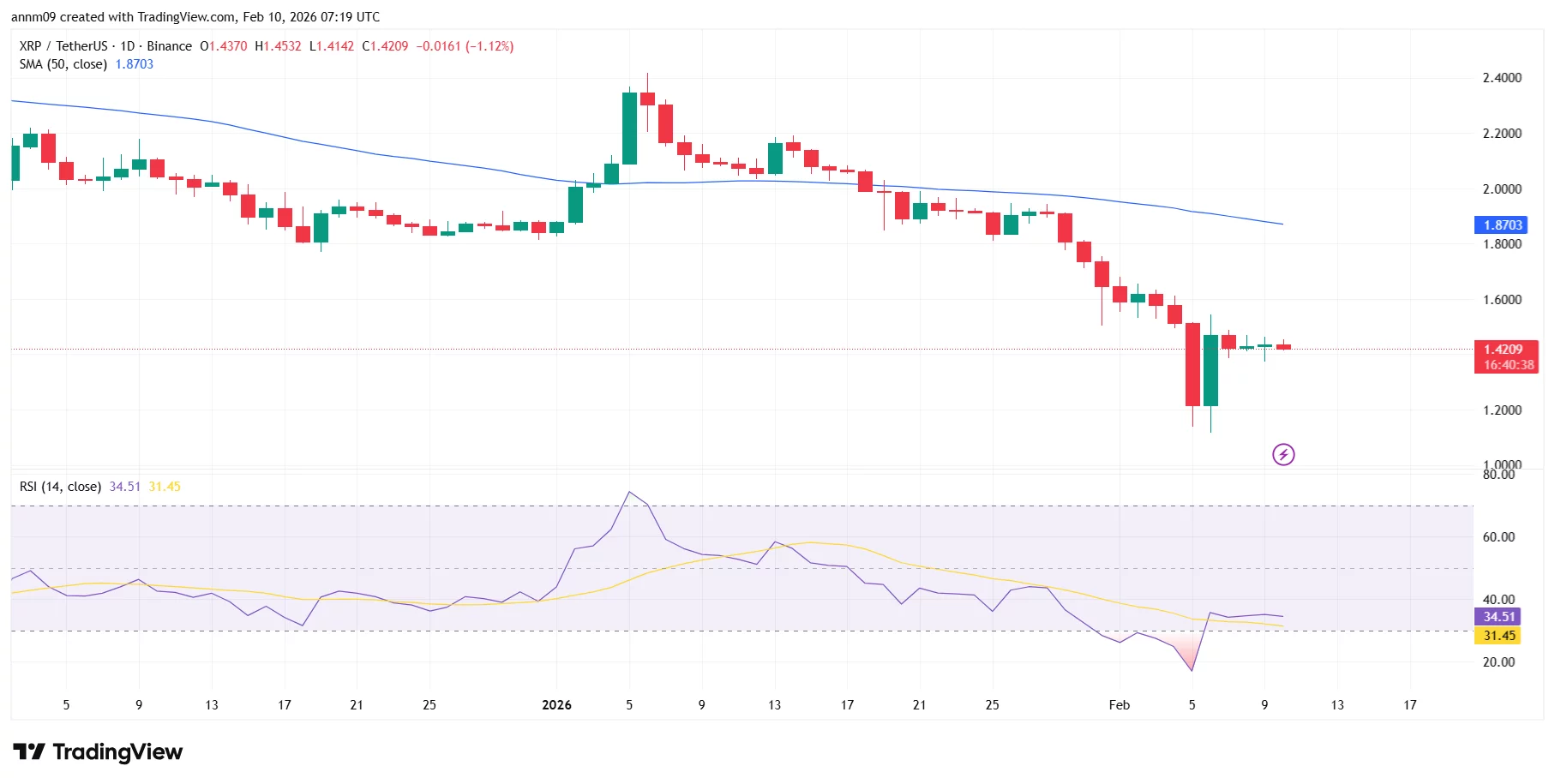
The RSI, still in sub-50 territory, suggests that bulls have not regained control, and the price continues to trade below a declining 50-day moving average. That alignment of weak technicals and a broader market “risk-off” backdrop helps explain why XRP has been unable to gain traction.
In summary, while China’s sell call is not a fundamental driver of XRP’s underlying adoption or Ripple’s business prospects, it does heighten bearish sentiment across risk assets. This leaves tokens like XRP vulnerable and underscores the importance of monitoring macro news alongside crypto-specific indicators in any price prediction.
You May Also Like

YZi Labs Binance Deposit: A $6.63M Signal That Could Shake the ID Token Market

BitGo wins BaFIN nod to offer regulated crypto trading in Europe
BitGo’s move creates further competition in a burgeoning European crypto market that is expected to generate $26 billion revenue this year, according to one estimate. BitGo, a digital asset infrastructure company with more than $100 billion in assets under custody, has received an extension of its license from Germany’s Federal Financial Supervisory Authority (BaFin), enabling it to offer crypto services to European investors. The company said its local subsidiary, BitGo Europe, can now provide custody, staking, transfer, and trading services. Institutional clients will also have access to an over-the-counter (OTC) trading desk and multiple liquidity venues.The extension builds on BitGo’s previous Markets-in-Crypto-Assets (MiCA) license, also issued by BaFIN, and adds trading to the existing custody, transfer and staking services. BitGo acquired its initial MiCA license in May 2025, which allowed it to offer certain services to traditional institutions and crypto native companies in the European Union.Read more