The post Vitalik Buterin issues a blunt reality check to the biggest crypto networks appeared on BitcoinEthereumNews.com. Ethereum co-founder Vitalik Buterin saidThe post Vitalik Buterin issues a blunt reality check to the biggest crypto networks appeared on BitcoinEthereumNews.com. Ethereum co-founder Vitalik Buterin said

Vitalik Buterin issues a blunt reality check to the biggest crypto networks

3 min read

Ethereum co-founder Vitalik Buterin said the role of layer-2 networks needs to be reconsidered as Ethereum’s main network continues to scale and transaction costs remain low.

In a post on X, Buterin said the original rollup-centric roadmap, which positioned layer-2s as the primary way Ethereum would scale, “no longer makes sense.” That roadmap envisioned layer-2s as secure extensions of Ethereum that would handle most transactions while inheriting Ethereum’s security guarantees, often described as “branded shards” of the network.

Layer 2s, such as Arbitrum, Optimism and Base, are offchain networks built on top of primary blockchains (Layer 1s) like Ethereum. The main purpose of these is to increase transaction speed and reduce transaction costs on the main network.

Think of Ethereum’s main network as a packed main hall at a conference. Space is limited, so getting in can be slow and expensive. Layer-2 networks act like overflow rooms, letting people participate and interact without crowding the main hall, while still staying connected to what’s happening there.

‘You are not scaling Ethereum’

According to Buterin, two developments have challenged that original vision for Layer 2 networks.

First, progress among layer-2s toward later stages of decentralization has been slower and more difficult than expected. Second, Ethereum itself is now scaling directly on layer-1, with fees remaining low and gas limits expected to increase significantly in 2026.

Buterin wrote that scaling Ethereum should mean creating “large quantities of block space that is backed by the full faith and credit of Ethereum,” where activity is “guaranteed to be valid, uncensored, unreverted, untouched, as long as Ethereum itself functions.”

He argued that high-throughput chains connected to Ethereum through multisig-controlled bridges do not meet that definition. “If you create a 10000 TPS EVM where its connection to L1 is mediated by a multisig bridge, then you are not scaling Ethereum,” he wrote.

In his view, Ethereum no longer needs layer-2s to function as “branded shards” for the network. This means that, because Ethereum itself is scaling, layer-2 networks are no longer required to function as official extensions of Ethereum. He also noted that many layer-2s are “not able or willing” to meet the decentralization and security standards required by the model.

Buterin also noted that some layer-2s may intentionally choose not to move beyond “stage 1,” including for regulatory reasons.

In one example, he wrote that a project argued it may never decentralize further because “their customers’ regulatory needs require them to have ultimate control.” While he said that approach may be appropriate for those users, he added that such systems should not be described as scaling Ethereum.

“This may be doing the right thing for your customers. But it should be obvious that if you are doing this, then you are not ‘scaling Ethereum’ in the sense meant by the rollup-centric roadmap,” Buterin wrote.”

Instead, Buterin suggested viewing layer-2s as a spectrum of networks with different levels of connection to Ethereum, each offering different trade-offs. He said layer-2s should focus on providing value beyond basic scaling, such as privacy features, application-specific design, ultra-fast transaction confirmation, or non-financial use cases, and be clear with users about what guarantees they provide.

Read more: Ethereum co-founder Vitalik Buterin warns decentralized stablecoins still have deep flaws

Source: https://www.coindesk.com/business/2026/02/03/you-are-not-scaling-ethereum-vitalik-buterin-issues-a-blunt-reality-check-to-the-biggest-crypto-networks

Disclaimer: The articles reposted on this site are sourced from public platforms and are provided for informational purposes only. They do not necessarily reflect the views of MEXC. All rights remain with the original authors. If you believe any content infringes on third-party rights, please contact service@support.mexc.com for removal. MEXC makes no guarantees regarding the accuracy, completeness, or timeliness of the content and is not responsible for any actions taken based on the information provided. The content does not constitute financial, legal, or other professional advice, nor should it be considered a recommendation or endorsement by MEXC.

You May Also Like

Three dormant wallets, suspected to belong to the same entity, purchased 5,970 ETH eight hours ago.

Three dormant wallets, suspected to belong to the same entity, purchased 5,970 ETH eight hours ago.

PANews reported on February 4 that, according to Lookonchain monitoring, three wallets that had been dormant for four years (likely controlled by the same entity
Share
PANews2026/02/04 11:36
NVIDIA Stock Price Analysis as OpenAI Issues Concerns About its Chips

NVIDIA Stock Price Analysis as OpenAI Issues Concerns About its Chips

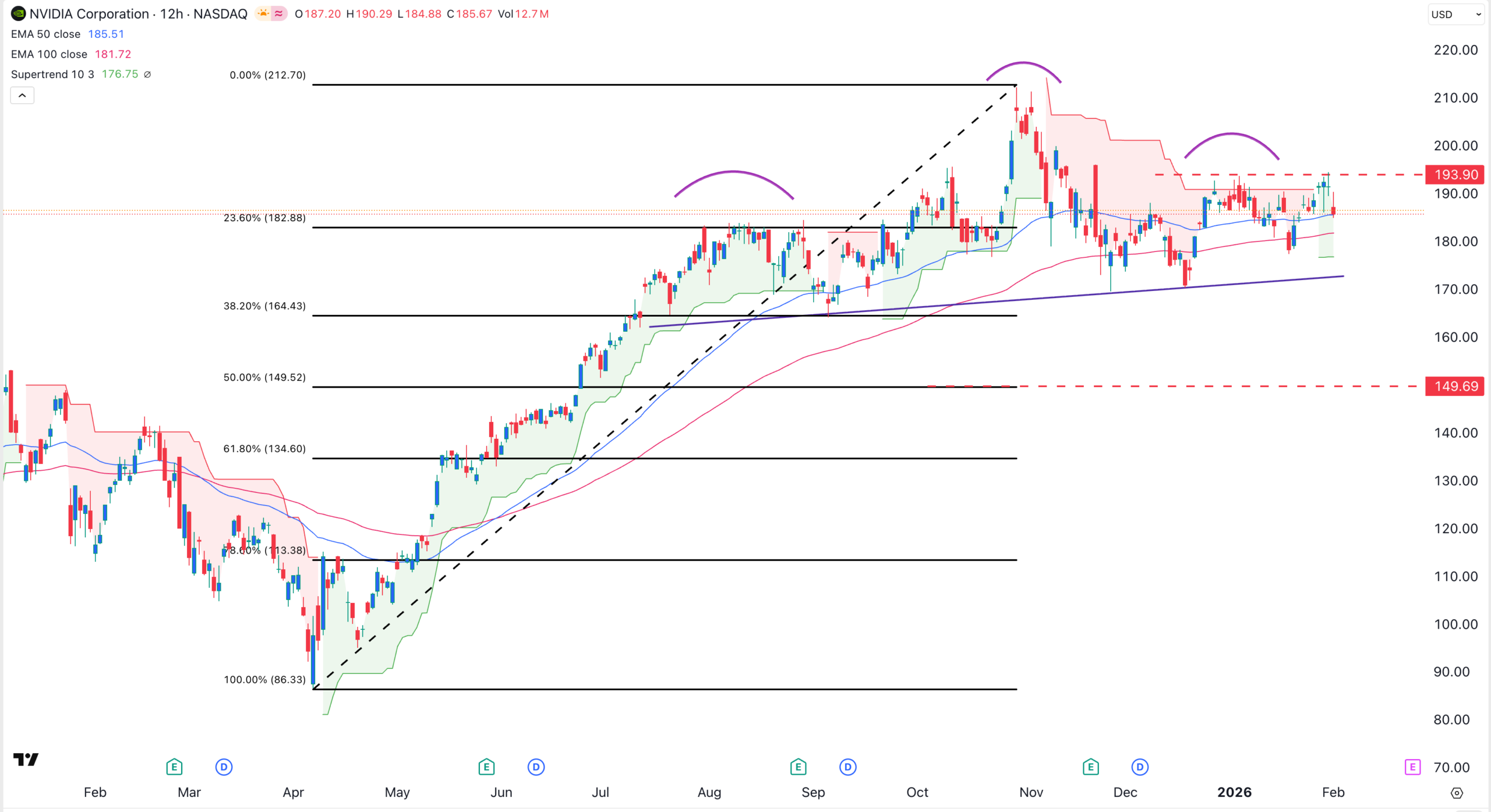
Key Insights NVIDIA stock started the week in the red. It crashed by over 2%. Meanwhile, the S&P 500, Dow Jones, and Nasdaq 100 moved close to their all-time highs
Share
Themarketperiodical2026/02/04 11:27
Ondo Finance Launches USDY Yieldcoin on Stellar, Bringing Tokenized U.S. Treasuries to Users

Ondo Finance Launches USDY Yieldcoin on Stellar, Bringing Tokenized U.S. Treasuries to Users

Ondo Finance, a U.S.-based digital asset firm specializing in bringing traditional financial products on-chain through tokenization, is expanding its yieldcoin USDY to the Stellar network. This lates update marks a step forward in merging tokenized real-world assets with a global payments infrastructure, unlocking new opportunities for users worldwide. The announcement was made at the Stellar Meridian event in Copacabana, Rio de Janeiro, on September 17. USDY Joins the Stellar Ecosystem Ondo Finance, a recognized leader in tokenized real-world assets, announced the deployment of United States Dollar Yield (USDY) on Stellar, the payments-focused blockchain known for speed and low transaction costs. USDY is the most widely available “yieldcoin,” offering investors access to onchain assets backed by U.S. Treasuries. This launch allows Stellar’s global user base to tap into permissionless, yield-bearing assets tied to one of the safest financial instruments in the world. It also aligns with Stellar’s mission of driving fast, affordable cross-border payments. Combining Yield with Payments Infrastructure “Stablecoins unlocked global access to the U.S. dollar. With USDY, we’re taking the next step by bringing U.S. Treasuries onchain in a form that combines stability, liquidity, and yield,” said Ian De Bode, Chief Strategy Officer at Ondo Finance. “Fast, affordable cross-border payments are at the center of what Stellar was designed to do. The global reach of the Stellar ecosystem combined with a yield-bearing asset like USDY levels up what is possible onchain, allowing wallets and businesses to offer yield opportunities to their users,” said Denelle Dixon, CEO of the Stellar Development Foundation. Ondo claims by pairing USDY with Stellar’s infrastructure, new possibilities open up in treasury management, collateralization, and everyday financial applications. Unlocking Institutional and Retail Use Cases USDY currently manages over $650 million in total value locked (TVL) across nine blockchains and offers a 5.3% APY. By launching on Stellar, Ondo Finance extends these benefits to global retail and institutional users. The firm explains balances on Stellar can now become productive, supporting use cases such as onchain savings, institutional treasury strategies, cost-efficient collateral for DeFi protocols, and remittance flows that carry yield rather than remaining static. A Milestone for Tokenized Treasuries With the integration of USDY, Stellar users gain more than just access to stable-value assets—they gain access to institutional-grade yield. For investors outside the U.S., the launch represents a new way to combine the safety of Treasuries with the accessibility of blockchain technology. As tokenization accelerates globally, Ondo Finance’s decision to deploy USDY on Stellar reinforces the narrative that blockchain is not just about speculation, but about reimagining the global financial system through secure, yield-bearing digital assets
Share
CryptoNews2025/09/18 00:46