Bitcoin has moved back below the $75,000 threshold, with price trading around $74,700–$74,800 during the latest hourly session, losing 5% in the past 24 hours. Bitcoin has moved back below the $75,000 threshold, with price trading around $74,700–$74,800 during the latest hourly session, losing 5% in the past 24 hours.

Bitcoin Slips Back Below $75,000 as Bearish Pressure Builds

2026/02/04 02:18
3 min read

Bitcoin has moved back below the $75,000 threshold, with price trading around $74,700–$74,800 during the latest hourly session, losing 5% in the past 24 hours.

The move places BTC firmly under a psychologically important level, while short-term structure shows increasing downside pressure following a sharp intraday sell-off.

The latest chart highlights a decisive breakdown, with price accelerating lower after failing to hold recent consolidation highs near the upper $78,000–$79,000 region. This shift comes amid elevated volatility and a broader bearish market backdrop, as reflected across multiple short-term indicators visible in the accompanying data.

At this stage, the market is transitioning from consolidation into reaction, making the current zone structurally important for short-term direction.

Short-Term Price Action: Sharp Breakdown Below Key Support

At the time of writing Bitcoin is trading near $74,711, following a steep sell-off accompanied by expanding red volume. The move represents a clear rejection from the $78,500–$79,000 area, where price previously attempted to stabilize before sellers regained control.

Immediate support is now located around $74,500–$74,700, where price is attempting to pause after the sharp decline. A sustained loss of this zone would expose lower intraday liquidity, with downside risk opening toward the $73,800–$74,000 area, based on visible price compression and prior reaction points on the chart.

On the upside, resistance is now defined near $75,500–$76,000, followed by a broader resistance band around $77,800–$78,300. Any recovery attempt would need acceptance back above these levels to suggest stabilization rather than a relief bounce.

Volume behavior reinforces the bearish tone, with the largest recent spike occurring on the downside move, signaling aggressive participation rather than low-liquidity drift.

Broader Context: Momentum Weakness and Bearish Alignment

Market-wide data shown alongside price confirms the fragile setup. Bitcoin is trading well below its 50-day SMA at $89,218 and its 200-day SMA at $103,698, underscoring the broader bearish alignment. The 14-day RSI near 30.15places momentum close to oversold territory but without a visible reversal signal.

Sentiment readings remain strained, with the Fear & Greed Index at 17 (Extreme Fear), while only 12 of the last 30 days have closed green. Volatility remains elevated at 5.12%, suggesting continued risk of sharp directional moves rather than controlled consolidation.

These conditions indicate that the current decline is not occurring in isolation, but rather within a wider environment of risk aversion and structural weakness.

Most Global Family Offices Still Avoid Crypto in 2026, JPMorgan Report Shows

Scenarios and Risk Levels

From a constructive perspective, Bitcoin would need to hold above $74,500 and reclaim $75,500–$76,000 with follow-through to signal short-term stabilization. Acceptance back above $77,800 would meaningfully improve structure and reduce immediate downside risk.

Conversely, a decisive break below $74,500 would weaken the current base and increase the probability of continuation toward the $73,800–$74,000 zone. Failure to attract buyers there would leave the market vulnerable to further downside extensions.

At present, risk remains skewed to the downside unless clear confirmation emerges through reclaimed levels and reduced sell-side pressure.

Conclusion

Bitcoin’s move back under $75,000 reflects a loss of short-term structure following a sharp rejection from higher levels. With price trading below key moving averages and volume confirming the breakdown, the market remains in a reactive phase rather than a confirmed recovery.

For now, structure favors caution. Stabilization will depend on Bitcoin’s ability to defend the mid-$74,000 area and regain acceptance above nearby resistance, while continued weakness below support would reinforce the prevailing bearish bias.

The post Bitcoin Slips Back Below $75,000 as Bearish Pressure Builds appeared first on ETHNews.

Disclaimer: The articles reposted on this site are sourced from public platforms and are provided for informational purposes only. They do not necessarily reflect the views of MEXC. All rights remain with the original authors. If you believe any content infringes on third-party rights, please contact service@support.mexc.com for removal. MEXC makes no guarantees regarding the accuracy, completeness, or timeliness of the content and is not responsible for any actions taken based on the information provided. The content does not constitute financial, legal, or other professional advice, nor should it be considered a recommendation or endorsement by MEXC.

You May Also Like

Three dormant wallets, suspected to belong to the same entity, purchased 5,970 ETH eight hours ago.
Three dormant wallets, suspected to belong to the same entity, purchased 5,970 ETH eight hours ago.

PANews reported on February 4 that, according to Lookonchain monitoring, three wallets that had been dormant for four years (likely controlled by the same entity
Share
PANews2026/02/04 11:36
NVIDIA Stock Price Analysis as OpenAI Issues Concerns About its Chips

NVIDIA Stock Price Analysis as OpenAI Issues Concerns About its Chips

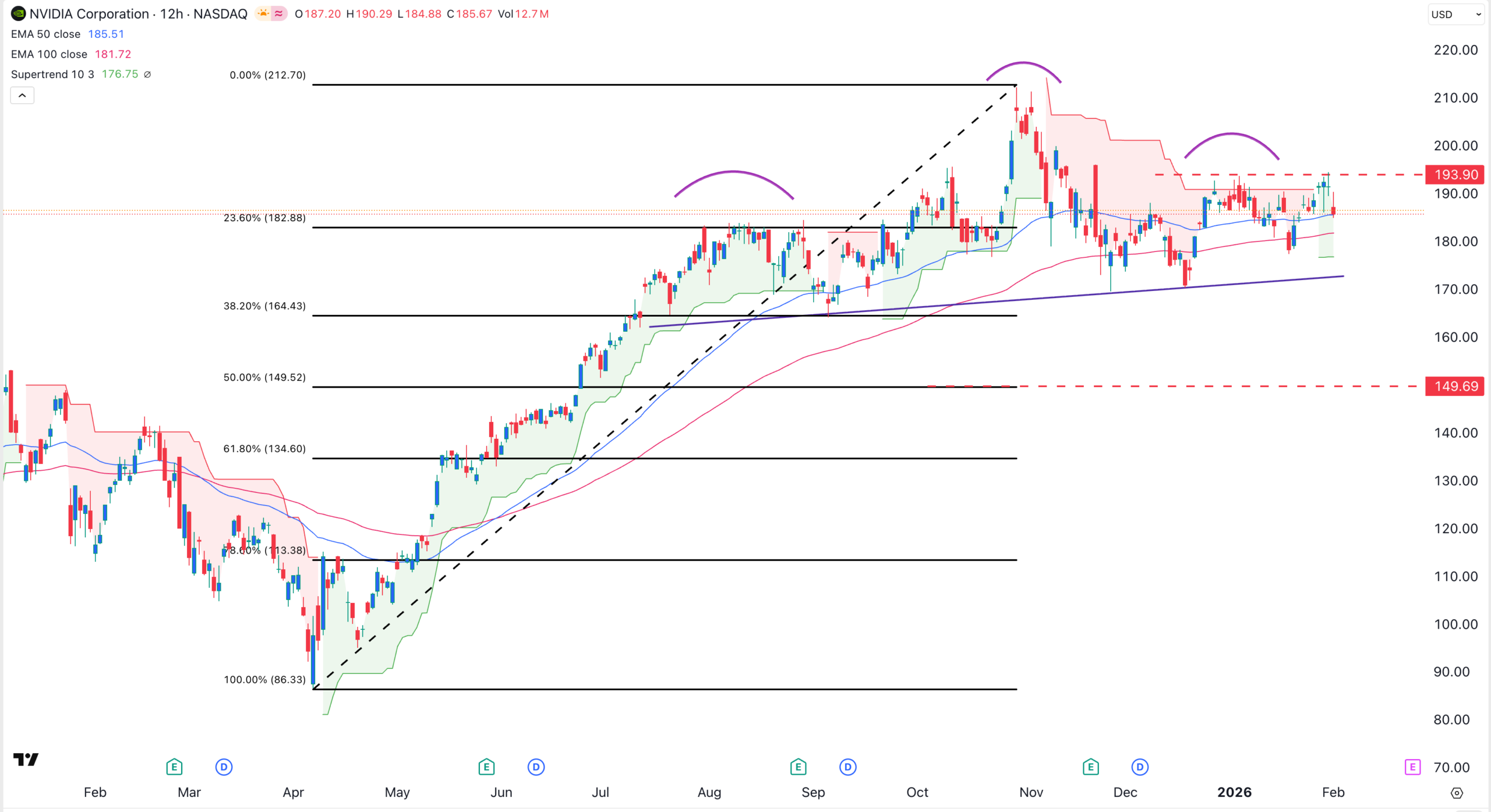
Key Insights NVIDIA stock started the week in the red. It crashed by over 2%. Meanwhile, the S&P 500, Dow Jones, and Nasdaq 100 moved close to their all-time highs
Share
Themarketperiodical2026/02/04 11:27
Ondo Finance Launches USDY Yieldcoin on Stellar, Bringing Tokenized U.S. Treasuries to Users

Ondo Finance Launches USDY Yieldcoin on Stellar, Bringing Tokenized U.S. Treasuries to Users

Ondo Finance, a U.S.-based digital asset firm specializing in bringing traditional financial products on-chain through tokenization, is expanding its yieldcoin USDY to the Stellar network. This lates update marks a step forward in merging tokenized real-world assets with a global payments infrastructure, unlocking new opportunities for users worldwide. The announcement was made at the Stellar Meridian event in Copacabana, Rio de Janeiro, on September 17. USDY Joins the Stellar Ecosystem Ondo Finance, a recognized leader in tokenized real-world assets, announced the deployment of United States Dollar Yield (USDY) on Stellar, the payments-focused blockchain known for speed and low transaction costs. USDY is the most widely available “yieldcoin,” offering investors access to onchain assets backed by U.S. Treasuries. This launch allows Stellar’s global user base to tap into permissionless, yield-bearing assets tied to one of the safest financial instruments in the world. It also aligns with Stellar’s mission of driving fast, affordable cross-border payments. Combining Yield with Payments Infrastructure “Stablecoins unlocked global access to the U.S. dollar. With USDY, we’re taking the next step by bringing U.S. Treasuries onchain in a form that combines stability, liquidity, and yield,” said Ian De Bode, Chief Strategy Officer at Ondo Finance. “Fast, affordable cross-border payments are at the center of what Stellar was designed to do. The global reach of the Stellar ecosystem combined with a yield-bearing asset like USDY levels up what is possible onchain, allowing wallets and businesses to offer yield opportunities to their users,” said Denelle Dixon, CEO of the Stellar Development Foundation. Ondo claims by pairing USDY with Stellar’s infrastructure, new possibilities open up in treasury management, collateralization, and everyday financial applications. Unlocking Institutional and Retail Use Cases USDY currently manages over $650 million in total value locked (TVL) across nine blockchains and offers a 5.3% APY. By launching on Stellar, Ondo Finance extends these benefits to global retail and institutional users. The firm explains balances on Stellar can now become productive, supporting use cases such as onchain savings, institutional treasury strategies, cost-efficient collateral for DeFi protocols, and remittance flows that carry yield rather than remaining static. A Milestone for Tokenized Treasuries With the integration of USDY, Stellar users gain more than just access to stable-value assets—they gain access to institutional-grade yield. For investors outside the U.S., the launch represents a new way to combine the safety of Treasuries with the accessibility of blockchain technology. As tokenization accelerates globally, Ondo Finance’s decision to deploy USDY on Stellar reinforces the narrative that blockchain is not just about speculation, but about reimagining the global financial system through secure, yield-bearing digital assets
Share
CryptoNews2025/09/18 00:46
