Key Takeaways: 912,296.82 ETH tokens are permanently inaccessible, according to public blockchain records. BlackRock’s ETHA led ETF inflows, bringing total U.S. Ethereum ETF inflows to $5.5B. Ethereum’s self-custody model offers no built-in recovery for user-side errors. A recent GitHub post published by Coinbase Head of Product Conor Grogan has documented over 912,000 ETH that have been permanently lost due to user error or protocol failures, representing more than 0.76% of Ethereum’s circulating supply. Grogan compiled wallet addresses from public records, contract audits, and community-sourced data. The analysis excludes unknown lost-key events, covering only ETH that is provably inaccessible. A Total of 912,296.82 ETH Lost “To be clear, this $3.4B+ number significantly undershoots the actual lost/inaccessible ETH amount,” Grogan wrote. “It just covers instances where Ethereum is locked forever.” “For example, it doesn’t cover all lost private keys or things like Genesis wallets that have been forgotten,” said Grogan. Based on my research, a minimum of 913,111 Ethereum is lost forever due to user error. This is 0.76%+ of ETH supply, or $3.43 billion in lost funds If we include EIP‑1559 burned ETH (5.3M), then >5% of all ETH ever made ($23.42B) have been permanently destroyed pic.twitter.com/IlTduN7Kzx — Conor (@jconorgrogan) July 20, 2025 Major losses include 306,000 ETH trapped in a Parity multisig contract once used by the Web3 Foundation, 60,000 ETH from the failed QuadrigaCX exchange, and 11,500 ETH lost by the Akutars NFT project due to a contract error. Grogan also identified 25,000 ETH manually sent to a known burn address. The dataset incorporates findings from researcher Johannes, who documented over 12,000 ETH lost due to wallet typos, and credits contributions from Tayvano and J6sp5r. Grogan said future updates will expand the dataset to cover situations such as North Korean losses and cases involving unrecoverable private keys. Ethereum ETFs Grow with Record Inflows Ethereum ETFs have drawn over $5.5 billion in total inflows, with $3.3 billion added since mid-April. The renewed demand follows a rise in Ethereum basis yield and stronger futures activity. BlackRock’s iShares Ethereum Trust (ETHA) led with $489 million in inflows on July 17, its highest on record. ETHA brought in $1.25 billion across five sessions, raising BlackRock’s ETH ETF holdings to $6.94 billion. U.S. Ethereum ETFs collectively saw $726.74 million in daily inflows on July 17, beating the previous record. Fidelity’s FETH and Grayscale’s mini trust added $113.31 million and $54.18 million, respectively. The persistence of lost Ethereum indicates the protocol’s strict finality and lack of recourse for user-side errors. Unlike traditional financial systems that offer chargebacks or custodial recovery, Ethereum’s self-custody model makes asset recovery functionally impossible once certain errors occur. Institutional exposure now grows through vehicles like ETFs, making user education and wallet safety increasingly relevant. Preventing future losses will likely depend more on improved tooling and standards than changes to the protocol itself. Frequently Asked Questions (FAQs) Can lost ETH ever be recovered through upgrades or forks? No. Ethereum’s consensus design does not allow selective access changes without a hard fork, which would require broad network coordination and is highly unlikely. Could other chains implement loss-recovery tools without compromising decentralization? Some newer chains experiment with programmable recovery functions or guardian models, but these involve tradeoffs in user control and system trust assumptions. How is ETH loss accounted for in monetary policy models or supply tracking? Lost ETH is not officially removed from circulating supply metrics, but is often considered when estimating effective supply and scarcity. Do ETFs holding ETH face specific technical risks from these loss patterns? While ETFs use custodians to minimize risk, operational security failures in staking, slashing, or private key management could still create large-scale losses.Key Takeaways: 912,296.82 ETH tokens are permanently inaccessible, according to public blockchain records. BlackRock’s ETHA led ETF inflows, bringing total U.S. Ethereum ETF inflows to $5.5B. Ethereum’s self-custody model offers no built-in recovery for user-side errors. A recent GitHub post published by Coinbase Head of Product Conor Grogan has documented over 912,000 ETH that have been permanently lost due to user error or protocol failures, representing more than 0.76% of Ethereum’s circulating supply. Grogan compiled wallet addresses from public records, contract audits, and community-sourced data. The analysis excludes unknown lost-key events, covering only ETH that is provably inaccessible. A Total of 912,296.82 ETH Lost “To be clear, this $3.4B+ number significantly undershoots the actual lost/inaccessible ETH amount,” Grogan wrote. “It just covers instances where Ethereum is locked forever.” “For example, it doesn’t cover all lost private keys or things like Genesis wallets that have been forgotten,” said Grogan. Based on my research, a minimum of 913,111 Ethereum is lost forever due to user error. This is 0.76%+ of ETH supply, or $3.43 billion in lost funds If we include EIP‑1559 burned ETH (5.3M), then >5% of all ETH ever made ($23.42B) have been permanently destroyed pic.twitter.com/IlTduN7Kzx — Conor (@jconorgrogan) July 20, 2025 Major losses include 306,000 ETH trapped in a Parity multisig contract once used by the Web3 Foundation, 60,000 ETH from the failed QuadrigaCX exchange, and 11,500 ETH lost by the Akutars NFT project due to a contract error. Grogan also identified 25,000 ETH manually sent to a known burn address. The dataset incorporates findings from researcher Johannes, who documented over 12,000 ETH lost due to wallet typos, and credits contributions from Tayvano and J6sp5r. Grogan said future updates will expand the dataset to cover situations such as North Korean losses and cases involving unrecoverable private keys. Ethereum ETFs Grow with Record Inflows Ethereum ETFs have drawn over $5.5 billion in total inflows, with $3.3 billion added since mid-April. The renewed demand follows a rise in Ethereum basis yield and stronger futures activity. BlackRock’s iShares Ethereum Trust (ETHA) led with $489 million in inflows on July 17, its highest on record. ETHA brought in $1.25 billion across five sessions, raising BlackRock’s ETH ETF holdings to $6.94 billion. U.S. Ethereum ETFs collectively saw $726.74 million in daily inflows on July 17, beating the previous record. Fidelity’s FETH and Grayscale’s mini trust added $113.31 million and $54.18 million, respectively. The persistence of lost Ethereum indicates the protocol’s strict finality and lack of recourse for user-side errors. Unlike traditional financial systems that offer chargebacks or custodial recovery, Ethereum’s self-custody model makes asset recovery functionally impossible once certain errors occur. Institutional exposure now grows through vehicles like ETFs, making user education and wallet safety increasingly relevant. Preventing future losses will likely depend more on improved tooling and standards than changes to the protocol itself. Frequently Asked Questions (FAQs) Can lost ETH ever be recovered through upgrades or forks? No. Ethereum’s consensus design does not allow selective access changes without a hard fork, which would require broad network coordination and is highly unlikely. Could other chains implement loss-recovery tools without compromising decentralization? Some newer chains experiment with programmable recovery functions or guardian models, but these involve tradeoffs in user control and system trust assumptions. How is ETH loss accounted for in monetary policy models or supply tracking? Lost ETH is not officially removed from circulating supply metrics, but is often considered when estimating effective supply and scarcity. Do ETFs holding ETH face specific technical risks from these loss patterns? While ETFs use custodians to minimize risk, operational security failures in staking, slashing, or private key management could still create large-scale losses.

$3.4B in Ethereum Gone Forever – 912K ETH Lost to Irreversible Errors

3 min read

Key Takeaways:

  • 912,296.82 ETH tokens are permanently inaccessible, according to public blockchain records.
  • BlackRock’s ETHA led ETF inflows, bringing total U.S. Ethereum ETF inflows to $5.5B.
  • Ethereum’s self-custody model offers no built-in recovery for user-side errors.

A recent GitHub post published by Coinbase Head of Product Conor Grogan has documented over 912,000 ETH that have been permanently lost due to user error or protocol failures, representing more than 0.76% of Ethereum’s circulating supply.

Grogan compiled wallet addresses from public records, contract audits, and community-sourced data. The analysis excludes unknown lost-key events, covering only ETH that is provably inaccessible.

A Total of 912,296.82 ETH Lost

“To be clear, this $3.4B+ number significantly undershoots the actual lost/inaccessible ETH amount,” Grogan wrote. “It just covers instances where Ethereum is locked forever.”

“For example, it doesn’t cover all lost private keys or things like Genesis wallets that have been forgotten,” said Grogan.

Major losses include 306,000 ETH trapped in a Parity multisig contract once used by the Web3 Foundation, 60,000 ETH from the failed QuadrigaCX exchange, and 11,500 ETH lost by the Akutars NFT project due to a contract error. Grogan also identified 25,000 ETH manually sent to a known burn address.

The dataset incorporates findings from researcher Johannes, who documented over 12,000 ETH lost due to wallet typos, and credits contributions from Tayvano and J6sp5r.

Grogan said future updates will expand the dataset to cover situations such as North Korean losses and cases involving unrecoverable private keys.

Ethereum ETFs Grow with Record Inflows

Ethereum ETFs have drawn over $5.5 billion in total inflows, with $3.3 billion added since mid-April. The renewed demand follows a rise in Ethereum basis yield and stronger futures activity.

BlackRock’s iShares Ethereum Trust (ETHA) led with $489 million in inflows on July 17, its highest on record. ETHA brought in $1.25 billion across five sessions, raising BlackRock’s ETH ETF holdings to $6.94 billion.

U.S. Ethereum ETFs collectively saw $726.74 million in daily inflows on July 17, beating the previous record. Fidelity’s FETH and Grayscale’s mini trust added $113.31 million and $54.18 million, respectively.

The persistence of lost Ethereum indicates the protocol’s strict finality and lack of recourse for user-side errors. Unlike traditional financial systems that offer chargebacks or custodial recovery, Ethereum’s self-custody model makes asset recovery functionally impossible once certain errors occur.

Institutional exposure now grows through vehicles like ETFs, making user education and wallet safety increasingly relevant. Preventing future losses will likely depend more on improved tooling and standards than changes to the protocol itself.

Frequently Asked Questions (FAQs)

Can lost ETH ever be recovered through upgrades or forks?

No. Ethereum’s consensus design does not allow selective access changes without a hard fork, which would require broad network coordination and is highly unlikely.

Could other chains implement loss-recovery tools without compromising decentralization?

Some newer chains experiment with programmable recovery functions or guardian models, but these involve tradeoffs in user control and system trust assumptions.

How is ETH loss accounted for in monetary policy models or supply tracking?

Lost ETH is not officially removed from circulating supply metrics, but is often considered when estimating effective supply and scarcity.

Do ETFs holding ETH face specific technical risks from these loss patterns?

While ETFs use custodians to minimize risk, operational security failures in staking, slashing, or private key management could still create large-scale losses.

Market Opportunity
Threshold Logo
Threshold Price(T)
$0.008126
$0.008126$0.008126
-0.09%
USD
Threshold (T) Live Price Chart
Disclaimer: The articles reposted on this site are sourced from public platforms and are provided for informational purposes only. They do not necessarily reflect the views of MEXC. All rights remain with the original authors. If you believe any content infringes on third-party rights, please contact service@support.mexc.com for removal. MEXC makes no guarantees regarding the accuracy, completeness, or timeliness of the content and is not responsible for any actions taken based on the information provided. The content does not constitute financial, legal, or other professional advice, nor should it be considered a recommendation or endorsement by MEXC.

You May Also Like

Three dormant wallets, suspected to belong to the same entity, purchased 5,970 ETH eight hours ago.
Three dormant wallets, suspected to belong to the same entity, purchased 5,970 ETH eight hours ago.

PANews reported on February 4 that, according to Lookonchain monitoring, three wallets that had been dormant for four years (likely controlled by the same entity
Share
PANews2026/02/04 11:36
NVIDIA Stock Price Analysis as OpenAI Issues Concerns About its Chips

NVIDIA Stock Price Analysis as OpenAI Issues Concerns About its Chips

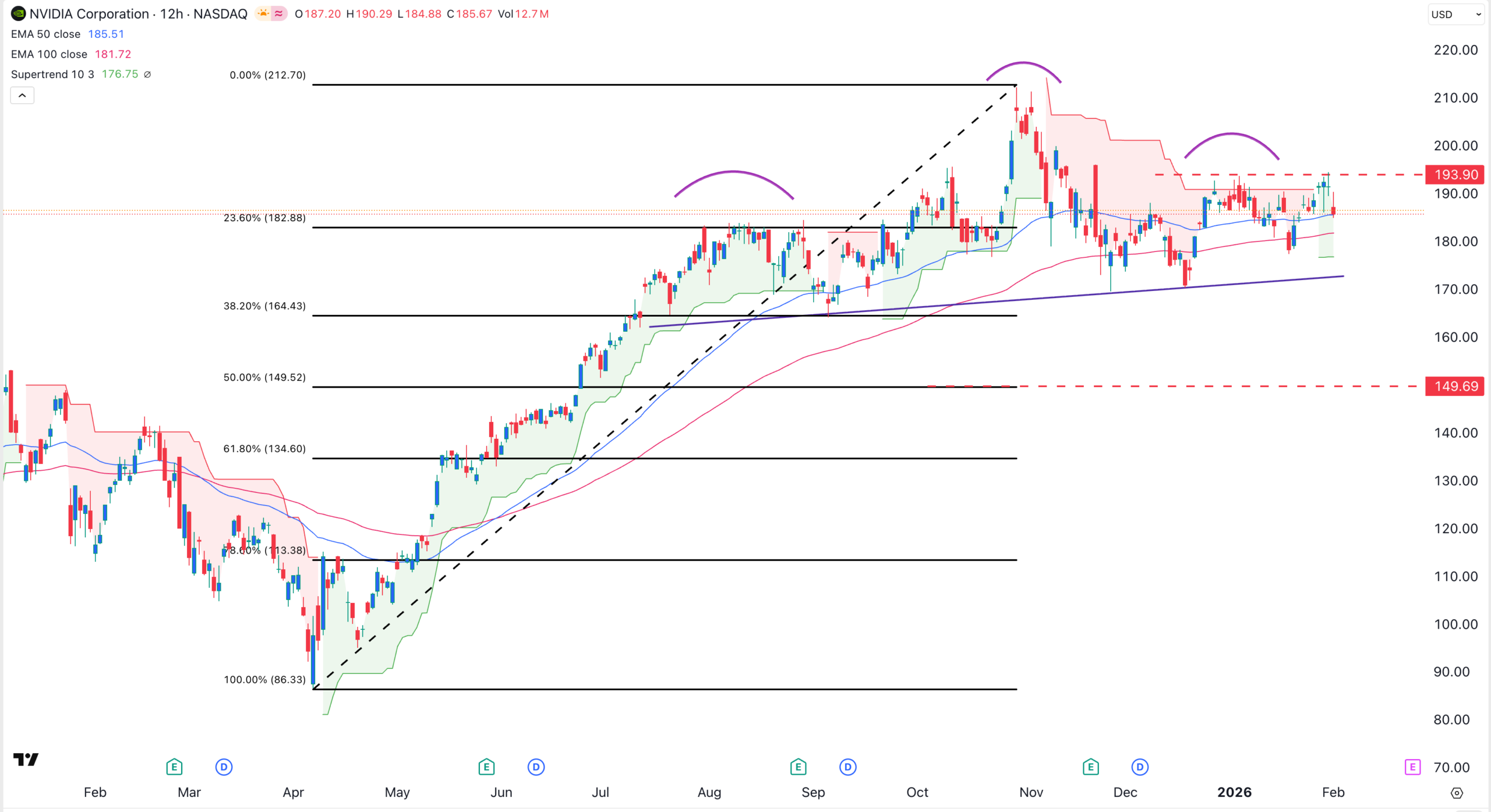
Key Insights NVIDIA stock started the week in the red. It crashed by over 2%. Meanwhile, the S&P 500, Dow Jones, and Nasdaq 100 moved close to their all-time highs
Share
Themarketperiodical2026/02/04 11:27
Ondo Finance Launches USDY Yieldcoin on Stellar, Bringing Tokenized U.S. Treasuries to Users

Ondo Finance Launches USDY Yieldcoin on Stellar, Bringing Tokenized U.S. Treasuries to Users

Ondo Finance, a U.S.-based digital asset firm specializing in bringing traditional financial products on-chain through tokenization, is expanding its yieldcoin USDY to the Stellar network. This lates update marks a step forward in merging tokenized real-world assets with a global payments infrastructure, unlocking new opportunities for users worldwide. The announcement was made at the Stellar Meridian event in Copacabana, Rio de Janeiro, on September 17. USDY Joins the Stellar Ecosystem Ondo Finance, a recognized leader in tokenized real-world assets, announced the deployment of United States Dollar Yield (USDY) on Stellar, the payments-focused blockchain known for speed and low transaction costs. USDY is the most widely available “yieldcoin,” offering investors access to onchain assets backed by U.S. Treasuries. This launch allows Stellar’s global user base to tap into permissionless, yield-bearing assets tied to one of the safest financial instruments in the world. It also aligns with Stellar’s mission of driving fast, affordable cross-border payments. Combining Yield with Payments Infrastructure “Stablecoins unlocked global access to the U.S. dollar. With USDY, we’re taking the next step by bringing U.S. Treasuries onchain in a form that combines stability, liquidity, and yield,” said Ian De Bode, Chief Strategy Officer at Ondo Finance. “Fast, affordable cross-border payments are at the center of what Stellar was designed to do. The global reach of the Stellar ecosystem combined with a yield-bearing asset like USDY levels up what is possible onchain, allowing wallets and businesses to offer yield opportunities to their users,” said Denelle Dixon, CEO of the Stellar Development Foundation. Ondo claims by pairing USDY with Stellar’s infrastructure, new possibilities open up in treasury management, collateralization, and everyday financial applications. Unlocking Institutional and Retail Use Cases USDY currently manages over $650 million in total value locked (TVL) across nine blockchains and offers a 5.3% APY. By launching on Stellar, Ondo Finance extends these benefits to global retail and institutional users. The firm explains balances on Stellar can now become productive, supporting use cases such as onchain savings, institutional treasury strategies, cost-efficient collateral for DeFi protocols, and remittance flows that carry yield rather than remaining static. A Milestone for Tokenized Treasuries With the integration of USDY, Stellar users gain more than just access to stable-value assets—they gain access to institutional-grade yield. For investors outside the U.S., the launch represents a new way to combine the safety of Treasuries with the accessibility of blockchain technology. As tokenization accelerates globally, Ondo Finance’s decision to deploy USDY on Stellar reinforces the narrative that blockchain is not just about speculation, but about reimagining the global financial system through secure, yield-bearing digital assets
Share
CryptoNews2025/09/18 00:46
