Inside Iran’s Internet Blackouts: How Decentralized Messaging Tools Keep Users Connected
Iran has recently experienced widespread protests driven by public outrage over government repression, human rights abuses, and economic hardship. In response, authorities have imposed extensive internet shutdowns, severing international connectivity and blocking many encrypted messaging services to curtail communication and control the flow of information. These blackouts are intended to disrupt protesters’ ability to organize, limit access to independent news, and hinder documentation and reporting of human rights violations.
The state’s censorship infrastructure is complex and actively enforced. Researchers and monitoring groups have documented the use of techniques such as DNS poisoning and inline traffic manipulation, which redirect or block requests for foreign websites and applications, preventing users from accessing official download sources and pushing them toward state-controlled networks or unreliable workarounds.
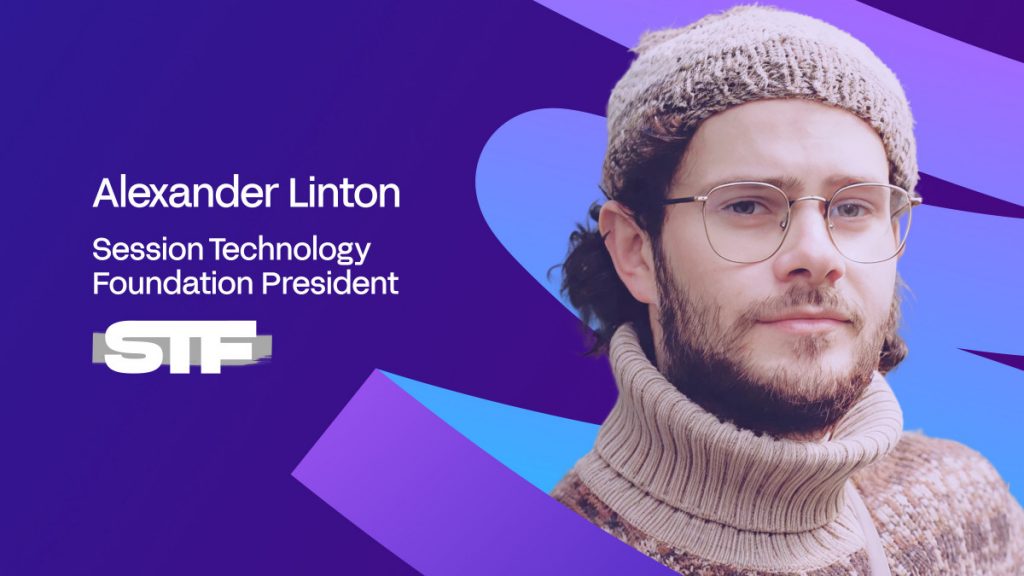
In an exclusive interview with MPost, Alex Linton, President of the Session Technology Foundation, discussed how the decentralized, privacy-focused messaging application Session helps protect user security and metadata and shared how to maintain connectivity during censorship and internet shutdowns. He also outlined the platform’s plans to strengthen privacy, resilience, and cryptographic protections, while addressing safety and mitigating potential abuse.
Why do governments target tools like Session during periods of political unrest?
Governments block tools in order to suppress and control the spread of information. This may prevent or dissuade local people from effectively organizing, or prevent the broader public from learning about human rights abuses which are occurring.
Regimes which are violating human rights will seek to herd people onto platforms which they control, while outright blocking those which they cannot. The goal is for the technology which mediates real-time information (such as social media, messaging apps, or news apps) to be under the control of the regime, so that its opponents can be proactively and oppressed.
What is Session and which features distinguish it from other messaging apps?
Session is an end-to-end encrypted, decentralized messaging application. It is designed to preserve people’s privacy as much as possible.
Unlike other messaging apps, users do not need a phone number, email, or other identifying information to create an account on Session, instead they generate a safe and secure Account ID. This can be particularly important when SMS 2FA services are shutdown or censored (preventing users from signing up or logging in and accessing the service), or when exposing your phone number could put you at risk.
Additionally, advanced techniques are utilized by Session to protect vulnerable user metadata, such as the use of onion-routing to obfuscate the user’s IP address.
How can decentralization and peer-to-peer architectures reduce single points of failure?
Session’s decentralized network provides strong redundancy against infrastructure failures, remaining connected even when major services go down. Late last year, thousands of sites and services went offline due to issues with AWS (a cloud hyperscaler). Session remained resilient due to its plurality of providers and node operators. As cloud hyperscalers become more centralized, this type of event is likely to become more common – and essential services will inevitably go offline when people need them.
In the case of complete internet shutdown, such as the current case in Iran, fully peer-to-peer solutions will be required.
In general, the internet appears to be in a state of decay and splintering, and so those creating apps and services will need to closely consider how they will remain resilient going forward.
What steps can users take to maintain access to Session when facing censorship or network blocks?
If it is blocked in your region, Session can be used in combination with a VPN or similar technologies. Similarly, if it is removed from local app marketplaces, Session always remains available for direct download via the website (https://getsession.org/download) and GitHub.
Users should always consider their local laws and personal risk when using these tools.
How should app stores, infrastructure providers, and international platforms respond when governments employ DNS spoofing?
Due to the restrictions already placed on major app marketplaces in Iran, people often utilize alternative stores which are designed to securely deliver various applications which would ordinarily be unavailable in-country. However, preparedness is an issue — generally users will already need to have these marketplaces set up on their device before a shutdown begins.
In general community response is extremely important, with technical assistance such as the operation of mirror sites or downloads, and ongoing educational efforts to ensure that people have the tools ready before periods of increased restriction.
Amid internet blackouts, what options do users have for maintaining access to communication?
Currently, internet connectivity in Iran is extremely limited. Any service which relies on internet connectivity to function will likely be unable to operate in Iran.
These types of shutdowns are extremely economically expensive, and this is the longest shutdown duration in Iran so far. It is not clear how long the regime will continue with this strategy, but atrocities are occurring while people remain disconnected. Currently, people in-country will need to rely on services which can operate without the use of the internet.
There are some applications, such as Briar, which offer this type of functionality, and others like Dash Chat are emerging.
Do messaging apps need to be built to withstand internet shutdowns?
Yes, messaging apps are critical communication infrastructure and an important public good in the digital age. It is essential that we build systems which are robust and able to resist interference or disruptions.
In general, over-centralization makes it much easier for a service to be blocked or censored via technical or legal means. Increased decentralization and utilization of peer-to-peer technologies will be necessary to protect against these shutdowns going forward. Unfortunately, the AI industry is generally making this transition more difficult.
How does Session assess and mitigate risks of platform abuse without undermining its censorship-resistance and privacy guarantees?
Unlike other messaging platforms, Session generally minimizes the velocity of information (virality), as it does not have built-in discoverability or extremely large-size channels. That is, nobody can find you on Session unless you give them the means to do so — you cannot be searched using your name, phone number, or other readily available information. Of course, Session still contains reasonable safety protections, such as restrictions on what type of content unknown contacts can send you, and the ability to block other users.
Session focuses on keeping connections personal and people-forward, rather than algorithmic, and this inherently protects against many of the safety concerns inherent to general social platforms.
Privacy is cited as a core objective for future technology—how will Session evolve over the next 12 months to improve privacy, security, and reliability?
Session contributors are currently working on the development of Session Protocol v2, which will re-implement Perfect Forward Secrecy and introduce quantum-resistant cryptography. These features are designed to protect against future threats, with developments in artificial intelligence and quantum computing presenting an oncoming danger for secure communication.
In addition to this, contributors are also looking to partner with other technologists to circumvent network-level blocking, such as is the case in Iran.
The post Inside Iran’s Internet Blackouts: How Decentralized Messaging Tools Keep Users Connected appeared first on Metaverse Post.
You May Also Like

Is Doge Losing Steam As Traders Choose Pepeto For The Best Crypto Investment?

The United Nations launches the "Global Dialogue on Artificial Intelligence Governance" mechanism