Asia-Pacific volumes rose about 20% year on year, helping push OKX’s regulated market trading up 53x as user wallets and onchain activity expanded sharply.Asia-Pacific volumes rose about 20% year on year, helping push OKX’s regulated market trading up 53x as user wallets and onchain activity expanded sharply.

Regulated Markets Power OKX Growth, With APAC Near 30% of Global CEX Volume


2026/01/06 20:30
5 min read
Regulated Markets Power OKX Growth, With APAC Near 30% of Global CEX Volume

OKX is seeing regulated markets pull sharply ahead of the rest of its business, with Asia-Pacific emerging as one of the clearest engines of that growth.

Internal end-of-year data shared by OKX with Blockhead shows trading volume in licensed and regulated markets surging 53 times this year across jurisdictions including the U.S., Singapore, the UAE and the European Economic Area.

Asia-Pacific has been a material part of that expansion. According to Lennix Lai, OKX’s global chief compliance officer, APAC exchange volumes grew roughly 20% year on year and now represent just under 30% of the platform’s global centralised exchange (CEX) activity.

“Asia-Pacific is one of the strongest engines behind that expansion,” Lai told Blockhead, pointing to sustained activity in regulated venues rather than short-term bursts of speculative trading.

User growth has followed a similar trajectory. OKX’s data shows daily active wallets doubling year on year, with an average of around 190,000 new wallets created every day in 2025 so far. Activity has accelerated across both centralised and decentralised products. Global DEX trading volume rose 262% this year, nearly a fourfold increase, while CEX trading volumes climbed 16% globally, underscoring the continued importance of mature exchange infrastructure even as onchain usage scales.

Singapore growth tied to infrastructure confidence

In Singapore, Lai said growth is less about aggressive promotions and more about trust in the underlying rails. He pointed to proof-of-reserves disclosures, security investments and independent certifications as factors that increasingly influence how users choose platforms.

He added that OKX has prioritised security, controls and auditability so users feel comfortable engaging with digital assets through systems that meet high regulatory and operational standards.

“For us, trust is the real currency in this market,” Lai said. “We’re investing in that first and foremost, so that when customers choose to engage with digital assets, they feel they are doing so on infrastructure that meets the most rigorous standards.”

That approach appears to align with how APAC users behave on the platform. OKX’s data shows the region contributes just under 30% of global CEX volume, with meme-asset trading accounting for around 1% of that activity. Lai said this mix reflects interest in new narratives layered on top of a large base of more conventional trading and investment use cases.

Regulatory convergence as a tailwind

Looking ahead to 2026, OKX expects regulatory frameworks across Asia-Pacific to continue converging, even as individual jurisdictions move at different speeds.

“The expectation is that the APAC region will keep moving toward a common set of safeguards around asset segregation, on-hain transparency and higher bars for listings and stablecoins,” Lai said.

He noted that policy discussions across the region are increasingly focused on stronger custody requirements, clearer disclosure regimes and tighter oversight of stablecoins and exchange-traded products. That direction, he argued, naturally favours platforms that already operate with robust custody practices, regular proof-of-reserves and independent certifications.

“That convergence supports platforms that are built for the long term, rather than those optimising purely for short-term volume,” Lai said.

As a result, OKX is prioritising depth over breadth in its regional strategy. “Our focus is to deepen our presence in a small number of high-conviction markets where the rulebook is clear,” Lai said, adding that clearer regulation also makes it easier to responsibly introduce products such as stablecoin payments and compliant Web3 access alongside everyday financial activity.

Localised products and community-led partnerships

On the product side, OKX has leaned into localisation, particularly in Singapore, where Lai described the exchange’s licensed platform as being built “in Singapore, for Singapore.”

“We design everything with local users in mind,” he said. “Onboarding should feel familiar and safe, while more experienced users can access flexible trading modes and institutional-grade custody.”

Marketing and growth efforts in the region are also being shaped around partnerships that emphasise community engagement over traditional user acquisition. Lai said brand partnerships are less about lead generation and more about creating shared experiences around real products.

“With strategic partnerships, the goal isn’t primarily lead generation,” he said. “It’s about bringing passionate communities together around real product experiences.”

OKX’s partnerships with Manchester City and player ambassadors such as Jeremy Doku and Rúben Dias are part of that strategy. In Asia-Pacific, Lai said these collaborations are used to convene users through events, fan activations and educational sessions, giving people a hands-on introduction to OKX Wallet and related tools.

“That’s how people see, touch and participate in the technology together,” Lai said. “And that’s ultimately what builds trust, advocacy and long-term adoption.”


➢ Stay ahead of the curve. Join Blockhead on Telegram today for all the latest in crypto.
+ Follow Blockhead on Google News

Podcast

Decentralization and Privacy: Insights from TEN Protocol's Cais Manai

In this episode of Blockcast, host Takatoshi Shibayama sits down with Cais Manai, co-founder of TEN Protocol, to delve into the intricacies of blockchain privacy and decentralization. Cais shares his journey from discovering Bitcoin in 2012 to co-founding TEN Protocol, a project focused on integrating privacy into Ethereum's Layer 2 solutions.

Tune in at blockcast.blockhead.co or on Spotify, Apple, Amazon Music, or any major podcast platform.


Regulated Markets Power OKX Growth, With APAC Near 30% of Global CEX Volume

Blockhead is a media partner for Consensus Hong Kong 2026. Readers can save 20% on tickets using exclusive code BLOCKDESK at this link.

Disclaimer: The articles reposted on this site are sourced from public platforms and are provided for informational purposes only. They do not necessarily reflect the views of MEXC. All rights remain with the original authors. If you believe any content infringes on third-party rights, please contact service@support.mexc.com for removal. MEXC makes no guarantees regarding the accuracy, completeness, or timeliness of the content and is not responsible for any actions taken based on the information provided. The content does not constitute financial, legal, or other professional advice, nor should it be considered a recommendation or endorsement by MEXC.

You May Also Like

UK and US Seal $42 Billion Tech Pact Driving AI and Energy Future
UK and US Seal $42 Billion Tech Pact Driving AI and Energy Future

The post UK and US Seal $42 Billion Tech Pact Driving AI and Energy Future appeared on BitcoinEthereumNews.com. Key Highlights Microsoft and Google pledge billions as part of UK US tech partnership Nvidia to deploy 120,000 GPUs with British firm Nscale in Project Stargate Deal positions UK as an innovation hub rivaling global tech powers UK and US Seal $42 Billion Tech Pact Driving AI and Energy Future The UK and the US have signed a “Technological Prosperity Agreement” that paves the way for joint projects in artificial intelligence, quantum computing, and nuclear energy, according to Reuters. Donald Trump and King Charles review the guard of honour at Windsor Castle, 17 September 2025. Image: Kirsty Wigglesworth/Reuters The agreement was unveiled ahead of U.S. President Donald Trump’s second state visit to the UK, marking a historic moment in transatlantic technology cooperation. Billions Flow Into the UK Tech Sector As part of the deal, major American corporations pledged to invest $42 billion in the UK. Microsoft leads with a $30 billion investment to expand cloud and AI infrastructure, including the construction of a new supercomputer in Loughton. Nvidia will deploy 120,000 GPUs, including up to 60,000 Grace Blackwell Ultra chips—in partnership with the British company Nscale as part of Project Stargate. Google is contributing $6.8 billion to build a data center in Waltham Cross and expand DeepMind research. Other companies are joining as well. CoreWeave announced a $3.4 billion investment in data centers, while Salesforce, Scale AI, BlackRock, Oracle, and AWS confirmed additional investments ranging from hundreds of millions to several billion dollars. UK Positions Itself as a Global Innovation Hub British Prime Minister Keir Starmer said the deal could impact millions of lives across the Atlantic. He stressed that the UK aims to position itself as an investment hub with lighter regulations than the European Union. Nvidia spokesman David Hogan noted the significance of the agreement, saying it would…
Share
BitcoinEthereumNews2025/09/18 02:22
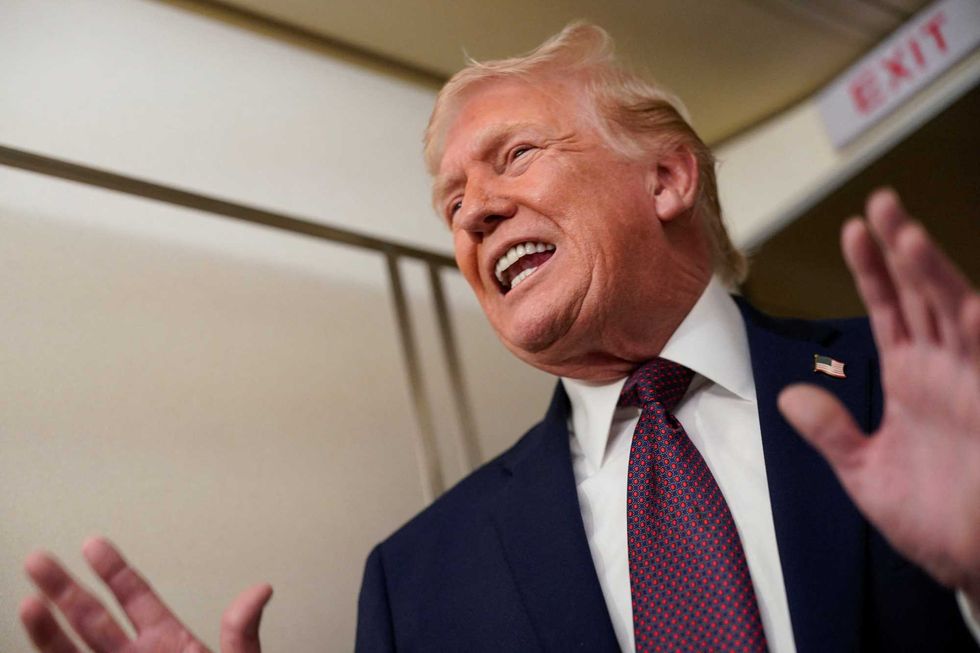
Trump caves on his own snubs as retaliation ploy against Dem governors backfires
Trump caves on his own snubs as retaliation ploy against Dem governors backfires

President Donald Trump on Wednesday walked back a snub he gave to two Democratic Governors. Last week, Trump notably did not invite Democratic governors Wes Moore
Share
Rawstory2026/02/12 10:29
Bitcoin devs cheer block reconstruction stats, ignore security budget concerns

Bitcoin devs cheer block reconstruction stats, ignore security budget concerns

The post Bitcoin devs cheer block reconstruction stats, ignore security budget concerns appeared on BitcoinEthereumNews.com. This morning, Bitcoin Core developers celebrated improved block reconstruction statistics for node operators while conveniently ignoring the reason for these statistics — the downward trend in fees for Bitcoin’s security budget. Reacting with heart emojis and thumbs up to a green chart showing over 80% “successful compact block reconstructions without any requested transactions,” they conveniently omitted red trend lines of the fees that Bitcoin users pay for mining security which powered those green statistics. Block reconstructions occur when a node requests additional information about transactions within a compact block. Although compact blocks allow nodes to quickly relay valid bundles of transactions across the internet, the more frequently that nodes can reconstruct without extra, cumbersome transaction requests from their peers is a positive trend. Because so many nodes switched over in August to relay transactions bidding 0.1 sat/vB across their mempools, nodes now have to request less transaction data to reconstruct blocks containing sub-1 sat/vB transactions. After nodes switched over in August to accept and relay pending transactions bidding less than 1 sat/vB, disparate mempools became harmonized as most nodes had a better view of which transactions would likely join upcoming blocks. As a result, block reconstruction times improved, as nodes needed less information about these sub-1 sat/vB transactions. In July, several miners admitted that user demand for Bitcoin blockspace had persisted at such a low that they were willing to accept transaction fees of just 0.1 satoshi per virtual byte — 90% lower than their prior 1 sat/vB minimum. With so many blocks partially empty, they succumbed to the temptation to accept at least something — even 1 billionth of one bitcoin (BTC) — rather than $0 to fill up some of the excess blockspace. Read more: Bitcoin’s transaction fees have fallen to a multi-year low Green stats for block reconstruction after transaction fees crash After…
Share
BitcoinEthereumNews2025/09/18 04:07