

When the Internet Outgrows Earth: SpaceCoin and the Future of Off-World Communication
Picture this: It's 2045. You're a mining engineer on a lunar base, and you need to transfer payment to a supplier on Mars for critical equipment parts. Your Earth-based bank account? Useless. Traditional internet? Laughably inadequate. The communication delay between Earth and Mars ranges from 4 to 24 minutes depending on orbital positions. Good luck getting your transaction approved in real-time.
This isn't science fiction; it's the future we're quickly moving toward. And we're not ready for it at all.
A decentralized, space-based internet isn't just a cool tech project. It's the infrastructure humanity needs to become an interplanetary species. Without it, we're trying to colonize Mars with dial-up modems and fax machines. In this article, I'll explain why SpaceCoin might be the communication backbone that makes our spacefaring future actually work.
The Era of Lunar Bases and Mars Colonies
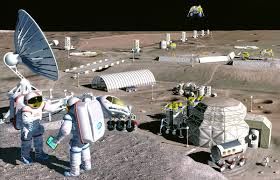
We're not talking about distant dreams anymore. SpaceX is actively developing Starship for Mars missions. NASA's Artemis program aims to establish a permanent lunar presence by the early 2030s. Private companies are planning asteroid mining operations. China and India have ambitious space programs. The question isn't if we'll have off-world settlements, it's when and how.
But here's what nobody's talking about enough: How will these settlements communicate? How will they transact? How will they coordinate?
The current internet was designed for Earth. It assumes low latency, continuous connectivity, and terrestrial infrastructure. None of these assumptions hold true in space.
Vint Cerf, one of the two "fathers of the Internet" who co-developed TCP/IP has been working on this problem since 1998. He asked the right question: "What should we be doing now that we're going to need 25 years from now for space communications?"
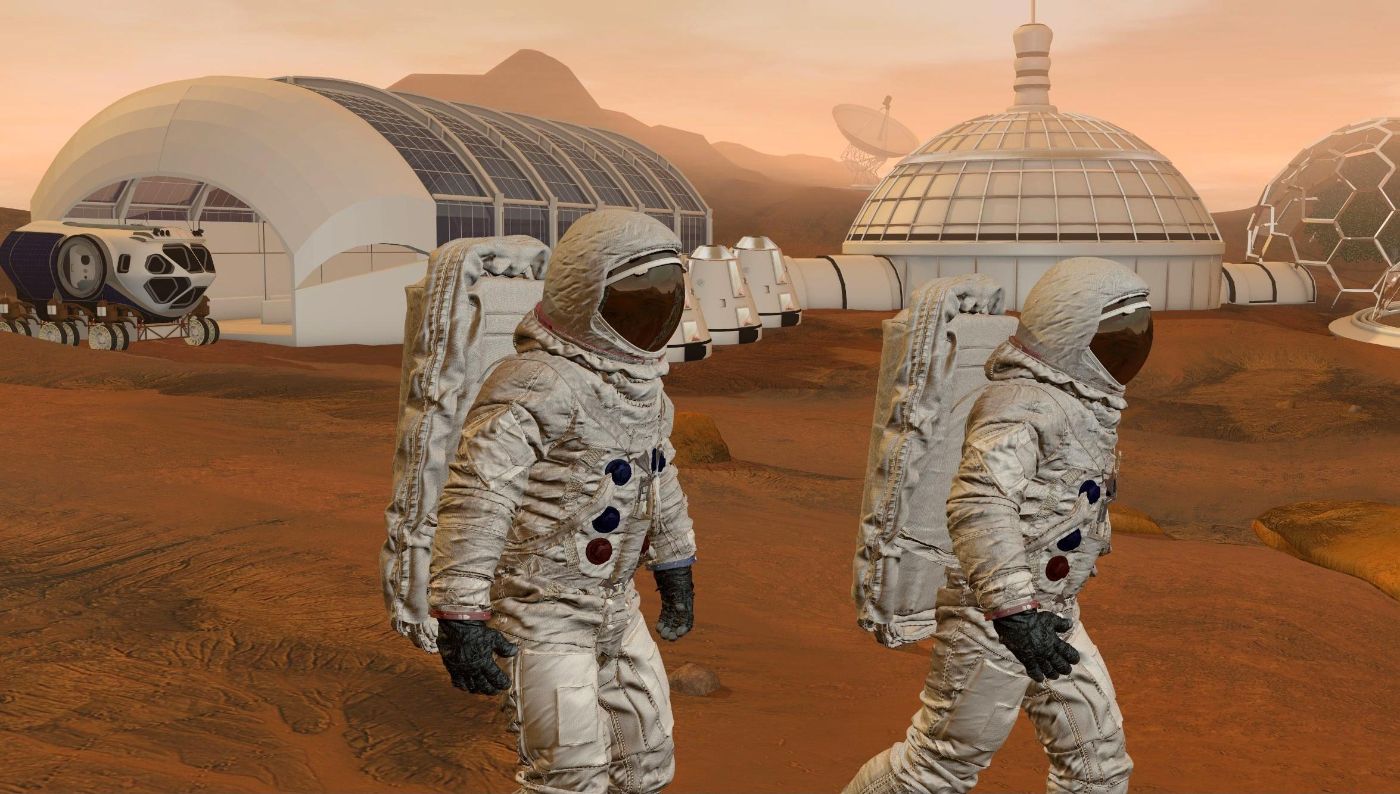
\ The answer? Delay-Tolerant Networking (DTN). NASA has been developing it for years. But here's the thing: NASA's solution is centralized, government-controlled, and designed primarily for scientific missions. What about commercial activity? What about individual freedom? What about the millions of people who will eventually live and work off-world?
The Problem: Current Internet Protocols Can't Serve Interplanetary Distances
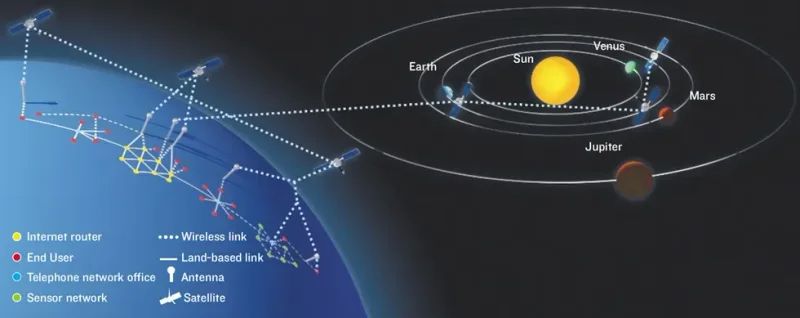
\ Let me break down why your favorite apps won't work on Mars:
Latency is brutal. Light-speed delay between Earth and Mars ranges from 4 minutes (when planets are closest) to 24 minutes (when they're on opposite sides of the Sun). That's one-way delay. A round-trip communication takes 8-48 minutes. Forget about video calls with family back on Earth. Forget about real-time gaming. Forget about anything requiring instant feedback.
TCP/IP, the protocol that runs the internet, expects an acknowledgment in a few seconds. If it doesn't get one, it thinks there's a problem and resends the data. In space, this doesn't work because the data is just slow, not lost, so you'd keep resending data that's actually okay.
Connectivity is intermittent. Planets rotate. Satellites orbit. Line-of-sight communication gets blocked by celestial bodies. A Mars rover might only have a few hours per day when it can communicate with Earth. Traditional internet protocols assume you're always connected. Space doesn't work that way.
Terrestrial ISPs are useless. Comcast isn't running fiber optic cables to Mars. Your cellular provider isn't building towers on the Moon. The entire business model of terrestrial internet service providers centralized infrastructure, subscription fees, geographic monopolies doesn't translate to space.
We need something fundamentally different. We need infrastructure that works across planetary distances, handles massive delays gracefully, operates without centralized control, and enables commerce and communication for people living millions of kilometers apart.
SpaceCoin's Vision: The First Off-World Blockchain Ledger
This is where SpaceCoin gets interesting. They're not just building another satellite internet service. They're creating decentralized infrastructure for an interplanetary economy.
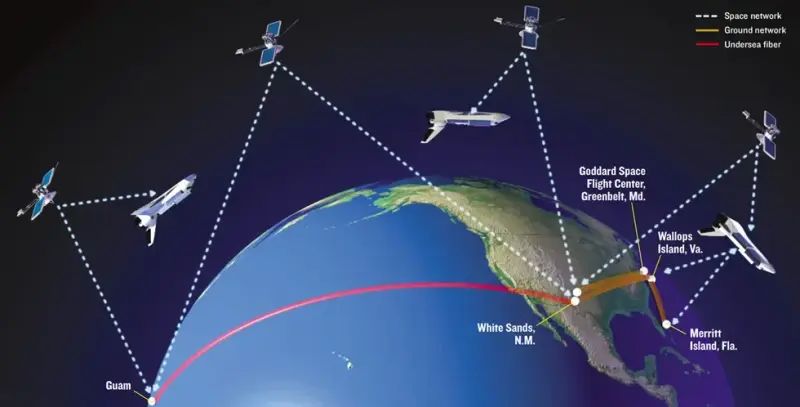
\ Establishing the first off-world blockchain ledger means creating a financial and communication system that doesn't depend on Earth. Think about what that enables:
A mining operation on an asteroid could transact directly with a manufacturing facility on Mars, with payment settled via blockchain without routing through Earth-based banks. The transaction gets verified by satellites orbiting multiple celestial bodies. No single government controls it. No corporation owns it. It just works.
SpaceCoin's CTC-0 satellite, launched in December 2024, already demonstrated this concept. It successfully transmitted a blockchain transaction from Chile to Portugal via orbital relay. The cryptographic signature remained intact through space. The transaction was verified on the Creditcoin blockchain. This wasn't a simulation, it was a real proof-of-concept that blockchain can function in space.
Using satellites as neutral validators across celestial bodies solves a fundamental problem: trust. When you're dealing with entities on different planets, potentially under different governmental jurisdictions (or no jurisdiction at all), how do you establish trust for transactions?
Blockchain provides the answer: cryptographic verification instead of institutional trust. Satellites orbiting Earth, the Moon, and Mars could serve as distributed validators. No single entity controls the network. Consensus happens across space itself.
The beauty of this approach is that it's permissionless. You don't need permission from NASA, SpaceX, or any government to participate. If you can launch a satellite that adheres to the open standards, you can join the network and earn revenue by providing connectivity and validation services.
Use Cases: Mining Settlements and Cross-Planet Communication
Let me paint you a picture of how this actually works:
Scenario 1: Asteroid Mining Settlement
It's 2042. A mining company operates a settlement on asteroid 16 Psyche, which contains trillions of dollars worth of metal. They need to:
- Pay workers (who might be from Earth, Mars, or the Moon)
- Purchase supplies from various off-world suppliers
- Sell extracted materials to buyers across the solar system
- Coordinate operations with partners on multiple celestial bodies
Traditional banking? Impossible. Earth-based banks can't process transactions with 20-minute delays. They can't verify identities for people who've never set foot on Earth. They can't handle the regulatory complexity of interplanetary commerce.
SpaceCoin's solution: Workers get paid in cryptocurrency that they can spend anywhere in the solar system. Suppliers accept payment via blockchain, verified by satellites orbiting multiple locations. The mining company transacts directly with buyers, with smart contracts automatically executing when shipments arrive.
The entire economy operates on a decentralized ledger that doesn't depend on any single planet's infrastructure.
Scenario 2: Mars Colony Communication
A permanent Mars settlement needs to communicate with Earth, but also with other Mars bases, lunar facilities, and orbital stations. Traditional internet routing doesn't work, you can't have a centralized DNS server on Earth managing addresses for the entire solar system.
SpaceCoin's decentralized architecture means each node (satellite, ground station, settlement) participates in routing and validation. Messages get stored and forwarded as satellites orbit and connectivity windows open. The system is delay-tolerant by design, it doesn't break when communication takes minutes or hours.
A Mars colonist can send an encrypted message to a friend on the Moon. The message routes through satellites orbiting Mars, gets relayed to Earth-orbit satellites, then forwarded to lunar satellites, and finally delivered. The entire process happens without centralized control, and the encryption ensures privacy even though the message passes through multiple relay points.
Scenario 3: Emergency Coordination
A solar flare disrupts communication between Earth and Mars. Traditional centralized systems fail because the Earth-based control centers can't reach Mars assets. But SpaceCoin's decentralized network continues functioning, satellites in Mars orbit can still communicate with ground stations, coordinate emergency responses, and maintain critical operations.
This isn't hypothetical. Space is dangerous. Communication failures during emergencies can be fatal. Decentralized infrastructure provides redundancy that centralized systems can't match.
Long-Term Implication: A Unified, Delay-Tolerant Internet Protocol Spanning Worlds
Here's what gets me excited: SpaceCoin isn't just solving today's problems. They're building infrastructure for a future most people can barely imagine.
A unified internet protocol spanning worlds means humanity's digital infrastructure grows with our physical expansion. As we establish settlements on Mars, the moons of Jupiter, and eventually beyond, the communication network expands organically. New nodes join the network. New routes get established. The system scales without centralized planning.
This is how the internet itself grew on Earth, organically, through voluntary participation, following open standards. SpaceCoin is applying that same model to space.
Delay-tolerant networking becomes the standard, not the exception. Applications get designed to work asynchronously. You don't expect instant responses, you expect reliable delivery whenever connectivity allows. This might sound like a downgrade, but it's actually more robust. Systems that handle delays gracefully don't break when delays occur.
Think about email versus instant messaging. Email was designed to be delay-tolerant, you send a message, it gets delivered when possible, you get a response eventually. Instant messaging assumes low latency. In space, email-style architecture wins.
The economic implications are staggering. A truly interplanetary economy requires infrastructure that enables commerce across planetary distances. SpaceCoin's tokenized model, where satellite operators earn cryptocurrency based on actual usage, creates market incentives for network expansion. As humanity spreads through the solar system, the communication network spreads with us, driven by profit motive rather than government budgets.
The Obstacle (Again)
The greatest obstacle isn't technical, it's institutional. Governments and established corporations don't like systems they can't control.
Space is currently governed by the Outer Space Treaty of 1967, which establishes that space is the "province of all mankind" and prohibits national appropriation of celestial bodies. But the treaty was written before commercial space activity became viable. Regulatory frameworks are outdated and unclear.
Who regulates a decentralized satellite network that operates across multiple jurisdictions? Who enforces rules when participants are on different planets? What happens when Earth-based governments try to impose regulations on Mars settlements that have their own governance?
These aren't just legal questions, they're philosophical ones about sovereignty, freedom, and human organization beyond Earth.
SpaceCoin's decentralized model sidesteps some of these issues by not requiring centralized authority. But that's exactly why governments will be nervous about it. A communication network they can't monitor or control? A financial system that operates beyond their jurisdiction? That's threatening to power structures built on information control.
How do we address this obstacle? The same way we always have: by building systems so useful that people adopt them regardless of official approval. By making the technology work so well that trying to stop it becomes politically untenable.
The internet itself faced similar resistance. Governments wanted to control it. Corporations wanted to own it. But the technology was too useful, too distributed, and too valuable to suppress. The same will be true for space-based decentralized networks.
SpaceCoin: Building the Future With Style
I'm impressed by SpaceCoin's approach. They're not waiting for permission. They're not asking governments to build this infrastructure. They're just doing it.
They launched their first satellite on a SpaceX Falcon 9 in 2024. That's what I call doing decentralization with style. They're planning three more satellites in Q4 2025. They're open-sourcing their designs so other companies can build compatible satellites and join the network.
This is how you build the future, by building it, not by writing white papers and waiting for approval.
The team includes people who understand both the technical challenges and the philosophical importance. Stuart Gardner, SpaceCoin's CEO, talks about serving the 2.9 billion people with limited internet access. But the vision extends beyond Earth. They're building infrastructure for humanity's expansion into space.
Retired 4-Star General Wesley Clark's involvement adds credibility and strategic thinking. His argument about blockchain providing an "anchor point of trust" that cuts across governmental and institutional distrust is exactly right. In space, where traditional institutions have limited reach, cryptographic trust becomes essential.
The Leap Into The Future
My grandfather worked on the Apollo program. He was part of the team that got humanity to the Moon. That achievement required vision, courage, and infrastructure that didn't exist until we built it.
SpaceCoin is part of the next leap, the infrastructure that will enable humanity to become an interplanetary species. Not just visiting other worlds, but living there, working there, building economies there.
The internet transformed Earth by connecting people and enabling commerce across geographic boundaries. The interplanetary internet will do the same thing across planetary boundaries. It will enable coordination, commerce, and communication for a civilization that spans multiple worlds.
This isn't just about technology. It's about human agency, the ability of individuals to communicate, transact, and coordinate without requiring permission from centralized authorities. It's about building systems that expand human freedom rather than constraining it.
The centralized internet on Earth is increasingly controlled by governments and corporations. The interplanetary internet has the opportunity to be different, decentralized from the start, resistant to control, designed for freedom.
Will SpaceCoin specifically succeed? I don't know. The challenges are enormous. The competition is fierce. The regulatory environment is uncertain.
But the vision is right. The technology is feasible. The need is real.
Humanity's future is off-world. Our communication infrastructure needs to grow beyond Earth. SpaceCoin is building that infrastructure.
And unlike my grandfather's work on Apollo, which ended with "Finis" written in his final notebook, this work never ends. The interplanetary internet will grow as humanity grows, expand as we expand, evolve as we evolve.
It's infrastructure for a future as limitless as space itself.
The internet is outgrowing Earth. It's about time.
You May Also Like

eurosecurity.net Expands Cryptocurrency Asset Recovery Capabilities Amid Rising Investor Losses

DeFi Platform Operating on BNB Chain Attacked by Hackers! How Much Lost? Here Are the Details
