The post Non-dollar stablecoins said to reach 20% market share in two years appeared on BitcoinEthereumNews.com. Stablecoins based on national currencies other than the U.S. dollar are expected to occupy a fifth of the global market within the next couple of years. The prediction comes from an executive member of the team behind one of the main contenders in this category, which has been growing fast, not without controversy. Market share of non-USD stablecoins to grow, A7A5 exec says Cryptocurrencies backed by fiat money not printed by the United States will have around 20% of the whole stablecoin market by 2028. That’s according to Oleg Ogienko, Director for International Development of the A7A5 project. The latter is a new Russian ruble-pegged coin that has been met with sanctions by the U.S. and its allies, alleging it’s being used by Moscow to finance its war in Ukraine. The stablecoin is issued by a Kyrgyzstan-registered entity, but is linked to Russian actors. Speaking at the TOKEN2049 international conference in Singapore, Ogienko insisted that stablecoins like his are actively strengthening their positions. Quoted by the Russian business news outlet RBC on Thursday, he also stated: “One of the stable trends in the crypto industry is the active development of non-dollar stablecoins. Their growth reflects the growing demand for digital assets backed by national currencies, which contributes to market diversification.” The stablecoin space is now heavily dominated by dollar-denominated currencies like Tether (USDT) and Circle’s USDC, which account for over 98% of the market. Ogienko believes this weakens other economies and creates risks for users in different jurisdictions. Employing smart contracts, the issuers of such cryptocurrencies can freeze wallets based on the holder’s nationality, for example. A7A5 seems to have been created precisely with that in mind – to facilitate international settlements for Russian firms facing financial restrictions which it helps bypass. This week, Russia recognized it as a “digital… The post Non-dollar stablecoins said to reach 20% market share in two years appeared on BitcoinEthereumNews.com. Stablecoins based on national currencies other than the U.S. dollar are expected to occupy a fifth of the global market within the next couple of years. The prediction comes from an executive member of the team behind one of the main contenders in this category, which has been growing fast, not without controversy. Market share of non-USD stablecoins to grow, A7A5 exec says Cryptocurrencies backed by fiat money not printed by the United States will have around 20% of the whole stablecoin market by 2028. That’s according to Oleg Ogienko, Director for International Development of the A7A5 project. The latter is a new Russian ruble-pegged coin that has been met with sanctions by the U.S. and its allies, alleging it’s being used by Moscow to finance its war in Ukraine. The stablecoin is issued by a Kyrgyzstan-registered entity, but is linked to Russian actors. Speaking at the TOKEN2049 international conference in Singapore, Ogienko insisted that stablecoins like his are actively strengthening their positions. Quoted by the Russian business news outlet RBC on Thursday, he also stated: “One of the stable trends in the crypto industry is the active development of non-dollar stablecoins. Their growth reflects the growing demand for digital assets backed by national currencies, which contributes to market diversification.” The stablecoin space is now heavily dominated by dollar-denominated currencies like Tether (USDT) and Circle’s USDC, which account for over 98% of the market. Ogienko believes this weakens other economies and creates risks for users in different jurisdictions. Employing smart contracts, the issuers of such cryptocurrencies can freeze wallets based on the holder’s nationality, for example. A7A5 seems to have been created precisely with that in mind – to facilitate international settlements for Russian firms facing financial restrictions which it helps bypass. This week, Russia recognized it as a “digital…

Non-dollar stablecoins said to reach 20% market share in two years

4 min read

Stablecoins based on national currencies other than the U.S. dollar are expected to occupy a fifth of the global market within the next couple of years.

The prediction comes from an executive member of the team behind one of the main contenders in this category, which has been growing fast, not without controversy.

Market share of non-USD stablecoins to grow, A7A5 exec says

Cryptocurrencies backed by fiat money not printed by the United States will have around 20% of the whole stablecoin market by 2028. That’s according to Oleg Ogienko, Director for International Development of the A7A5 project.

The latter is a new Russian ruble-pegged coin that has been met with sanctions by the U.S. and its allies, alleging it’s being used by Moscow to finance its war in Ukraine. The stablecoin is issued by a Kyrgyzstan-registered entity, but is linked to Russian actors.

Speaking at the TOKEN2049 international conference in Singapore, Ogienko insisted that stablecoins like his are actively strengthening their positions. Quoted by the Russian business news outlet RBC on Thursday, he also stated:

The stablecoin space is now heavily dominated by dollar-denominated currencies like Tether (USDT) and Circle’s USDC, which account for over 98% of the market.

Ogienko believes this weakens other economies and creates risks for users in different jurisdictions. Employing smart contracts, the issuers of such cryptocurrencies can freeze wallets based on the holder’s nationality, for example.

A7A5 seems to have been created precisely with that in mind – to facilitate international settlements for Russian firms facing financial restrictions which it helps bypass. This week, Russia recognized it as a “digital financial asset,” which opens the door even more for its use in cross-border trade.

The ruble stablecoin was developed by A7, a Russian company majority-owned by a fugitive Moldovan oligarch with Russian citizenship, Ilan Shor, and partially owned by the sanctioned state-controlled Russian bank, PSB (formerly Promsvyazbank).

Allegedly underpinned by 1:1 deposits at the PSB, it was launched in January 2025, and is currently issued by a Kyrgyzstan-based entity called Old Vector. This and other associated platforms have been sanctioned by the U.S., the U.K. and the European Union.

Among them is also Kyrgyz-registered Grinex, the alleged successor of the Russian crypto exchange Garantex, which was taken offline in a U.S.-led operation in March, when Tether froze $27 million worth of USDT in its wallets.

According to a report by the blockchain analysis firm Elliptic examining the rise of A7A5, which was released in July, the coin has been used to transfer more than $41 billion, with the daily volume of transactions sometimes exceeding $1 billion.

Non-dollar stablecoins’ market cap estimated at $1.2 billion

The total market capitalization of stablecoins now surpasses $300 billion, as reported by Cryptopolitan. The share of those not linked to the Greenback is only $1.2 billion, of which the ruble-pegged A7A5 accounts for 44%, or about $0.5 billion, as per Oleg Ogienko’s estimates.

He is convinced that alternatives like that will continue to emerge and expects an increase in the offering of regional stablecoins, such as one based on the Indian rupee, for example. At the same time, Ogienko admitted de-dollarization will be a challenging process due to political pressures. Nevertheless, he made a bold prediction:

The deficit of stablecoins pegged to currencies other than the dollar was acknowledged by Jesse Pollak, head of Base, the Ethereum Layer-2 network developed by U.S. crypto exchange Coinbase.

While many of them are important for the global economy, they are missing in the crypto economy, Pollak noted, quoted by The Block, in a speech during the same forum in Singapore.

Nine major European banks announced last week they are joining forces to issue a stablecoin tied to the euro, the Eurozone’s common fiat currency.

This week, the European Systemic Risk Board (ESRB), chaired by ECB President Christine Lagarde, adopted a recommendation to ban stablecoins issued both within the bloc and in other jurisdictions.

Get seen where it counts. Advertise in Cryptopolitan Research and reach crypto’s sharpest investors and builders.

Source: https://www.cryptopolitan.com/non-dollar-stablecoins-said-to-reach-20-market-share-in-two-years/

Market Opportunity
Union Logo
Union Price(U)
$0.001626
$0.001626$0.001626
-12.48%
USD
Union (U) Live Price Chart
Disclaimer: The articles reposted on this site are sourced from public platforms and are provided for informational purposes only. They do not necessarily reflect the views of MEXC. All rights remain with the original authors. If you believe any content infringes on third-party rights, please contact service@support.mexc.com for removal. MEXC makes no guarantees regarding the accuracy, completeness, or timeliness of the content and is not responsible for any actions taken based on the information provided. The content does not constitute financial, legal, or other professional advice, nor should it be considered a recommendation or endorsement by MEXC.

You May Also Like

Three dormant wallets, suspected to belong to the same entity, purchased 5,970 ETH eight hours ago.

Three dormant wallets, suspected to belong to the same entity, purchased 5,970 ETH eight hours ago.

PANews reported on February 4 that, according to Lookonchain monitoring, three wallets that had been dormant for four years (likely controlled by the same entity
Share
PANews2026/02/04 11:36
NVIDIA Stock Price Analysis as OpenAI Issues Concerns About its Chips

NVIDIA Stock Price Analysis as OpenAI Issues Concerns About its Chips

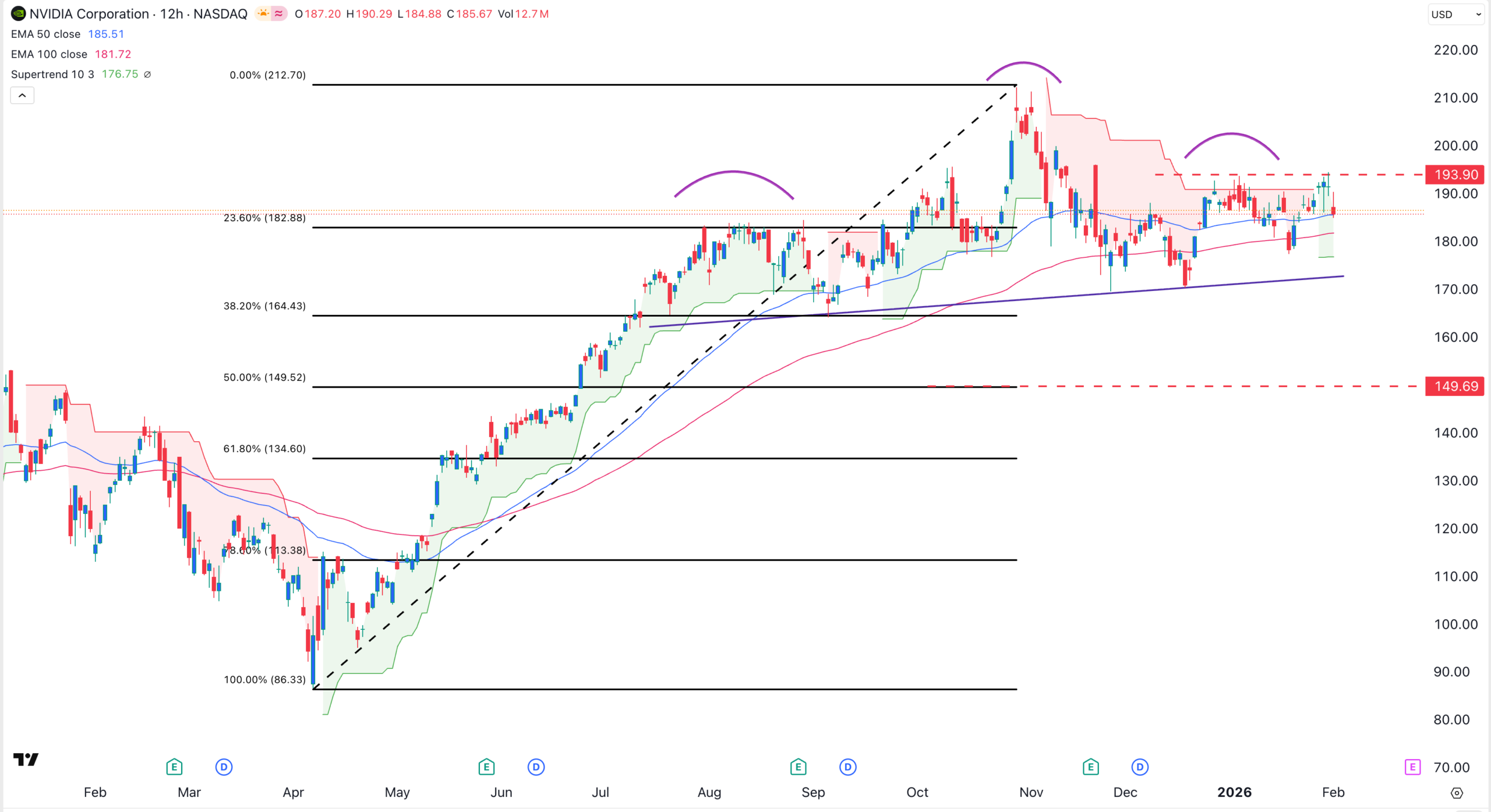
Key Insights NVIDIA stock started the week in the red. It crashed by over 2%. Meanwhile, the S&P 500, Dow Jones, and Nasdaq 100 moved close to their all-time highs
Share
Themarketperiodical2026/02/04 11:27
Ondo Finance Launches USDY Yieldcoin on Stellar, Bringing Tokenized U.S. Treasuries to Users

Ondo Finance Launches USDY Yieldcoin on Stellar, Bringing Tokenized U.S. Treasuries to Users

Ondo Finance, a U.S.-based digital asset firm specializing in bringing traditional financial products on-chain through tokenization, is expanding its yieldcoin USDY to the Stellar network. This lates update marks a step forward in merging tokenized real-world assets with a global payments infrastructure, unlocking new opportunities for users worldwide. The announcement was made at the Stellar Meridian event in Copacabana, Rio de Janeiro, on September 17. USDY Joins the Stellar Ecosystem Ondo Finance, a recognized leader in tokenized real-world assets, announced the deployment of United States Dollar Yield (USDY) on Stellar, the payments-focused blockchain known for speed and low transaction costs. USDY is the most widely available “yieldcoin,” offering investors access to onchain assets backed by U.S. Treasuries. This launch allows Stellar’s global user base to tap into permissionless, yield-bearing assets tied to one of the safest financial instruments in the world. It also aligns with Stellar’s mission of driving fast, affordable cross-border payments. Combining Yield with Payments Infrastructure “Stablecoins unlocked global access to the U.S. dollar. With USDY, we’re taking the next step by bringing U.S. Treasuries onchain in a form that combines stability, liquidity, and yield,” said Ian De Bode, Chief Strategy Officer at Ondo Finance. “Fast, affordable cross-border payments are at the center of what Stellar was designed to do. The global reach of the Stellar ecosystem combined with a yield-bearing asset like USDY levels up what is possible onchain, allowing wallets and businesses to offer yield opportunities to their users,” said Denelle Dixon, CEO of the Stellar Development Foundation. Ondo claims by pairing USDY with Stellar’s infrastructure, new possibilities open up in treasury management, collateralization, and everyday financial applications. Unlocking Institutional and Retail Use Cases USDY currently manages over $650 million in total value locked (TVL) across nine blockchains and offers a 5.3% APY. By launching on Stellar, Ondo Finance extends these benefits to global retail and institutional users. The firm explains balances on Stellar can now become productive, supporting use cases such as onchain savings, institutional treasury strategies, cost-efficient collateral for DeFi protocols, and remittance flows that carry yield rather than remaining static. A Milestone for Tokenized Treasuries With the integration of USDY, Stellar users gain more than just access to stable-value assets—they gain access to institutional-grade yield. For investors outside the U.S., the launch represents a new way to combine the safety of Treasuries with the accessibility of blockchain technology. As tokenization accelerates globally, Ondo Finance’s decision to deploy USDY on Stellar reinforces the narrative that blockchain is not just about speculation, but about reimagining the global financial system through secure, yield-bearing digital assets
Share
CryptoNews2025/09/18 00:46