

Orbital Compute Cluster Revolution: Kepler’s Pioneering Leap in Space-Based Data Processing
BitcoinWorld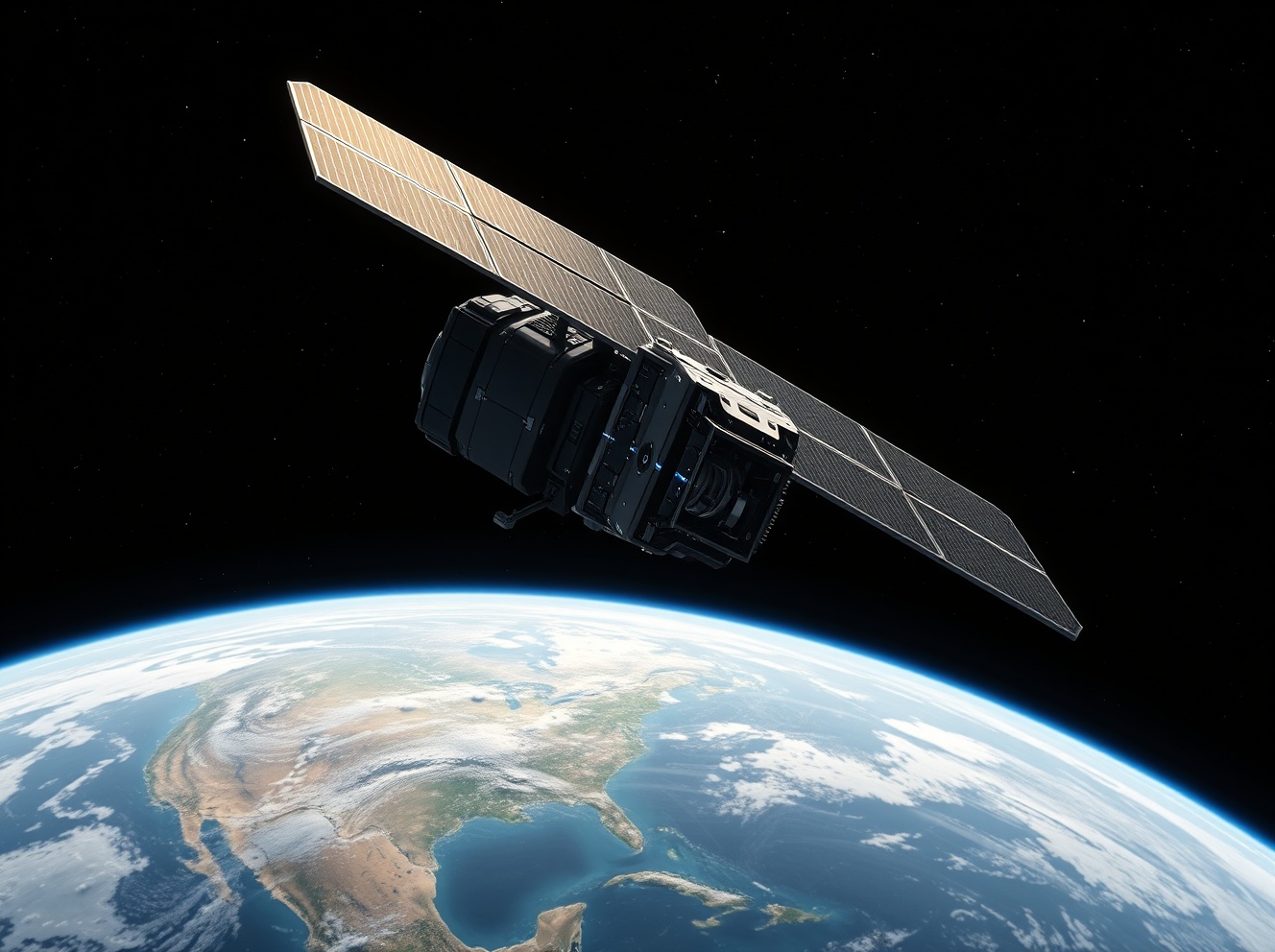
Orbital Compute Cluster Revolution: Kepler’s Pioneering Leap in Space-Based Data Processing
In a significant milestone for space infrastructure, the largest orbital compute cluster is now operational, marking a pivotal shift from terrestrial data centers to in-space processing capabilities that promise to transform defense, commercial, and scientific operations. Launched by Canada’s Kepler Communications in January, this network represents the most advanced computational platform currently orbiting Earth, fundamentally changing how data collected in space is managed and utilized.
The Architecture of the Largest Orbital Compute Cluster
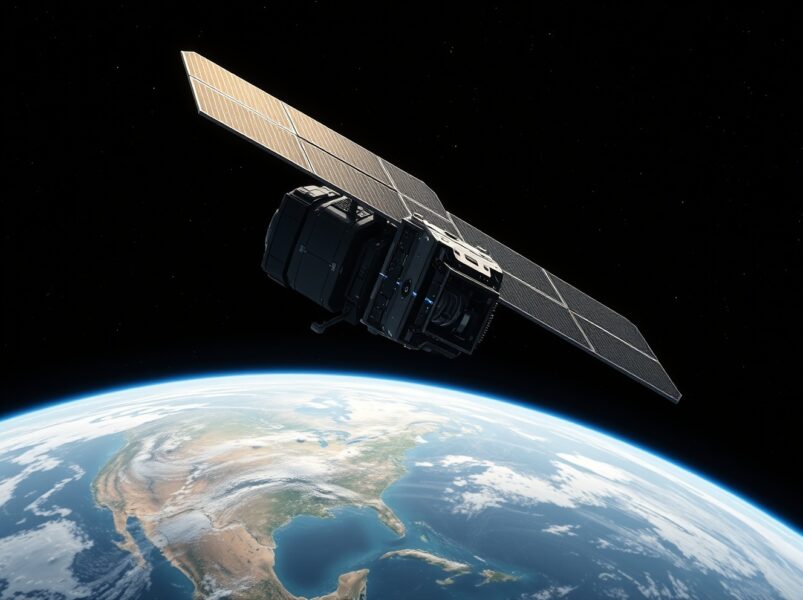
Kepler’s orbital compute cluster consists of 10 operational satellites interconnected by laser communications links, creating a distributed computing network in space. The system boasts approximately 40 Nvidia Orin edge processors specifically designed for high-performance, low-power applications. This configuration enables real-time data processing directly in orbit, eliminating the latency and bandwidth constraints associated with transmitting raw data to Earth.
The company has already secured 18 customers for its pioneering service. Furthermore, Kepler announced a strategic partnership with startup Sophia Space on Monday. Sophia will test its proprietary operating system across six GPUs on two of Kepler’s spacecraft. This collaboration represents the first attempt to deploy and configure software across multiple orbital processors, a routine activity in terrestrial data centers but unprecedented in space.
Strategic Applications and Military Significance
The immediate value proposition centers on processing data where it’s collected. This edge computing approach dramatically improves response times for critical applications. For instance, the U.S. military represents a key customer as it develops next-generation missile defense systems. These systems rely on satellites to detect and track threats with minimal latency.
Kepler has already demonstrated a space-to-air laser link in a government demonstration. CEO Mina Mitry explains that satellite companies are now designing future assets around this processing model. The approach particularly benefits power-hungry sensors like synthetic aperture radar, which generate massive data volumes. By processing this data in orbit, satellites can transmit only actionable intelligence rather than raw sensor feeds.
A Different Vision from Space Giants
Kepler’s strategy distinguishes itself from ambitious projects by SpaceX, Blue Origin, and well-funded startups like Starcloud and Aetherflux. Those companies envision massive orbital data centers with traditional data-center-style processors. Conversely, Kepler focuses on distributed inference rather than centralized training workloads.
“Because we believe it’s more inference than training, we want more distributed GPUs that do inference, rather than one superpower GPU with training workload capacity,” Mitry told Bitcoin World. “If a system consumes kilowatts of power but operates at only 10% capacity, that’s inefficient. Our GPUs run at 100% utilization.”
This efficiency-focused approach makes Kepler’s model commercially viable today, while larger-scale orbital data centers likely won’t emerge until the 2030s according to industry experts.
The Cooling Challenge and Sophia’s Innovation
One major obstacle for orbital computing involves thermal management. Powerful processors generate substantial heat, and space presents unique cooling challenges. Traditional active cooling systems add significant weight, complexity, and cost to spacecraft.
Sophia Space addresses this challenge with passively-cooled space computers. Their technology could enable more powerful processors in orbit without requiring heavy, expensive cooling infrastructure. Through the Kepler partnership, Sophia will upload its operating system to conduct a crucial de-risking exercise ahead of its planned satellite launch in late 2027.
This validation in the space environment is essential for proving the reliability of their systems. Success would represent a breakthrough for scalable orbital computing infrastructure.
Terrestrial Constraints Driving Orbital Solutions
Interestingly, developments on Earth may accelerate the adoption of space-based computing. Sophia CEO Rob DeMillo points to recent legislative actions restricting data center construction. Wisconsin recently adopted a ban on new data centers, and similar proposals are circulating in Congress.
“There’s no more data centers in this country,” DeMillo observed regarding the trend. “It’s gonna get weird from here.” These terrestrial constraints make space-based alternatives increasingly attractive from regulatory and environmental perspectives.
Business Model and Future Expansion
Kepler doesn’t position itself as a data center company but as infrastructure for space applications. The company aims to provide network services for other satellites, drones, and aircraft. Currently, Kepler processes data uploaded from the ground or collected by payloads on its own spacecraft.
As the sector matures, the company plans to connect with third-party satellites to offer networking and processing services. This “infrastructure layer” approach could standardize how satellites communicate and share computational resources, similar to cloud services on Earth.
Conclusion
The deployment of the largest orbital compute cluster by Kepler Communications represents a foundational shift in space infrastructure. This pioneering system demonstrates the immediate practicality of in-orbit data processing for defense, commercial, and scientific applications. While massive orbital data centers remain years away, distributed edge computing networks like Kepler’s provide tangible benefits today. The partnership with Sophia Space addresses critical technical challenges, particularly thermal management. Furthermore, terrestrial constraints on data center expansion may unexpectedly boost the economic case for orbital computing solutions. As this technology proves its reliability and value, it will undoubtedly catalyze further innovation across the emerging space economy.
FAQs
Q1: What is an orbital compute cluster?
An orbital compute cluster is a network of computing processors deployed on satellites in space. It processes data directly in orbit rather than transmitting it to Earth, reducing latency and bandwidth requirements for space-based applications.
Q2: How does Kepler’s orbital compute cluster work?
Kepler’s cluster uses 40 Nvidia Orin edge processors distributed across 10 satellites connected by laser links. This creates a distributed computing network that processes data collected by sensors in space, enabling faster analysis and decision-making for applications like Earth observation and missile defense.
Q3: Why is cooling a challenge for orbital data centers?
In space, there’s no air for convection cooling, and heat can only dissipate through radiation. Powerful processors generate substantial heat that must be managed without traditional cooling systems, which are too heavy and power-intensive for most spacecraft.
Q4: What advantages does orbital computing offer over terrestrial data centers?
Orbital computing provides lower latency for space-based applications, reduces bandwidth needs for data transmission, offers potential regulatory advantages as terrestrial data centers face restrictions, and enables real-time processing for time-sensitive applications like defense systems.
Q5: When will large-scale orbital data centers become operational?
Industry experts predict large-scale orbital data centers similar to terrestrial facilities won’t emerge until the 2030s. Current systems like Kepler’s focus on distributed edge computing for specific applications rather than general-purpose data center operations.
This post Orbital Compute Cluster Revolution: Kepler’s Pioneering Leap in Space-Based Data Processing first appeared on BitcoinWorld.


Potrebbe anche piacerti

Strategic Metrics: A New Indicator Shakes Market Dynamics

RAVE Token Supply Shock: Analyst Uncovers 98% Team Control in Explosive Market Revelation




