The Saudi Arabian Vision 2030 has sped up the digital transformation of various sectors. The real estate industry is about to enter a new era with tokenized ownershipThe Saudi Arabian Vision 2030 has sped up the digital transformation of various sectors. The real estate industry is about to enter a new era with tokenized ownership

Saudi blockchain real estate offers tokenized investment under Vision 2030

  • Tokenized real estate enables fractional ownership through blockchain-based tokens.
  • Saudi investors must consider Zakat rules for trading and long-term holdings.
  • VAT and RETT depend on token classification and economic interest.
  • Non-Saudi investors may face corporate or withholding tax on returns.

The Saudi Arabian Vision 2030 has sped up the digital transformation of various sectors. The real estate industry is about to enter a new era with tokenized ownership. It is possible to associate the ownership of property with digital tokens stored in the blockchain. Such tokens will be fractional. It will give everyone access to expensive properties that only large investors can afford.

The Real Estate Registry, which falls under the umbrella of the Real Estate General Authority, has established a national infrastructure for such change. Blockchain registration, property fractionalization, and marketplace integration have already been established. It has become possible for an investor to digitally transfer property ownership, which will increase the speed and transparency of the processes.

The process of tokenization is revolutionizing the way real estate value and income-generating potential is shared. Real estate tokens can be used for ownership, shares, and income from renting, as well as gaining profit through selling. These tokens can be easily traded with low barriers for investment, making real estate investment well and truly inclusive.

Also Read: Stellar Blockchain Drives Real Estate Accessibility, XLM Eyes Key $0.246-$0.265 Levels

Tax Rules for Tokenized Real Estate in Saudi Arabia

A new dimension for taxation is introduced with tokenized property. Saudi real estate is subject to Zakat depending on the nature of the tokens; these are categorized according to being trading assets or income-focused tokens. Those trading assets are taxed based on market value, while others are taxed based on income.

Foreign investors could be levied either corporate income tax or withholding tax on income sourced from Saudi Arabia. This would depend on the taxable event triggered by the transfer of the token or the property itself. This could result in a risk of permanent establishment based on platform transactions. The VAT treatment would depend on the nature of the tokens as financial instruments or asset-backed property interests.

Fees on the platform, distributions on rental contracts, and proceeds on sales are subject to specific VAT treatments. Utility tokens securing income could be exempt from VAT, while other tokens backed by assets could be subject to normal real estate VAT laws. Real estate transaction tax at 5% could apply on sales of asset-backed tokens unless they are listed securities.

Saudi Tokenized Real Estate Boosts Investor Confidence

Documentation, categorization, and blockchain transaction evidence are necessary. The community requires clarification from ZATCA to avoid ambiguity regarding taxes on token transactions. Documenting all activities will facilitate Zakat calculation and ensure that all decisions by the Saudi Ministry of Finance are followed.

However, as the tokenized real estate industry expands in Saudi Arabia, the nation presents a distinct investing climate with greater transparency and fluidity. Investors will be able to manage VAT, RETT, corporate tax rates, and the Zakat system with greater efficiency. There is already a digital evolution of the real estate industry in progress.

Also Read: HBAR Sets Up for $0.39 Rally as Hedera Drives Real Estate Tokenization

Market Opportunity
RealLink Logo
RealLink Price(REAL)
$0.07486
$0.07486$0.07486
-0.97%
USD
RealLink (REAL) Live Price Chart
Disclaimer: The articles reposted on this site are sourced from public platforms and are provided for informational purposes only. They do not necessarily reflect the views of MEXC. All rights remain with the original authors. If you believe any content infringes on third-party rights, please contact service@support.mexc.com for removal. MEXC makes no guarantees regarding the accuracy, completeness, or timeliness of the content and is not responsible for any actions taken based on the information provided. The content does not constitute financial, legal, or other professional advice, nor should it be considered a recommendation or endorsement by MEXC.

You May Also Like

Building a DEXScreener Clone: A Step-by-Step Guide

Building a DEXScreener Clone: A Step-by-Step Guide

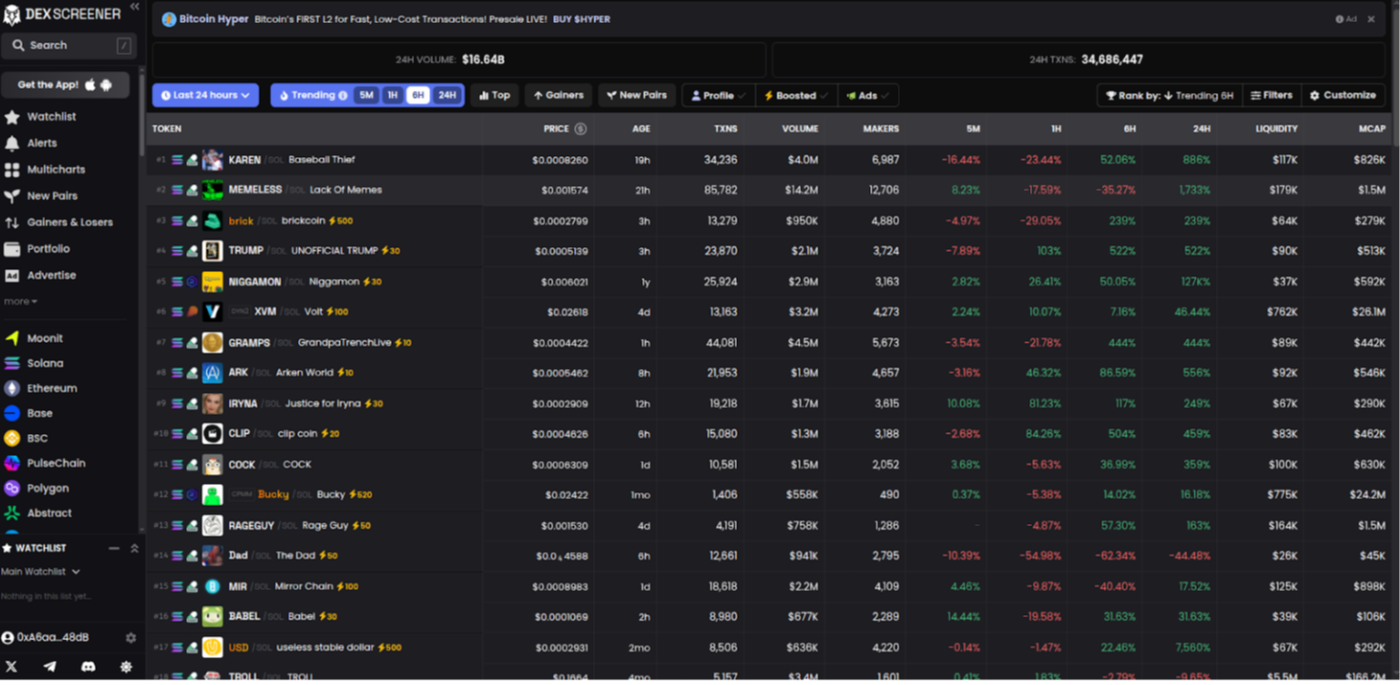
DEX Screener is used by crypto traders who need access to on-chain data like trading volumes, liquidity, and token prices. This information allows them to analyze trends, monitor new listings, and make informed investment decisions. In this tutorial, I will build a DEXScreener clone from scratch, covering everything from the initial design to a functional app. We will use Streamlit, a Python framework for building full-stack apps.
Share
Hackernoon2025/09/18 15:05
China Blocks Nvidia’s RTX Pro 6000D as Local Chips Rise

China Blocks Nvidia’s RTX Pro 6000D as Local Chips Rise

The post China Blocks Nvidia’s RTX Pro 6000D as Local Chips Rise appeared on BitcoinEthereumNews.com. China Blocks Nvidia’s RTX Pro 6000D as Local Chips Rise China’s internet regulator has ordered the country’s biggest technology firms, including Alibaba and ByteDance, to stop purchasing Nvidia’s RTX Pro 6000D GPUs. According to the Financial Times, the move shuts down the last major channel for mass supplies of American chips to the Chinese market. Why Beijing Halted Nvidia Purchases Chinese companies had planned to buy tens of thousands of RTX Pro 6000D accelerators and had already begun testing them in servers. But regulators intervened, halting the purchases and signaling stricter controls than earlier measures placed on Nvidia’s H20 chip. Image: Nvidia An audit compared Huawei and Cambricon processors, along with chips developed by Alibaba and Baidu, against Nvidia’s export-approved products. Regulators concluded that Chinese chips had reached performance levels comparable to the restricted U.S. models. This assessment pushed authorities to advise firms to rely more heavily on domestic processors, further tightening Nvidia’s already limited position in China. China’s Drive Toward Tech Independence The decision highlights Beijing’s focus on import substitution — developing self-sufficient chip production to reduce reliance on U.S. supplies. “The signal is now clear: all attention is focused on building a domestic ecosystem,” said a representative of a leading Chinese tech company. Nvidia had unveiled the RTX Pro 6000D in July 2025 during CEO Jensen Huang’s visit to Beijing, in an attempt to keep a foothold in China after Washington restricted exports of its most advanced chips. But momentum is shifting. Industry sources told the Financial Times that Chinese manufacturers plan to triple AI chip production next year to meet growing demand. They believe “domestic supply will now be sufficient without Nvidia.” What It Means for the Future With Huawei, Cambricon, Alibaba, and Baidu stepping up, China is positioning itself for long-term technological independence. Nvidia, meanwhile, faces…
Share
BitcoinEthereumNews2025/09/18 01:37
Ripple-Backed Evernorth Faces $220M Loss on XRP Holdings Amid Market Slump

Ripple-Backed Evernorth Faces $220M Loss on XRP Holdings Amid Market Slump

TLDR Evernorth invested $947M in XRP, now valued at $724M, a loss of over $220M. XRP’s price dropped 16% in the last 30 days, leading to Evernorth’s paper losses
Share
Coincentral2025/12/26 03:56