The post Laos Taps Hydropower Surplus for Cryptocurrency Mining appeared on BitcoinEthereumNews.com. Laos is leveraging its hydropower surplus to explore cryptocurrency mining amid rising national debt. The government seeks to monetize excess electricity, generating foreign currency while diversifying state revenue sources. Monetizing Hydropower Surplus to Service National Debt Laos faces one of the highest debt-to-GDP ratios in Southeast Asia, largely due to large-scale hydropower projects financed through international loans, primarily from China. Dubbed the “Battery of Southeast Asia,” the country produces more electricity than domestic demand and export capacity can absorb. Peak rainy seasons exacerbate the surplus, leaving the state utility, Électricité du Laos (EDL), with underutilized energy. Sponsored Sponsored In response, the Ministry of Technology and Communications (MTC) is developing a framework for digital asset mining, aiming to convert stranded hydropower into US dollar-denominated cryptocurrency revenue. Licensed mining operations would pay fixed electricity fees, creating a predictable fiscal mechanism to service debt obligations. By channeling excess power into Bitcoin and other digital assets, the government intends to establish a high-value demand for otherwise idle energy. This move represents an official endorsement of a sector historically marginalized or regulated inconsistently across Southeast Asia, positioning digital mining as a strategic financial lever. Regulatory Framework and Licensing Initiatives To support the mining initiative, Laos has introduced a formal licensing system for large-scale cryptocurrency miners and local trading platforms. The regulatory structure is designed to attract foreign investment, particularly from regions where mining faces restrictions, bringing both capital and technical expertise into the Lao economy. Domestic financial institutions are preparing to facilitate compliant conversions of mined digital assets into fiat currency. By formalizing mining operations, the government aims to monitor energy use, collect taxes, and ensure regulatory compliance. Critics, however, caution that even hydropower-based mining carries ecological and social risks. The government maintains that renewable energy minimizes environmental impact, yet large-scale operations may still stress… The post Laos Taps Hydropower Surplus for Cryptocurrency Mining appeared on BitcoinEthereumNews.com. Laos is leveraging its hydropower surplus to explore cryptocurrency mining amid rising national debt. The government seeks to monetize excess electricity, generating foreign currency while diversifying state revenue sources. Monetizing Hydropower Surplus to Service National Debt Laos faces one of the highest debt-to-GDP ratios in Southeast Asia, largely due to large-scale hydropower projects financed through international loans, primarily from China. Dubbed the “Battery of Southeast Asia,” the country produces more electricity than domestic demand and export capacity can absorb. Peak rainy seasons exacerbate the surplus, leaving the state utility, Électricité du Laos (EDL), with underutilized energy. Sponsored Sponsored In response, the Ministry of Technology and Communications (MTC) is developing a framework for digital asset mining, aiming to convert stranded hydropower into US dollar-denominated cryptocurrency revenue. Licensed mining operations would pay fixed electricity fees, creating a predictable fiscal mechanism to service debt obligations. By channeling excess power into Bitcoin and other digital assets, the government intends to establish a high-value demand for otherwise idle energy. This move represents an official endorsement of a sector historically marginalized or regulated inconsistently across Southeast Asia, positioning digital mining as a strategic financial lever. Regulatory Framework and Licensing Initiatives To support the mining initiative, Laos has introduced a formal licensing system for large-scale cryptocurrency miners and local trading platforms. The regulatory structure is designed to attract foreign investment, particularly from regions where mining faces restrictions, bringing both capital and technical expertise into the Lao economy. Domestic financial institutions are preparing to facilitate compliant conversions of mined digital assets into fiat currency. By formalizing mining operations, the government aims to monitor energy use, collect taxes, and ensure regulatory compliance. Critics, however, caution that even hydropower-based mining carries ecological and social risks. The government maintains that renewable energy minimizes environmental impact, yet large-scale operations may still stress…

Laos Taps Hydropower Surplus for Cryptocurrency Mining

Laos is leveraging its hydropower surplus to explore cryptocurrency mining amid rising national debt.

The government seeks to monetize excess electricity, generating foreign currency while diversifying state revenue sources.

Monetizing Hydropower Surplus to Service National Debt

Laos faces one of the highest debt-to-GDP ratios in Southeast Asia, largely due to large-scale hydropower projects financed through international loans, primarily from China. Dubbed the “Battery of Southeast Asia,” the country produces more electricity than domestic demand and export capacity can absorb. Peak rainy seasons exacerbate the surplus, leaving the state utility, Électricité du Laos (EDL), with underutilized energy.

Sponsored

Sponsored

In response, the Ministry of Technology and Communications (MTC) is developing a framework for digital asset mining, aiming to convert stranded hydropower into US dollar-denominated cryptocurrency revenue. Licensed mining operations would pay fixed electricity fees, creating a predictable fiscal mechanism to service debt obligations.

By channeling excess power into Bitcoin and other digital assets, the government intends to establish a high-value demand for otherwise idle energy. This move represents an official endorsement of a sector historically marginalized or regulated inconsistently across Southeast Asia, positioning digital mining as a strategic financial lever.

Regulatory Framework and Licensing Initiatives

To support the mining initiative, Laos has introduced a formal licensing system for large-scale cryptocurrency miners and local trading platforms. The regulatory structure is designed to attract foreign investment, particularly from regions where mining faces restrictions, bringing both capital and technical expertise into the Lao economy.

Domestic financial institutions are preparing to facilitate compliant conversions of mined digital assets into fiat currency. By formalizing mining operations, the government aims to monitor energy use, collect taxes, and ensure regulatory compliance.

Critics, however, caution that even hydropower-based mining carries ecological and social risks. The government maintains that renewable energy minimizes environmental impact, yet large-scale operations may still stress the grid and necessitate additional infrastructure or compromise essential domestic energy use.

Grid Stability and Environmental Concerns

Experts and environmental groups have raised concerns regarding grid stability and ecological impact. Despite frequent hydropower surpluses, the domestic transmission network remains sensitive, and prioritizing energy-intensive mining could disrupt local consumption. Non-peaking, continuous energy demand may reduce buffer capacity, exposing the grid during dry seasons or equipment failures.

Laos’s lush landscapes and river systems provide the hydropower foundation for its new economic push into Bitcoin mining. Photo: Unsplash

Hydropower development has already affected river ecosystems and downstream agriculture, with displacements and social disruption for local communities. Critics argue that allocating electricity to speculative digital assets risks undermining long-term sustainability in favor of short-term debt relief. The Lao government faces the challenge of balancing high-value crypto operations with grid stability and ecological stewardship, ensuring that financial gains do not compromise local welfare or environmental resilience.

Source: https://beincrypto.com/laos-taps-hydropower-surplus-for-cryptocurrency-mining/
Market Opportunity
Battery Logo
Battery Price(BATTERY)
$0.0001171
$0.0001171$0.0001171
+0.08%
USD
Battery (BATTERY) Live Price Chart
Disclaimer: The articles reposted on this site are sourced from public platforms and are provided for informational purposes only. They do not necessarily reflect the views of MEXC. All rights remain with the original authors. If you believe any content infringes on third-party rights, please contact service@support.mexc.com for removal. MEXC makes no guarantees regarding the accuracy, completeness, or timeliness of the content and is not responsible for any actions taken based on the information provided. The content does not constitute financial, legal, or other professional advice, nor should it be considered a recommendation or endorsement by MEXC.

You May Also Like

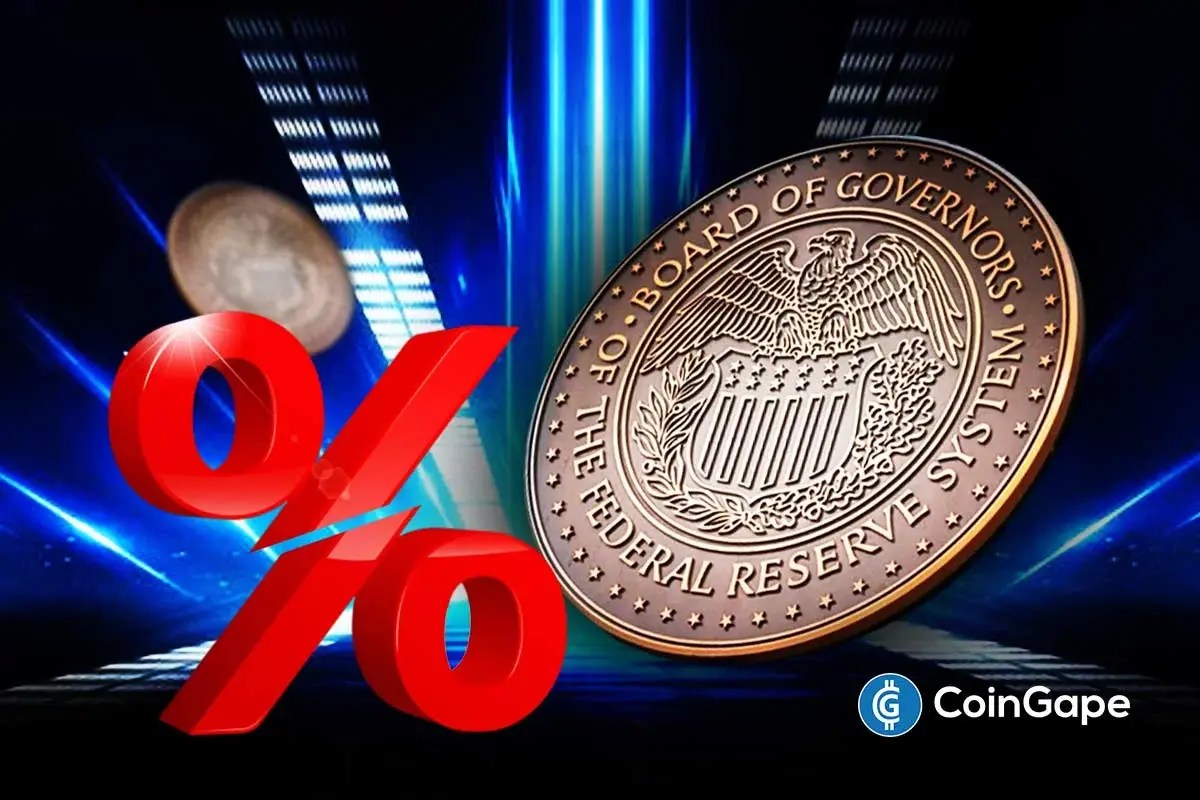
Fed Makes First Rate Cut of the Year, Lowers Rates by 25 Bps

Fed Makes First Rate Cut of the Year, Lowers Rates by 25 Bps

The post Fed Makes First Rate Cut of the Year, Lowers Rates by 25 Bps appeared on BitcoinEthereumNews.com. The Federal Reserve has made its first Fed rate cut this year following today’s FOMC meeting, lowering interest rates by 25 basis points (bps). This comes in line with expectations, while the crypto market awaits Fed Chair Jerome Powell’s speech for guidance on the committee’s stance moving forward. FOMC Makes First Fed Rate Cut This Year With 25 Bps Cut In a press release, the committee announced that it has decided to lower the target range for the federal funds rate by 25 bps from between 4.25% and 4.5% to 4% and 4.25%. This comes in line with expectations as market participants were pricing in a 25 bps cut, as against a 50 bps cut. This marks the first Fed rate cut this year, with the last cut before this coming last year in December. Notably, the Fed also made the first cut last year in September, although it was a 50 bps cut back then. All Fed officials voted in favor of a 25 bps cut except Stephen Miran, who dissented in favor of a 50 bps cut. This rate cut decision comes amid concerns that the labor market may be softening, with recent U.S. jobs data pointing to a weak labor market. The committee noted in the release that job gains have slowed, and that the unemployment rate has edged up but remains low. They added that inflation has moved up and remains somewhat elevated. Fed Chair Jerome Powell had also already signaled at the Jackson Hole Conference that they were likely to lower interest rates with the downside risk in the labor market rising. The committee reiterated this in the release that downside risks to employment have risen. Before the Fed rate cut decision, experts weighed in on whether the FOMC should make a 25 bps cut or…
Share
BitcoinEthereumNews2025/09/18 04:36
Trump-backed stablecoin hits $5 billion as first family cashes in

Trump-backed stablecoin hits $5 billion as first family cashes in

Trump Jr. has emerged as a vocal crypto advocate and operator, while World Liberty Financial has made USD1 the backbone of its decentralized finance platform.
Share
Crypto.news2026/01/30 04:30
Will Ripple be publicly traded? — Will Ripple be publicly traded?

Will Ripple be publicly traded? — Will Ripple be publicly traded?

Many readers search for ripple shares price expecting a company stock quote. That expectation is understandable because Ripple is a well-known brand in crypto,
Share
Coinstats2026/01/30 04:14